
| No | Name | Description |
|---|---|---|
 |
The watermill was restored in the 1920s and renewed operations in 1992. It offers a look at historical mechanisms and the milling process, while the café offers pancakes made of the flour that is ground at the mill. Latvian cuisine: Herring with cottage cheese and boiled potatoes, pancakes with mushrooms, cheese, vegetables, meat, honey, cream, cottage cheese, ice cream and caramel. |
|
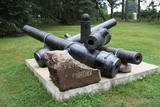 |
Dole Island is the largest river island in Latvia, and it is the site of the Dole baronial estate. The mansion of the estate was built in 1898 by the aristocratic family which owned the estate. Today the mansion is home to the Dole Museum with a rich exhibition which tells about the lives of people on the shores of the Daugava River. The adjoining park features ethnographic buildings, as well as lamprey and salmon spawning grounds. There are five unique cannons that were found in Salaspils when a new stadium was being built there. In 1910, a tsarist military camp was here, and a monument to Tsar Peter the Great was unveiled. One of the cannons is in the exhibition of the museum itself.
|
|
 |
Guests can walk around and take photos at the lavender field, relax in the cozy and fragrant Provencal style neighborhood. |
|
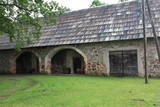 |
The road leading to this estate is reminiscent of a narrow mountain road with a deep river valley alongside it. The estate used to be known as the Libe Estate, and the buildings that are seen there now belonged to a nobleman, Magnuss. The mansion has a Neo-Gothic glass tower which is known as an architectural curio among specialists. The Sarkaņi Parish Council sits in the mansion. The granary is the work of a local enthusiast, Andris Trečaks, who has collected a series of ancient objects. Outside the granary is a very broad view of the “lower” Lubāna flatlands, resembling a painting with an empty frame. |
|
 |
Mežvidi (SIA Latgale Vegetable Logistics) began operations in 2007 and sells tasty and healthy red tomatoes. The owners plan to grow and deliver tomatoes during the winter, when people have the greatest need for healthy and vitamin-rich vegetables. The farm helps to facilitate co-operation among people who farm vegetables, and it informs the public about how tomatoes are grown. |
|
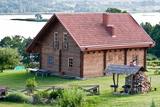 |
Atrodas ezera Vilkokšnio ezera krastā - attālā dabas nostūrī, kur smelties spēku un enerģiju. Pirts, guļamistabas ar koka smaržu, vasaras lapene, kamīns, rotaļlaukums, peldēšanās ezerā, makšķerēšana, sporta laukumi, laiva, ūdens velosipēdi, kalnu velosipēdi un kempings. Lauku sētas entnogrāfiskajā istabā tiek cepta mājas maize. Iepazīsieties ar senajiem piederumiem, maizes cepšanas tradīcijām un paražām.
|
|
 |
Here you will enjoy an educational programme that teaches you that cattle offer not just food, but also communications. You will see cattle learn about how they are bred, and what they provide for the local village and nature. |
|
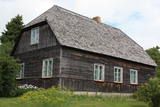 |
The museum was established in 1973 and has been in the Kalna Ziedi homestead since 1989. The permanent exhibition is in a building that was erected in 1989 on the foundations of the former home, while the warehouse (1990) was built on the foundations of a cattle shed. The exhibition hall (2000) was built where a granary once stood. The only part of the former farm that remains in place is the cellar, but the placement of the buildings is typical for the layout of a farm in Vidzeme. The collection of the museum speaks to the history of the administrative district, beginning with information about the Stone Age. The open-air exhibition features beehives with marks of belonging, as well as rare round crosses that are monuments to Medieval cemeteries. 100 metres to the Northeast from the museum is the Kalna Ziedi castle hill, while 200 metres to the south are the remains of a sacrificial oak stump that was destroyed in 1994. The location is on the edge of the reservoir of the Pļaviņas hydroelectric power plant and offers a broad view of the plant’s dam and the town of Pļaviņas.
|
|
 |
A gourmet’s favourite in the very heart of Valmiera, opposite Valmiera Town Hall Square. Here every guest can become a gourmet and enjoy a variety of flavour "bouquets" and seasonal products that come from local farms. The restaurant's Summer Garden is designed to highlight Valmiera as a Hanseatic city of a medieval merchant association. Latvian cuisine: A selection of Latvian cheeses, Valmiera salad, potatoes in their jackets with cottage cheese, cold kefir soup, lamb soup, pike from Lake Burtnieks, baked filet of catfish, leg of lamb steak, roast pork ribs. Special foods: Rye bread baked in honey. |
|
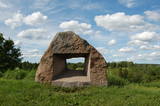 |
The open-air museum was proposed in 1992 by the sculptor Ojārs Arvīds Feldbergs, and it is located on the banks of the Ancient Abava River valley and on land that was once part of the Firkspedvāle and Briņķpedvāle estates. The park features contemporary art, and the museum also organises symposiums, creative workshops and other events. |
|
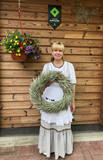 |
The Dzīļu bakery in Malnava is a symbol of Krāslava and it is located next to the Malnava manor park. The lady of the house prepare hearty Lettigalian dishes and other country goodies. In the bakery the owner bakes different types of bread, for example, rye-bread, sweet-and sour bread, as well as makes cakes on pre-order. She also offers to groups and families to bake bread, pies, cakes or pizzas together. The tasting and Latgalian dishes in nowadays’style. A walk around the park of Malnava manor and stories about the white gate. Local bread is famous in Kārsava. The bakery offers brunch on weekends, as well as markets of local crafts and other products. |
|
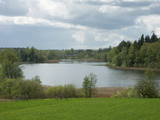 |
This restricted area protects the eutrophic Lake Istra and the biotopes that are alongside it – various kinds of forests and meadows. This is a particularly lovely part of the Latgale region. Interestingly, the so-called system of “rope farms” can still be seen in the nature park.
|
|
 1 day
|
Dodieties ekskursijā, lai gūtu ieskatu lauku profesijā un dzīvesveidā, kā arī iegūtu jaunus iespaidus un labu atpūtu visai klasei. Ekskursijas laikā apmeklējiet mini zoo, kur apskatāmas aitas, kazas, Ķīnas lielās cūkas, truši, dažādi eksotiskie dzīvnieki un putni. Bērniem īpašu prieku sagādā saskarsme ar mājdzīvniekiem un Japānas makaka – pērtiķa Nilsona izdarības. Pēc tam apmeklējiet zemnieku saimniecību, kurā izveidots atrakciju parks ar vairāk kā 20 atrakcijām 3,5 hektāru platībā. Ekskursijas noslēgumā dodieties uz atpūtas kompleksu pašā Zemgales sirdī, lai apskatītu vējdzirnavas un izceptu paši savus pīrāgus. |
|
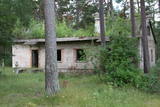 |
This is an abandoned facility that is no longer used. The coast guard facility is in the forest, around 600 metres from the sea. There is one building right on the shore.
|
|
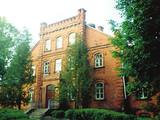 |
Rikavas Manor is the local architectural monument that belonged to Janovski family. Michael Riks
bought the building in the second half of the 18th century. The construction works of the manor house lasted
from 1870 till 1875. The redbrick building is an example of Neo Gothic style. Since 1926 there was established
a school. You should see the beautiful interior and wooden stairs as well as school’s workshop
|
|
 |
A cosy café in the centre of Liepāja. Offers coffee, delicious cakes and great food. Every morning at around 5 a.m., the croissant master starts to work in order to have fresh croissants ready to serve for 9 a.m. |
|
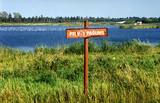 |
A restricted area with a set of artificial ponds to the South-west of Saldus. The ponds attract many different kinds of birds during nesting and migration season. The location has not been improved for tourist purposes, but it is still an interesting place for some bird-watching. The forests around the ponds are also home to many protected birds and species of bat. |
|
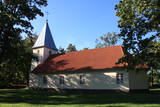 |
according to legend, was washed into the sea because of collapsing shores along with other buildings and the old road. The church was built in 1862 and has an altar painting from the late 19th century, "Mother of God," along with an organ. The metal elements of the building's doors are interesting. Hanging from the ceiling of the church is a sailing ship that has to do with the rescue of the crew of the sunken ship. |
|
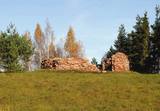 |
Swedish scanst (Kuce Hill, Jumprava Hill). Medieval fortification. The monument of national meaning
is located in the village Stari 450 m from Atspuki mill, 70 mto the Southeast from the ruins of Jumpravmuiža.
The territory is 0,7 – 1 m deep outside and 1 – 1,5 m high inside. The new road to the ruins of Jumpravmuiža
leads through the West side of the fortification.
|
|
 |
The mouth of the most beautiful river of Vidzeme. On the seashore between the mouths of River Gauja and River Daugava, one of the largest dune ranges in Latvia with distinctive parabolic dunes overgrown with forest (wooded dunes) is situated. The Mouth of River Gauja is unique as it is one of the few major rivers in Latvia and in EU countries to flow into the sea naturally. There is no harbour or other hydro-engineering construction. It is a popular recreation area in the vicinity of Riga and Saulkrasti while, unfortunately, the lack of infrastructure makes it suffer from anthropogenic load. Not far from the rivermouth, hidden in dunes, there are pillboxes which were built in 1920 or 30ies as anti-airborne barriers. There was a whole range of them along the coastline from the mouth of the River Lielupe to the mouth of the River Gauja forming a part of the Daugavgrīva Fortress fortifications. The pillbox is made of concrete, ca 1.5m thick. Every year, on the 3rd Sunday in August, a lamprey festival takes place in Carnikava town by the Gauja rivermouth. Carnikava is called the Lamprey Capital as it is famous for its lamprey fishing tradition and generous catches. The Mouth of the River Gauja is a good bird-watching area, especially in spring and autumn when one can observe the highest variety of species. Just few of the many bird species that can be observed near the Gauja rivermouth |
|


