
| No | Name | Description |
|---|---|---|
 |
In Kännu Alpaca Farm you can see Peruvian alpacas, mammals with beautiful, soft coat which they are known for. While in this farm you can feed alpacas with food provided by the owners and pet them. You can also see goats, sheeps, rabbits and chickens. In the farm shop you can buy souvenirs and also products that are made of alpaca wool. Kännu Alpaca Farm is also suitable for family visits. |
|
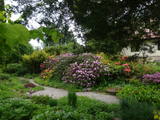 |
This guesthouse and dendrological garden are found near Kuldīga, and its pond has trout and carps. The Sauleskalni arboretum is alongside the guesthouse. It was established in 1960 and features some 100 types of plants and bushes, including 25 local types and 16 types of rhododendrons. Unique samples include a 50-year-old magnolia tree, a 45-year-old smoke tree, a maidenhair tree, and others. Donations are accepted. The owners will discuss history and the gardeners who created the garden. Various plants are available. |
|
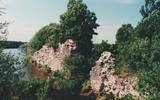 |
The castle hill is an island in the reservoir of the Pļaviņas hydroelectric power plant, and it can be accessed by boat. The ancient Selonian castle hill was settled several times between the 6th and the 12th century. This was the political and military centre of the Selonian region. In 1373, the Livonian Order built a stone castle on the hill, as it did on many other ancient hillocks. The castle was sacked in 1704 during the Great Northern War. Remnants of a square tower, a guard room and the 12 m embankment that once protected the castle are all that survive. Approximately 300 m to the North of the Sēlpils castle hill is Oliņkalns hill, which is underwater. |
|
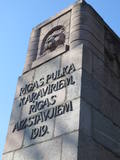 |
This is a sand dune that is covered with pines and has a monument to soldiers from Company 6 in Rīga, who defended the city in 1919. It was from this place that the soldiers went into battle against the numerically much larger army of Bermont-Avalov to liberate Rīga and its Pārdaugava neighbourhood. Created by the sculptor Kārlis Zāle, the monument features a wall facing Slokas Street that is 12 metres tall and is a depiction of the head of a lion that was once part of the gates to Rīga. The side walls on both sides have bas relief depictions of Ancient Latvians and soldiers from 1919. Atop the dune is an area with an altar, a sacrificial dish, and a memorial plaque to commemorate those who fell in battle. The monument was unveiled in 1937 by President Kārlis Ulmanis. |
|
 |
The cafe is situated in the southern part of Vecpiebalga. The interior decorations are made of oak and boast Latvian symbols, as well as stained glass. Working hours: Monday- Thu 8:00 - 22:00, Fri, Sat 8:00 - 01:00, Sun. 8:00 - 22:00 |
|
 |
Zemnieku saimniecība „Virši” audzē kaņepju sēklas, no kurām tiek iegūta kaņepju eļļa un kaņepju staks (apceptas, maltas kaņepes). ZS "Virši" produkciju ir iespējams degustēt dažādās vietās ārpus saimniecības, kā, piemēram, Kalnciema tirdziņā u.c. |
|
 5 days
|
Duke Jacob of Courland was a ruler of the Duchy of Courland and Zemgale for 40 years (1642-1682). There were great changes during his rule, with the ship building industry developing rapidly, the first factories appearing, and agricultural output improving. The duke had a large fleet that brought grain, meat, butter, wool, timber and all that was manufactured at baronial estates in Zemgale and Courland to Western Europe. The fleet was so big and strong that its ships sailed not just to Europe, but also all the way to Tobago and Gambia, where colonies were established to bring sugar, coffee and spices to Europe. The duchy built ships, manufactured paper and saltpetre and wove textiles, brocade and tapestries. Iron manufacturing was highly developed, and ore was imported from Sweden. This made it possible to forge nails, anchors, bells, cannons and other firearms. The duchy produced vodka, vinegar and gunpowder for which there was great demand in Europe, because there were attacks and defences that required it. As much as 25 tonnes of gunpowder were produced each year. One of the gunpowder towers is still in Kandava, though it has been rebuilt many times. The duchy manufactured sails and ropes, as well as hemp ropes. It was said that the fleet of the Queen of England would not have existed without those ropes. The duke also thought about selection of grain, bred livestock, improved land with land reclamation and tried to expand output from his fields. Jacob did not manage to do everything that he wanted to do. A canal to avoid the Venta rapids was not finished, and plans such as the colonisation of Australia were not finished. Yet the era of Duke Jacob was a period of great change in the territory of Latvia, and it has not gone unnoticed that the great achievements of the duke occurred on a small plot of European land. That proves that wise management can ensure lots of progress. |
|
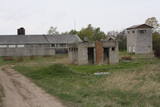 |
The former communications facilities at Pļavmalas are used as a farm warehouse at this time. They belong to a local farm.
|
|
 11 days
|
On this tour there are the finest cultural and historical heritage left behind over the course of several centuries – medieval castles, different manors and splendid palaces. Part of the route goes through Gauja National Park with some excellent views of meadows and ancient forest, where farmsteads carry on with their unchanging lives. A picturesque road connects three castles - Sigulda, Turaida and Krimulda - situated on the high valley sides of the Gauja river. Further on, the road passes one of the oldest churches in Latvia and heads to two attractive 19th century manors at Birini and Igate. Next day, relax in luxury at Dikļi manor hotel. The tour then goes through charming medieval town Cesis with mighty castle ruins and a newer castle alomgside. The other part of the tour makes a loop formed by Zemgale's distinctive castles and palaces. It includes Jaunpils Castle, barely changed since medieval times, Dobele Castle ruins and Tervete ancient hillock. Located a short ride from each other are 15th century Bauska Castle, strategically situated between two rivers, the classically styled Mežotne Palace hotel and the most famous pearl in the Baltics - splendid baroque and rococo style Rundāle Palace surrounded by a French park. |
|
 |
A small producer that grows strawberries on the farm, smokes and marinates fish Estonian style. Here, mead and house wine is also made, as well as various meat products. |
|
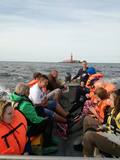 |
Piedāvā izbraucienu ar zvejnieku laivu līdz Kolkas bākai. Iespējama iepazīšanās ar zvejas procesu. Iepriekš saskaņojot, iespējams jūrā sagaidīt saullēktu vai saulrietu. |
|
 |
The Jūrkalne People's Centre is the main gathering place for Suiti people and is in a former saloon that was built around 1875. Major restorations were conducted in 2011. The centre offers various events, there is an exhibition hall for visitors, and the "Maģie Suiti" ethnographic ensemble and other amateur ensembles are active there. If you want to meet the Suiti and learn about their traditions, contact the centre in advance. |
|
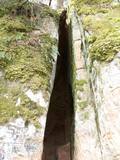 |
The Vējupīte ravine is meant for those who are not afraid of long and steep wooden stairs of the type that lead you up and down the ravine. From the Līvkalns guesthouse, you can climb the stairs downward, where you will find a shallow (3.6 m) but high (6.1 m) cave – the Pēters Cave. It is something of a gap or a niche. Another 10 minutes or so downstream (toward the Gauja) will lead you to the deep Pūces ravine and its Kraukļupīte River. The Satezele castle hill is at the confluence of the two rivers (90 x 75 m). A wooden castle was there during the feudal era in the early 13th century. Its main entrance was on the western side of the castle hill. You can get to the hill from the depths of the ravine via a wooden staircase. The Kraukļi ravine, in turn, is accessible if you climb down the same stairs and continue on your way toward the Gauja. The ravine is found on the left bank of the Vējupīte, and its sandstone walls are up to 11 m high. The Kraukļi cave, which is 5.2 m deep, is on the wall. Another 10-15 minutes (crossing the Vējupīte on a wooden bridge), and you will find another staircase leading you to Paradīze Hill (see the description above). |
|
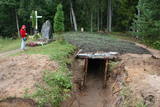 |
In October 1948, nationalist partisans who opposed the Soviet regime built a 9x6 m bunker in the forests of Īle for themselves. Five months later, the KGB attacked the bunker. After five hours of gunfire, 15 partisans lay dead, and another nine were captured. The bunker has been restored in commemoration of this event, and it is open to visitors.
|
|
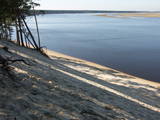 |
An important complex of the coastline and its sand dunes along with the mouths of three major rivers – the Lielupe, the Daugava and the Gauja. This area has ancient traditions of recreation and spa services. The territory has lovely shoreline landscapes and features one of the few coastline meadows in Latvia. The nature park includes several restricted areas – the meadows of the Lielupe estuary, Vakarbuļļi, Daugavgrīva, Vecdaugava and Ummis (see the section on “Restricted Natural Areas”). Interesting elements of nature in this area include the amphitheatre of the Garciems dunes, along with individual dunes such as the Legzdiņi dune and the so-called ski mountain dune. Visitors will be attracted by various cultural and historical monuments – fortifications on the Mangaļi peninsula, military buildings from the period of the Russian tsars all the way through the late period of the Soviet occupation, the fortress of Daugavgrīva, the Vecāķi spa with its old shoreline buildings, and the beaches at Daugavgrīva and Vecāķi. The proximity of the city of Rīga and various important recreational resources are the reason for the massive anthropogenic burden that is placed on this territory. The nature park is appropriate for active tourism (hiking, bicycling, boating, driving), distance skiing, nature and bird-watching, cultural tourism, passive leisure and educational tourism. There are nature trails at Daugavgrīva and the Rožu dunes, along with other elements of infrastructure. |
|
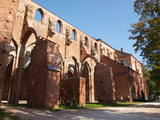 |
Eine der größten Kirchen Osteuropas (bis 16. Jh.) un die einzige mittelalterliche Kirche Estlands mit zwei Türmen. Wurde in 13. – 16. Jh. gebaut, zerstört im Laufe des Livländischen Kriegs. Im Chorteil der Kirche befindet sich das Museum der Universität Taru (früher – eine Bibliothek). Die Türme sind renoviert und in denen sind die Aussichtsplätze eingerichtet. |
|
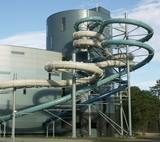 |
Der älteste und größte Kurort Litauens (seit 1794). Mikroklima (Luft der Umgebungswälder), salzhaltigee Quellen, Heilschlamm. Die Altstadt ist ein städtebauliches Denkmal. |
|
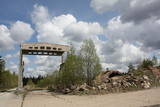 |
The ship and coast guard missile repair workshops in the forests around Bārta in the Liepāja District are very impressive in visual terms. The facility is owned by the regional local government and is being dismantled to obtain building materials.
|
|
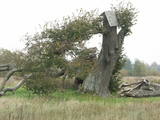 |
Before a great storm in 2005, this was one of the tallest and most noble lime trees in Latvia. Now only one branch is still alive.
|
|
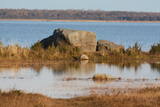 |
Trīs lielāka izmēra laukakmeņi – aizsargājami dabas pieminekļi, kas atrodas Matsalu līča krastā starp Sāstnas (Saastna) un Metskjulas (Metsküla) ciemiem. Tuvējā ceļa malā ir izvietots informācijas stends un norādes, bet līdz akmeņiem var nokļūt pa iezīmētu taku. Pēc kāda tautas nostāsta, lielas vētras laikā, kas notikusi Jaungada naktī, lielais akmens sašķēlies trīs daļās. No tā arī cēlies vietvārds. Apkārtnē redzamās pļavas ir nozīmīga daudzu augu sugu dzīves vide un svarīga putnu ligzdošanas un atpūtas vieta. Šī iemesla dēļ taku drīkst apmeklēt tikai no 1. jūlija līdz septembra beigām. Akmeņi ir arī labi redzami no minētā ceļa. Tie ar ledāju atceļojuši no Turku (Somija) apkārtnes. |
|


