
| No | Name | Description |
|---|---|---|
 |
Windmill restaurant Saaremaa is the most popular restaurant amongst locals, offering the best and freshest products. The menu includes game meat from Saaremaa forests, smoked fish during summer, treats from berries, local apple wine, as well as the best wines of Saaremaa Island. |
|
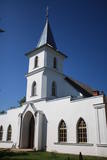 |
The Ilūkste Roman Catholic Church is to the North of Unity Square. The first stone church in Ilūkste was financed by the Plater-Sieberg dynasty of noblemen between 1754 and 1769. The current church was built in 1816. In 1861, it was taken over by the Orthodox Church, but it was returned to a Catholic congregation in 1920. The church was restored in 1921. The interior can be viewed during worship services. |
|
 12 days
|
The route includes some of the most authentic local expediencies travelling through blue lake districts along the Eastern part of Latvia and Lithuania. This is a region where mass tourism has not yet arrived, and you find very sincere and hospitable people, traditional villages, many churches and cult locations which bring together paganism, Roman Catholicism, Lutheranism, Russian Orthodoxy and Old believers, |
|
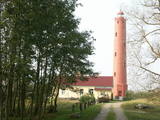 |
This was Coastal Defence Battery No. 500 at one time, and it was dismantled in 1955. There were four 130 mm cannons, and their foundations can still be spotted in the forest northeast from the lighthouse. They are mostly covered by moss and can be very hard to find. Those who are not familiar with the region will probably have the most trouble of all.
|
|
 |
This facility is used for military and tactical training at this time. The facility can be used for automobile and motorcycle racing, testing drives, and security training, all of which must be arranged in advance. The surrounding nature reserve offers a chance to look at local plants and animals.
|
|
 |
Die nach dem Bau der Straße Tallinn – Narva gefundene und rekonstruierte 36 alte Bestattungen (8. – 7. Jh. vor Christus) ist ein interessantes archiologisches Denkmal mit einem Besucherzentrum und einer geschichtlichen Ausstellung. |
|
 3 days
|
Ventspils ir viena no attīstītākajām Latvijas pilsētām ar izcilu infrastruktūru, restaurētu vecpilsētu un Livonijas Ordeņa pili, tīru un labi ierīkotu balto smilšu pludmali, promenādi un dažādām izklaides un atpūtas vietām. Pilsēta ir piemērota ģimenēm, un bērni visvairāk izbauda Zilā karoga pludmali ar dažādām šūpolēm, slidkalniņiem, kā arī Bērnu pilsētiņu ar aktivitāšu zonām dažādu vecumu bērniem. Īss izbrauciens ar Mazbānīti, kas ir interesanta atrakcija gan bērniem, gan pieaugušajiem. Ūdens priekus var baudīt gan iekštelpu, gan āra akvaparkos. Dodieties izbraucienos pa tuvējo apkārtni, lai izbaudītu ainavisko jūras piekrasti, redzētu tradicionālos zvejnieku ciematus, kur iespējams iegādāties kūpinātas zivis tieši no zvejniekiem. Slīteres nacionālais parks ar skaistu skatu, kas paveres no Slīteres bākas, apburošā Kuldīga ar tās koka arhitektūru. |
|
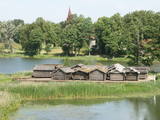 |
The Lake Castle of Āraiši is of pan-European importance. It is a reconstructed Lettigalian lake castle from the 9th or 10th century, and it is the only place in the Baltic States at which visitors can learn about how people lived more than 1,000 years ago. The castle offers various thematic events. |
|
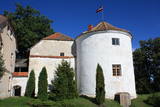 |
The first stone castle in Alsunga was built in 1372, starting with the central part of the southern wing. The authorised representative of the Livonian Order, who was subject to a higher-ranking official in Kuldīga, lived here. The guard towers and other parts of the castle were gradually added between the 15th and the 18th century. The Baroque castle with its two towers is quite impressive. The castle is unique in and outside of Latvia in that it is one of the rare Medieval castles to have survived to the present day in part, but in its original historical appearance. The castle offers an exhibition about its history. Visitors can look at a Suiti kitchen, write a letter with a fountain pen in Barbara’s boudoir, or celebrate a special event in the romantic venue of the castle’s round tower. Renovation of the castle began in 2018, and it is closed to visitors. Still, you can look at its exterior and tour its garden. |
|
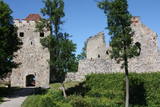 |
Exploring of Sigulda can be started with a visit to Sigulda castle ruins. The construction of the castle was begun by the Knights of the Sword Order in 1207, but in 1236 it was rebuilt for the needs of the Livonian Order. Sigulda castle suffered much from the wars in the second half of the 16th century and in the beginning of 17th century. During the Northern War, it is burned down and is no more restored. Today south-western building of the convent and the tower of the main gate, behind which is the inner forefront of the castle with open air stage, which offers impressive views over the Gauja valley. Currently the reconstruction of castle ruins is in progress. Construction of New castle (owner - Prince Kropotkin) in the South of the Sigulda took place from the 1878 until 1881. From 1923 - 1940 the building was the Palace of Writers, but during the Soviet years - Cardiology sanatorium. Since 2003 Sigulda district council is located there. The manor complex includes wooden house (middle of 19th century), which was Kropotkin's family home, barn (turn of the 18th - 19th century), gardener's house (19th century) and a stone fencing (19th century.) If we make our way from New Castle in a north-eastern direction, after almost 2 km we will reach Vejupite ravine. There you can see the shallow (3.6 m) but high (6.1 m) in Peter's Cave and deep Pucu ravine with Krauklupite. At the conjunction of ravines of both streams rises a Satezele hill fort (plateau 90 x 75 m), where in the beginning of 13th century was the oak castle of Liv land chief (eldest) - Dabrelis. Near can be found Krauklu gorge - ravine of Vejupite left bank, with 11 m high sandstone walls and 5.2 m deep Krauklu cave. At the conjunction of Vejupite ravine and Gauja valley columns Paradise (Gleznotaju) Hill - a very picturesque place, painted and photographed since old times! The Paradise Hill can be reached with a electric vehicle. In the west part of Sigulda is located Ferris wheel (works during the summer) and Air cableway (streetcar) - the only this type of vehicle in Baltics (built in the 1969). Its self-supporting cable extends in 1060 m length and without any support joins the Gauja River valley banks between Sigulda and Krimulda ~ 40 m above Gauja River. Here you can enjoy excellent views! In the south-western part of Sigulda one can walk to mighty Beites precipice, which is split by the deep ravine of stream. On the west side of the ravine lies Keizarskats, which is located ~ 67 m above the Gauja level and offers good views of Krimulda and Turaida castle. Sight place was arranged here already in the 1862 when Russian Tsar Alexander II visited Sigulda. In the eastern part of the ravine wooden Keizarkrēsls (Emperor Stool) is located. |
|
 |
The house is on the eastern shore of Lake Lubāns with a wonderful view of Latvia’s largest lake. The owners prepare dishes from local freshwater fish, using old recipes and ones that they have developed themselves. "Zvejnieki" is the participant of Latgalian culinary heritage. Latvian cuisine: Porridge with homemade jam, fish soup, bream or pike cakes, smoked carp, sautéed wild duck, sautéed elk, wild berries with milk. Special foods: Oven-baked pike-perch with potatoes or vegetables. |
|
 |
A large paddock which is freely accessible for children and their parents offers contacts with goats, pigs, fowl and other animals, including rabbits. During the season, the owner offers eggs for sale. |
|
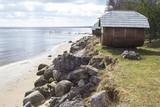 |
This is an ancient Liv village, known as Mustanumm is the last village in the south-easterly direction, and during the mid-20th century, just a few Livonians lived there. Of 307 inhabitants in 1935, only 15 were Livonians. At the beginning of the 19th century, there were six farms and a lagoon here, but at the end of the century there were 63 farms. The valley of the Baķupīte River and the sea had remnants of pilings that provided evidence about a Medieval port. Legends say that the sea robber Trommel had a castle on the left bank of the river during the 14th century. Sailing ships were once built in the region, as well. Two locations of cultural and historical importance in Melnsils are the ancient cult location that is the Baķi castle hill, and the castle hill of a sea pirate Trommel. |
|
 |
The café is along the Rīga-Ventspils highway (A10). A summer terrace is available during the season. Latvian cuisine: Beef tongue salad, chilled soup, stock with dumplings, “little farmer,” pork ribs, potato pancakes and crepes, whipped fool. Special foods: Kharcho a la “Pie Jānis”. |
|
 |
Apmeklētāju centrā var iegūt noderīgu informāciju un iepazīt ekspozīciju par Karulas augstienes veidošanās vēsturi, ezeru iemītniekiem un šejienes novada kultūrvēsturiskajām tradīcijām. Apmeklētāju grupas semināru zālē var noskatīties izzinošu prezentāciju. |
|
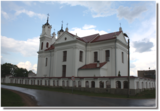 |
The Dviete Catholic Church is in the centre of the small village of Dviete. The white church can be seen from a distance. The first wooden church was built here in 1775 by the owner of the local estate, Count J.K. Wischling. Later the church was dismantled and brought the Zarinki cemetery. The Neo-Baroque Catholic church that is seen today has two towers, and its construction was financed by Count Kazimir Plater-Sieberg. The church was destroyed during World War I, and until it was rebuilt and consecrated, the granary of the Dviete Estate magazine, with its ridged roof, was used as a prayer house. It is on the side of the Dviete-Bebrene road and has recently been restored. In 1940, a stone fence was installed around the church with a tiled roof, and a building for the congregation was built in the 1970s. The church features a particularly ornate sacral Baroque interior, which is seen as the most ornate interior of its type in the former Daugavpils District. |
|
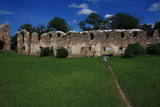 |
On the right bank of the Bērze River and in the western part of Dobele, the castle hill and its fortified forecastle were occupied between the 10th and 13th centuries, with an ancient town at its foot (currently the square between Tērvetes Street and the Liepāja highway). As was common, the Livonian Order used this ancient Semigallian castle hill to build a brick castle between 1335 and 1347. The castle was sacked during the 18th century, and its fairly impressive and beautiful ruins have been conserved. A viewing platform is part of the charm. |
|
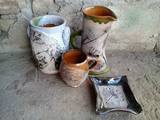 |
The ceramicist works in the household building of the Durbe Castle. You can watch her at work, try your hand at ceramics work, order artworks and purchase clay souvenirs. You can also tour the Durbe Castle complex, which is undergoing renovations at this time (2013). |
|
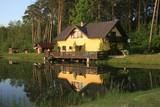 |
Recreation place "Kaupēna mill" is located near Tērvete, Zemgale region. In the pension there is hall for celebrations, there is a garden with grill. Free private parking is available for guests. The kitchenette is fully equipped with crockery and cutlery, and there is a microwave. Turkish bath and terrace. The guest house has 15 beds for overnight stays. Guests are also offered a holiday house "Paradise House". It is a fully equipped family house with kitchenette and 4 beds, pond view, barbecue and gazebo. Quality well / spring drinking water. "Egļu namiņš" - the house has 5 beds, anteroom, terrace. Barbecue with terrace, next to the pond, WC, showers. We also offer 3 camping houses. 4 beds in each cottage. Toilets and showers are shared. |
|
 |
The farm is located near Sangaste rukikula, amidst wild nature. At the farm you can enjoy delicious food, catch fish, go to the sauna, and spend the night. Both lovers of active recreation and people simply looking for a pleasant way to spend time will find suitable activities. |
|


