
| No | Name | Description |
|---|---|---|
 |
The cafe is situated in the centre of Jekabpils city, not far from the river Daugava. They offer rooms for banquets and celebrations,as well as celebration organization services. Working hours Mon-Thu: 10.00-22.30; Fri-Sat: 10.00-03.30; Sun 11.00 – 22.30 |
|
.JPG?size=160) |
This park was established mostly to protect a wide range of cultural and historical objects such as the Trakai lake castle, the ancient Trakai cloister, the Užutrakai castle, the Bražole castle hill, the heritage of ancient local tribes, etc.
|
|
 |
Atrodas Vecpiebalgas dienviddaļā pie Inešu ceļa. No sarkanajiem ķieģeļiem būvētā ēka uzcelta 1887. g. par vietējo iedzīvotāju saziedotajiem līdzekļiem. Vairāk nekā simts gadus šī ir vieta, kur vecpiebaldzēni pulcējas uz nozīmīgiem notikumiem, svētkiem, uzturot novada kultūras mantojumu. Celtni uzskata par vienu no spilgtākajiem Latvijas lauku arhitektūras pieminekļiem. Tai blakus uzstādīts piemineklis brāļiem Kaudzītēm. |
|
 2 days
|
This route is best for active hikers who want to travel down the valley of the mightiest river in the Baltic States to see lovely landscapes and feel powerful emotions. The route begins in Sigulda, which has been known as the Switzerland of Vidzeme and offers some of the loveliest views in Latvia. The route crosses the deep valleys of several Gauja River territory, offering a look at shores that are known at the Baltic level for their mighty Devonian cliffs. The nature trails in Līgatne are the only place in Latvia to see forestland that is close to natural circumstances, with forest animals living in large fenced areas so that they can be seen. There are also animals and tracks of their activities out in the wild as you walk down the forest and other trails of the Gauja National Park. Route information from Latvijas Lauku forums |
|
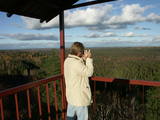 |
The viewing tower is in the southern part of the reserve, along the Ļaudona-Mārciena road and on the Madona-Trepe embankment. Here you can view a very wide territory all the way to the Vidzeme highlands, including Gaiziņkalns Hill if the weather is clear. At the foot of the tower you will see the lakes known as Small and Great Lake Plencis. |
|
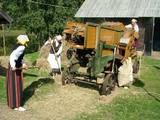 |
The 11 buildings of the museum feature farm equipment, horse-related equipment, several dozen internal combustion motors, as well as tools used by craftspeople and farmers during Latvia’s first period of independence. The annual harvest festival brings together as many as 2,000 visitors. A harvest festival features special porridge. Groups can take part in a bread programme, watching the production of bread from dough to loaf. |
|
 |
The café is in the centre of Lielvārde and offers a full feeding service, including breakfast, dinner, supper. Latvian cuisine: Cold soup, fresh cabbage soup, baked carp or catfish, steak haché, grey peas with bacon, pancakes. |
|
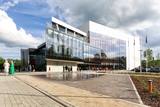 |
GORS, The Embassy of Latgale is located in the heart of Latgale region – Rezekne city. It is a place where the story of Latgale is both created and told. Cultural heritage and ancient values, traditions and creation, the language and events, the most significant global trends, art, culture, dance and songs converge here. A centre of culture, concert halls, film theatre, a place of residence for artists, an exhibition space for art, a restaurant for the enjoyment of life, a place for experiments with all the senses. |
|
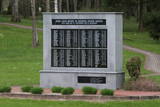 |
Late in September 1944, during World War II, the village of More was witness to some of the bloodiest and most merciless battles in Latvia – only those in the so-called “cauldron of Kurzeme” were worse. Members of the Latvian Legion who were fighting on the German side prevented the ability of the Red Army to break through to Rīga, and they also prevented the encirclement of the German military force. The result of the battle was enormously important to the more than 100,000 civilians who took the opportunity to become refugees and escape the Soviet repressions that were not far in the future. Commemorative events are held in the park each September, bringing together eyewitnesses to the battles and other. There’s a memorial wall with the engraved names of members of the Latvian Legion whose names are known, as well as a stone cross to commemorate unknown soldiers. Two kilometres to the East of the park is a museum, outside which is a Soviet army tank.
|
|
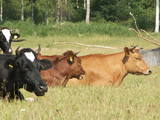 |
The farm grows peas, grits and beans, and it breeds cattle. Visitors can take a tour to learn about biodynamic agricultural techniques. |
|
 2 days
|
Путешествие для гурманов и любителей путешествий, в котором будет возможность попробовать не только традиционные курземские блюда, как скландраусис и копчушка, но и блины, приготовленные из свежемолотой муки, крестьянский сыр, домашнее вино и другие дары села. Кроме дегустации даров села, будет возможность пройтись по природным тропам и познакомиться с культурно-историческим наследием. Информация о маршруте от Latvijas Lauku forums |
|
 3 days
|
This is an easy 3-day route, suitable for any traveller ready to take some steps outside the capital and get into the woods. You will start the tour by taking a train from Rīga to Ķemeri. The walk will start in the Ķemeri resort park leading to the legendary sulphur spring and continue to the “Forest House” – the visitor’s centre of the Ķemeri National Park. The park is established for the protection of mainly wetlands – the shallow coast of the Gulf of Riga, the overgrown seaside lakes, the vast marshlands, mires (forests) and flood plans. Besides, there is the wooden plank Melnalkšņu swamp forest trail. Next, the Forest Trail takes one to the Lake Sloka, a shallow coastal lake with rich aquatic plants, sulphur springs and important migratory bird rest areas. On the banks of it, there is a 7 m high floating bird-watching tower. Further, the Forest Trail runs to the Gulf of Riga in the small fishermen village of Bigauņciems, where it joins with the Baltic Coastal Hiking Route (E9 European long distance path). From there on, the trail runs along the coast direction Jūrmala – the most popular resort town in Latvia with the widest sandy beaches. The tour ends in Ragakāpa Nature Park, which is established to preserve the dunes covered in old pine forests and natural diversity of the seaside. The Jūrmala Open-Air Museum is a place to get to know a traditional local fishermen’s farmstead. |
|
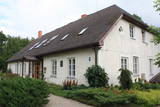 |
All that remains today is the governor’s house in which the Latvian author Rūdolfs Blaumanis (1863-1908) lived from 1885 until 1887, and a stable built of fieldstones. The Central Daugava Forestry Centre of the Latvian State Forests company is located in the building. The stone gates of the
|
|
 |
Pajumäe is a small, nice organic farm located in the green Mulgimaa, and produces various dairy products. You will have the opportunity to look at all stages of milk production - from cows on the pastures to dairy processing. |
|
 |
Kadarbiku estate is located in Harju, in the municipality Saue, in the village Tula (Tuula). Agriculture started to work here in 1989, while the family company Kadarbiku Köögivili OÜ was established in 2004. Kadarbik farms specializes in growing and processing vegetables. The farm uses 500 hectares of land, which grows carrots, cabbage, beets and various summer crops. They also make juices and smoothies. |
|
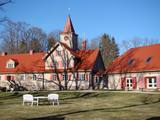 |
Atrodamas ziņas, ka Rankas muižas pils celta 18. gs. vidū un 19. gs. vidū (nozīmīgi - 1836.-1866.g.) pārbūvēta, kad uzceltas pārējās saimniecības ēkas. 20. gs. šeit atradās dažādas ar izglītību saistītas iestādes: 30. gados - Rankas mājturības skola, pēc 2. pasaules kara - Rankas lauksaimniecības skola. Muižas pils cieta 80. – 90. gadu mijā divu ugunsgrēku laikā. Daļēji saglabājušās kalpu mājas, kūtis, klētis, dārznieka māja, “brūzis” u.c. ēkas. Kopš 2013. gada ieguldīts milzīgs darbs, lai Rankas muižas kompleksu atjaunotu un izveidotu par sakārtotu, tīru vidi. Teritorijā notiek atjaunošanas darbi muižas ēkām. 2003. gadā par Rankas muiža kompleksa īpašniekiem kļuva Ābolu ģimene un, pateicoties viņiem, Rankas muižas komplekss pamazām atdzimst. Ekskursija pa Rankas muižu iekļauj visu telpu apskati: recepciju, antīko automašīnu un priekšmetu izstādi, mākslas galeriju, bibliotēku un Romas katoļu kapelu, kā arī muižas 8,4 hektārus plašo parku ar trīs dīķiem. |
|
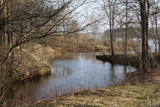 |
In the small town of Pļaviņas, at the place where the Skanstupīte River flows into the Daugava (Friendship Park), there are the remnants of a set of small and low fortifications known as the Swedish bastions. This was a place of military and political importance, because here was the place where the boundaries of Vidzeme (under Swedish rule), Latgale (under Polish rule), and the Duchy of Kurzeme (on the opposite side of the river) all came together. In 1625, the Swedes were defeated by the Poles here, and Swedish King Gustav Adolf almost lost his life. Medieval bastions of this kind can be seen in some other places of Latvia, as well.
|
|
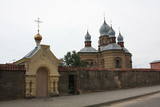 |
The Orthodox Church and Cloister of the Holy Spirit and the Orthodox Church of St Nicholas the Miracle Maker are found at Brīvības Street 200 in Jēkabpils. The Byzantine Church of the Holy Spirit was built between 1853 and 1886 to replace a wooden church which had been built in the latter half of the 17th century and burned down in 1773. Duke Jacob of the Duchy of Courland supplied the timber for the old church. The cloister was alongside the church. On Second Easter in 1903, the church caught on fire, and the only icon rescued was a painting of the Virgin Mary. The church suffered damage during World War I and was restored in 1933. Alongside the Church of the Holy Spirit is the oldest church in Jēkabpils – the oldest stone church in the city, which is named after St Nicholas the Miracle Maker and was erected in 1774. This is a very small church, just 17 x 19.5 m. The cloister of the Church of the Holy Spirit operates the church today, and it can be viewed from the inside. The stone fence that surrounds the complex is massive, but atypical of urban environments in Latvia.
|
|
 |
Atrodas Valmieras – Ainažu autoceļa (P 16) malā starp Matīšiem un Aloju. Iekārtota vecajā un atjaunotajā dzirnavu ēkā. Nedēļas nogalēs piedāvā izklaides pasākumus, klāj galdus un īrē telpas svinībām. |
|
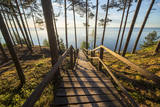 |
The trail reveals one of the rare bluffs of the Gulf of Riga – the Ēvaži Bluff (up to 15m high, a beautiful scenery opens from its watching platform) and the seashore forests. The trail starts from the main road and crosses a biotope “Wooded dunes of the coast” (according to Habitats Directive, Annex II), which is frequently observed by the sea. One can climb down the stairs to an extraordinary beach with narrow seashore and Black Alders growing almost in the sea. There are occasional puddles which make shelter for Natterjack Toad (Bufo calamita), a protected amphibian. Deeper pools are inhabited by three-spined stickleback (Gasterosteus aculeatus), they are food for fish-eating birds. In the second half of the summer, Common Shelduck (Tadorna tadorna) can be observed in the sea. About two kilometres to the South, there is Melnsils, one of the Liv fishing villages, famous for the stories about a channel which was once dug to drain coastal lakes into the sea, as well as about Trommel, the chief of robbers. The trail is in the Slītere National Park. |
|


