
| No | Name | Description |
|---|---|---|
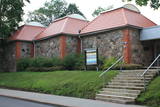 |
This is one of the oldest museums in Vidzeme and features interesting discoveries from the Middle Ages and the Iron Age, some of which were found around Lake Lubāna. Employees organise thematic exhibitions related to the culture and history of the administrative district, as well as art exhibitions. The museum is in the historical buildings of the former Birži Estate. |
|
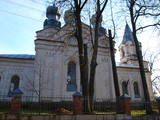 |
The church is on the highest part of the banks of the Marku river, and it is behind the Piedruja border control point. A paved street leads to the church, and it is thought that it was built in the early 20th century by local farmers, who were required to bring stones for the street when they attended worship services. The church has six cupolas and is seen as one of the most beautiful ones in the Krāslava Administrative District. The building was erected between 1883 and 1885 to replace an old 17th century wooden church. It corresponds to the architectural form of the Old Russian town of Vladimir and the Byzantine style. It is said that at one time the church had as many as 1,000 members. |
|
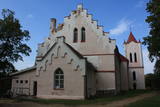 |
The Lutheran Church of St John in Aizpute is on Beidas Hill, which is near the steep river valley of the Tebra River and the Dzirnavdīķis pond which the river has created. The church is on an ancient Courlandian castle hill. The current Gothic appearance of the church dates back to 1860, when it was rebuilt. The tower dates back to 1730. This is one of the oldest churches in Kurzeme, and it features an interesting interior with many artistic monuments. |
|
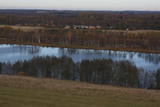 |
This is the most visually impressive drumlin field in the Baltic States, and it is close to the village of Tabivere. The drumlins were established by ice glaciers, and they point in the direction in which the ice moved long ago. In terms of their appearance, the drumlins resemble loaf-shaped hillocks. From their “backs,” there are lovely views of the local landscape and the lakes that are around the area. The visitor centre is in the village of Äksi.
|
|
 |
Jõeniidu is a small, lovely family farm offering accommodation and meals from vegetables grown on its farm and goat's milk. |
|
 |
Beķereja, veikals un kafejnīca atrodas Vaiņodes centrā. Saimniece cep pīrāgus, cepumus un plātsmaizes Latgales meistara mūrētā maizes krāsnī, gatavo tradicionāli latviskus ēdienus, klāj svētku galdus. Beķerejas veikalā var iegādāties ceptuves gardumus un uzzināt par apkaimes interesantākajām vietām. Par dienas aktuālo piedāvājumu beķerejas saimniece ziņo facebook.com/ineta.zveja . |
|
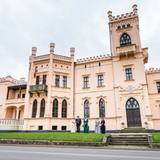 |
The castle was commissioned by Baron Alexander von Fittinghof and built between 1859 and 1863 in the late Tudor Neo-Gothic style. It is one of the most important monuments to this style in Latvia and has an ornate limestone façade. The 7th Sigulda Infantry Brigade was housed in the castle from 1921 until 1940. Today it is home to the Alūksne Museum with a permanent exhibition and an “environmental labyrinth.” One of the most unusual exhibits is a set of fluorescent minerals that can be viewed under lights with various spectrums. |
|
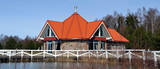 |
Pirts noma, izmitināšana, ēdināšana, banketu zāles noma, internets, makšķerēšana, volejbola laukums. |
|
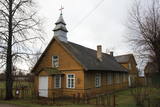 |
Atrodas Rucavas galvenās ielas malā, netālu no centra.Rucavas draudzi dibināja 1871. gadā, bet izmēros nelielo dievnamu uzcēla 1888. gadā. |
|
 |
A restaurant and a three-star hotel that is located in the former beer brewery of Kalnamuiža, in the valley of the River Abuls, in the territory of Smiltene Park. The restaurant offers Latvian cuisine and caters for seminars. |
|
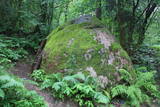 |
200 m attālumā no Gulbenes – Madonas ceļa mežainā nogāzē iegūlis 2,4 m augstais akmens. Tā lēzenajā virsmā iekalta ap metru gara, 0,3 m plata un ap 4 cm dziļa iedobe, bet akmens šķautnē - pakāpieni. Uzskata, ka šis ir sens kultakmens, pie kura ziedots. Lai nokļūtu līdz akmenim, vasaras otrajā pusē var nākties brist pa garu zāli. |
|
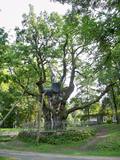 |
This park dates back to the mid-18th century and is to the south of Lake Stelmuže. There are winding trails on all sides of the hillock that lead to the Christ the King Church, with linden, maple, oak, birch, fir, elm and pine trees. At the foot of the hillock is the Laime stream, and visitors are welcome to stroll along the alley of oak trees. The oldest and fattest oak tree in Lithuania is one of the oldest ones in Europe. It is though that it is 1,500 to 2,000 ears old, and its record-setting diameter is 3.5 metres (eight or nine people linking hands are needed to encircle it). The tree is 23 m high. |
|
 3 days
|
This part of the Forest Trail gives an opportunity to see Setomaa or “the Land of Setos” which is inhabited by Setos – an ethnographic group with specific ancient traditions and a unique language dialect. Forest Trail hikers can visit the traditional Setos homestead and enjoy Setos cuisine. The forests of the region are especially charming in early autumn, when the ground is coloured lilac by the blooming heather. There is a good chance to pick wild mushrooms and berries. One of the most beautiful sections of this trail in Setomaa leads along the River Piusa, where the river is surrounded by sandstone outcrops. You will also visit the Piusa caves. The tour will end in Värska resort – with its sanatorium and SPA, which use the strengths of local nature: mineral water and lake mud. Värska mineral water is well known in Estonia and elsewhere. |
|
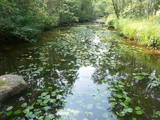 |
This territory protects a lime outcrop found on the shores of the lower reaches of the Zaņa River. There is a path for active hikers which begins at the Zaņa mill (1864, rebuilt 1890, shut down 1960). The path weaves its way along the steep shores of the little river, heading toward its mouth.
|
|
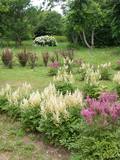 |
The park was founded by the gardener Arvīds Janitens. Professor Raimonds Cinovskis has said that Arvīds is just amazing, because he alone did work that would usually be done by a big group of people. This is one of the most popular tourism destinations of its kind in Latvia.
|
|
 |
The café is at the edge of the Cēsis-Valmiera road. It is in a log building with a Latvian interior design. Vegetables and fruits are bought from local farmers. Latvian cuisine: Crepes, potato pancakes, cold soup, wild mushroom soup, sorrel soup according to a recipe from granny, porridge, grey peas, baked herring, filet of cod, beef sautéed in Brenguļi beer, sautéed rabbit, stacked rye bread. Special foods: "Glendeloka". |
|
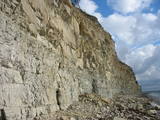 |
The highest and most beautiful wall of cliffs on Saaremaa Island (up to 21 m high), stretching along some 3 km. During strong winds from the W or NW, a part of the cliff is washed by the waves of the sea. The open face of the cliff has limestone, marls and dolomite, and there is a wealth of fossils at the base of the cliff – corals, stromatoporids, etc.
|
|
 |
This farm is engaged in dairy farming and rearing chickens; the obtained eggs and milk is processed in its very own dairy plant. You can taste various dairy products, including ice-cream in the farm, and also get to know the entire production process. You can also order meals for a picnic and apply for a dairy product masterclass. |
|
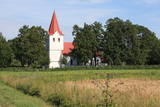 |
When you drive down the Nereta-Ilūkste road, the church, which was built in 1805 and restored in 1888, can be seen from a distance. The altar, pulpit and organ prospectus are all original. German soldiers who fell during World War I are buried outside of the church. Two plaques on the western wall of the building honour residents of the Laši Parish who died during the First World War, as well as those local residents who suffered Soviet repressions. |
|
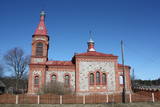 |
During restorations of the tower of the Kolka Lutheran church in the 1990s, a document was found which spoke to the conversion of many Livs to the Orthodox faith. The document was placed in the tower in 1885, when the church was being constructed, and it says that the decision by Livs to join the Orthodox church was based not on faith, "but instead as a resource for accessing advantages in relation to land." The Orthodox congregation purchased land from a local aristocrat in 1885, and in 1990, a church, manse and school were built on the land. All three buildings have survived to the present day. The church has its own congregation, and worship services are held once a month. There are news to show that Kolka is the only Liv shoreline village in which an Orthodox church was built during the 1890s. The church's bell dates back to 1936. During the Soviet era, the church was used as a mortuary, but today its original functions have been restored to it. |
|


