
| No | Name | Description |
|---|---|---|
 5 days
|
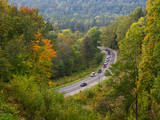
The Baltic Way was a unique demonstration at the Baltic, European and global level. Never before had the residents of three countries joined hands in a single chain to link the capital cities of the three nations – Vilnius, Rīga and Tallinn. The historical event occurred on the evening of August 23, 1989 and involved some two million people to recall events that had happened 50 years before – the conclusion of the Molotov-Ribbentrop Pact that allowed the two superpowers of the day, Germany and the USSR, to divide up spheres of influence in Europe before the new world war. The Baltic States lost their independence as a result of the pact. The chain of demonstrators was some 600 km long, marking out the Baltic Way from Bauska to Rīga and then on to Sigulda, Cēsis, Valmiera and Rūjiena. The route was known and used in the 14th and 15th century, or even earlier. Testimony to this is given by the mighty castle hill at Mežotne and the ancient port alongside it. The Bauska Castle was an important fort during the age of Livonia and, later, one of the residencies of the dukes of Courland. Sigulda was well fortified on the banks of the Gauja River, with three stone castles nearby. It was also a health spa. Līgatne is important in industrial terms because of the paper factory that is there. Āraiši is another ancient trade crossroad with a lake castle, ancient church, castle ruins and a famous windmill. Cēsis is one of the historical diamonds of Vidzeme with its old town, the old and new castle, and the majestic views of the ancient Gauja River valley at the cliffs of Ērgļi. Valmiera boasts of his St Simon’s Church, the Dāliņš stadium, its own theatre and the youthfulness of its own university college. In Rūjiena, there is a monument to the Bugler of Tālava, which was carved by Kārlis Zemdega and installed in 1937 to commemorate the liberation of Rūjiena. The monument survived all of the years after the war. The engraving, “the bugler had to die, but the Latvians heard his call,” is very much in line with the Baltic Way on August 23, 1989. |
|
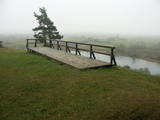 |
In Dagda, on the side of Daugavpils Street, there is a forested hillock that is the Lubāne castle hill. On the upper part of its southern side, there’s a viewing area which offers a view of the small Lake Lubenenis, the eastern part of Dagda, and the white tower of the local Catholic church. Legend has it that treasure is buried here.
|
|
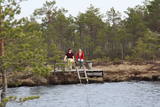 |
1,2 km gara taka, kas pa purvainu mežu aizved līdz Ērdi purvam (Öördi raba) un tā austrumu daļā esošajam Ērdi ezeram (Öördi järv), pie kura izveidota atpūtas un peldvieta. |
|
 |
Rancho Riisa is located in Soomaa National Park (Soomaa Rahvuspark), where there are a lot of fruits of the forest to be used in cooking. After a stroll through the national park and a refreshing sauna, the hosts will offer the best meal in Soomaa traditions. |
|
 7 days
|
The tour will guide you through the Latvia using its main tastes. Out of Riga you visit a farm which specialises in grain growing and bakes great cracknels and makes regional dishes using whole-meal grains. Afterwards there is a visit to Bauska Castle locates between two rivers and Bauska Brewery which takes pride in their produce free of preservatives. Then there is a visit to ethnographic museum at Ausekli Mill where you could try to make your own traditional piragi (bacon pasties). Further on the route cross the river Daugava and there is a stop at home -made ice-cream cafe to try savoury ice- cream salads. A ride on Viking ship around the legendary Koknese castle ruins and a visit to Cesvaine Castle is next. Then you have a visit to the goats farm and cheese tasting which is followed by cows cheese tasting at nearby production. Overnight is at Vecgulbene Manor with spa facilities. Next day you have a chance to make your own traditional black bread accompanied with humorous stories and instructions by the baker-lady. While the bread is baking there is another cheese tasting and visit to producer at Trikata. Then visit to Valmiermuiža Brewery which produces upmarket beer and promotes Latvian beer drinking tradition as a component in every celebration. Charming provincial town of Cesis with mighty medieval castle ruins, narrow ancient streets and home of famous Cesis brewery next. Historic brewery building there is nowadays only a tourism object but production is moved into big, modern building. It is the second largest beer producer in Latvia nowadays. Visit to the Cesis Brewery followed by excursion at Araisi windmill and having a traditional mill's porridge there. Then excursion at the Turaida Castle before returning to Riga. |
|
 |
Rankas Dairy was established in 1996 and manufactured some 80 dairy processing products, including cheese, cottage cheese, cream, fermented dairy products, desserts, etc. This is one of five companies in Latvia that is allowed to manufacture one of the EU’s guaranteed traditional characteristics product, “Summer Solstice” cheese. The products are available at the “Rīmaļnieks” store that is alongside the dairy. |
|
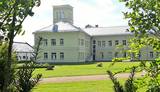 |
The Rietavas Park was once the largest landscape park in Lithuania. It was established between 1848 and 1855 in a naturally cleaned forest and reconstructed in 1904 and 1905. This is a very nice park with local bushes and trees, as well as several foreign plants. Various alleys of trees and fragments of the hedges have been preserved along with the white gate, the red gate and a guard's hut. The park has a complex system of bodies of water, including a few ponds, a curvy river and an island that is surrounded by the old river. |
|
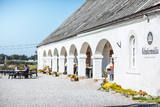 |
Located in the northern part of Valmiera, the Valmiermuiža Estate mansion (Neo-Baroque Style) was built between 1764 and 1771 by Prince August Friedrich of Schleswig, Holstein and Soderburg. Over the course of time it has been owned by other people. According to modern evidence, the mansion was a one-story building with a Baroque tower and a two-story addition in the early 20th century, which made it appropriate as a summer home and hunting lodge. The building burned down in 1918. Two years later, Valmiermuiža became a prison camp for captured soldiers. Later the addition to the mansion was restored and used as an elementary school. In 1936, the building became a prison, and it was once again a prison camp for captured soldiers during World War II. Later the building burned down again, and the ruins were removed. Still surviving is the Valmiermuiža tower, with ceiling paintings that are a cultural monument, as is the surrounding park. The Valmiermuiža brewery is alongside the historical monument, thus providing second wind for the whole region. |
|
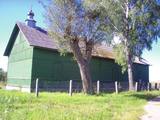 |
Kampišķi Old-Believers Prayer House was reconstructed in 1931
by architect V. Šervinskis. The building is very high and spacious; has two cells and a rectangular belltower with the cross on the top.
|
|
 |
This is a cemetery that was originated in the Middle Ages and used until the beginning of the 20th century. A mossy stone fence surrounds the cemetery. Interesting elements in the cemetery include the grave of Heinrihs Jakobsons (1832-1911), who was the first schoolteacher in Mazirbe (the old metal cross is to the left of the main gate), a pine tree of national importance and has a circumference of 3.17 metres (during the Soviet Union someone drilled a hole in the trunk of the tree to access honey), the grave of Niks Freimanis (1845-1908), who is said to have been the prototype for a character in a story and play by Marģers Zariņš, and the Werewolf Grave, which relates to countless ghost stories, including the claim that it is the only known gravesite of a werewolf in Latvia. |
|
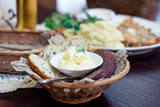 |
The “Pilsbergu krogs” guesthouse and café is 300 metres from the steep shores of Jūrkalne. It is in an historical building that has been restored. The Restaurant is open for the whole year. Foods from European cuisine as well as local dishes like local fish are served. Catering for tourist groups, banquet hall for up to 30 persons, restaurant hall for 25 persons and summer terrace for 30 persons. |
|
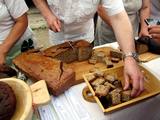 |
"Cēsu maize" is located in the very heart of Cēsis, Riga street 18. Bakery makes bread from organic cultivated grains in Latvia and with natural grass. The offer includes products such as: Spelled whole wheat bread, whole wheat bread with sun-dried tomatoes and olives and spelled sweet bread. |
|
 |
In the studio it is possible to buy or order different craftsmanship items, as well as to learn about craftsmanship process. The studio specializes in creating folk costumes, weaving and all sorts of handicrafts, creating jewellery, patchwork, sewing and silk painting. It is possible to see the crafts’ exhibition and buy souvenirs. |
|
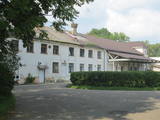 |
The first Mālpils dairy began operations in 1923 and manufactured butter and cheese. During the 1970s, the first soft and unfermented cheese in Latvia, “Mālpils Cheese” was produced here. Apply in advance for a tour of the company and a tasting of its products. You can purchase the products from the company’s warehouse. |
|
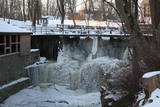 |
Atrodas pie Kuldīgas pils dzirnavām, kur straujā Alekšupīte pirms ietekas Ventā izgrauzusi dziļu „kanjonu” dolomītā. Šo dēvē par vienu no augstākajiem Latvijas ūdenskritumiem (4,15 m). 17. gs. ūdenskritumu ievērojami pārveidoja – paaugstināja un nostiprināja, lai Alekšupītes straumi izmantotu dzirnavu darbināšanai. Upītes kreisais krasts ir labiekārtots. |
|
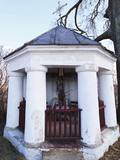 |
The Crucifix of Kurpinīki is known also as the place where Janis Streičs
shot some scenes of the movie „The Child of a Man”. Long time ago this crucifix
was situated in the courtyard of writer’s grandfather Donat Klidzejs in the USA.
|
|
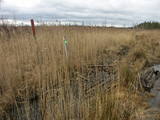 |
The part of the swamp which has mosses, not peat, is important for plover-type birds during nesting season, and goose-type birds during migration.
|
|
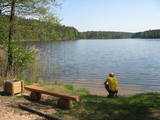 |
The aim of this territory is to regulate the natural and cultural landscapes of the upper reaches of the Daugava River valley, where there is a great deal of biological diversity. Nature trails have been installed in the park, as have bicycle routes. The river is good for boating in this area, too. The Curves of the Daugava nature park is part of the territory (see “Nature Parks”). |
|
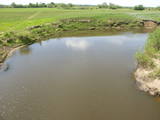 |
The Dviete Wetlands Nature Park contains a unique natural territory – the ancient Dviete River valley with the Lake Skuķi and the Lake Dviete and the surrounding wetland meadows. During flooding season, these wetlands store up waters from the Daugava River. They absorb a lot of floodwater at first and then slowly return it, thus reducing the level of floods in the Daugava River valley. This process is the reason for the unique ecosystem which exists in this area. It is an important location for plants and birds both during migration and nesting season. The river valley is important for birds during migration and nesting. In 2006, wild cows were released into the meadows. There is also work to improve the tourist infrastructure in the area. |
|
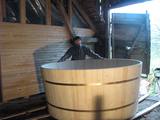 |
The craftsman represents the fifth generation of the oldest dynasty of Latvian barrel makers. The family began such work in the early 19th century, and he is continuing on with traditions related to barrels that are made of oak and ash. He will talk about the various aspects of making a barrel, and you will be able to watch him at work. The craftsman produces barrels, wooden tubs, scoops for saunas, etc. You can order and purchase these items. |
|


