
| No | Name | Description |
|---|---|---|
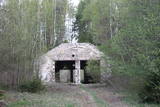 |
The Plāņciems missile base is in the forests of Bārta and is not easy to access. This special air defence facility is being dismantled for the purpose of obtaining building materials.
|
|
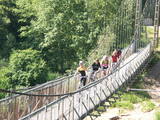 |
The Gauja National Park, established in 1973, was Latvia’s first national park, and it has a wealth of tradition in environmental protection and tourism. Indeed, the GNP is one of the most popular tourist destinations in Latvia. The main “artery” of the park is the ancient Gauja River valley, which was left behind when Ice Age glaciers receded. The valley is 95 kilometres long, with many tributaries that are also in deep ravines with massive sandstone cliffs from the Devonian period. The deepest part of the river valley is at Sigulda, where it is 85 metres deep. The territory has a great diversity of species – some 900 plant species in all. The Gauja is Latvia’s most popular river for water tourism, and many tourist accommodations are found along its shores. The Gauja National Park is one of the best-appointed protected territories in Latvia in terms of nature trails and tourism routes. Nature trails at Līgatne pass along paddocks of wild animals – the largest and most complete object of its kind in the Baltic States. The park also features cultural monuments of pan-Baltic importance – the Turaida Museum Reserve, the medieval old town of the city of Cēsis with its famous castle ruins and St John’s Church, the lake castle at Āraiši, etc. Visitors centres are found in Sigulda, along the Līgatne nature trails, and at the Zvārte rock. The administration of the GNP is building a new and modern visitors centre in Sigulda.
|
|
 |
The cave, which is 45 m deep and up to 5.5 m wide is found on the right bank of the Strīķupe river, by the Cēsis-Lenči road. The cave and its nearby sandstone cliff have suffered much damage from local visitors, which is why the administrators of the national park limited access to the surrounding territory a few years ago. You can no longer approach the cave. This is a positive example of who an important geological monument and a protected biotope can be protected. |
|
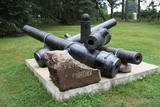 |
Dole Island is the largest river island in Latvia, and it is the site of the Dole baronial estate. The mansion of the estate was built in 1898 by the aristocratic family which owned the estate. Today the mansion is home to the Dole Museum with a rich exhibition which tells about the lives of people on the shores of the Daugava River. The adjoining park features ethnographic buildings, as well as lamprey and salmon spawning grounds. There are five unique cannons that were found in Salaspils when a new stadium was being built there. In 1910, a tsarist military camp was here, and a monument to Tsar Peter the Great was unveiled. One of the cannons is in the exhibition of the museum itself.
|
|
 |
A family restaurant, located next to the Melluži open-air stage in Jūrmala, 27 km from Riga. European and Latvian cuisine for all of the meals of the day, including soups of the day, salads, main courses, and a selection of desserts. All of this in a wonderfully cosy atmosphere. |
|
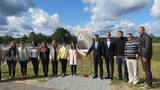 |
The memorial to the day when people in the Baltic States joined hands in an unbroken chain stretching from Tallinn through Rīga and on to Vilnius on August 23, 1989, is at the 25th kilometre of the Rīga-Bauska highway, near the little Ķekaviņa River. |
|
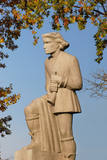 |
Another monument designed by Kārlis Zemdega, this one was installed in 1937 and was initially known as a monument to soldiers who liberated and fell in Rūjiena. The monument survived the Soviet era only because a statue of Lenin that was across the street was on a high pedestal and thus overshadowed the monument to the trumpeter of Talava. |
|
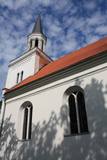 |
Atrodas Iecavas upes ielokā starp Rīgas un Sporta ielu. Baznīcas celtniecību uzsāka 1641. g. un pabeidza ap 1657. g. Ēka ievērojami cieta 2. Pasaules kara laikā. Pie baznīcas atrodas kapi, kuros apglabāti grāfu Pālenu dzimtas pārstāvji. To ziemeļaustrumu stūrī redzama Pālenu dzimtas kapliča. Baznīca ir it kā „sadalīta” divās daļās – vienā daļā notiek restaurācijas darbi, otrā izvietota bibliotēka. To ir vērts redzēt arī no iekšpuses. |
|
 |
Z/S “Paldaži” ir 19. gadsimta Vidzemes lauku sēta un bioloģiskā saimniecība Limbažu novadā, kas apzināti kopj un saglabā Latvijas vēsturisko un kultūras mantojumu, tai skaitā lībisko. Saimniecību vada Andrejs Kovaļovs, kurš attīsta aitkopību, biškopību, kokamatniecību un pieredzes tūrismu, radot iespēju viesiem iepazīt gan tradicionālo lauku dzīvi, gan mūsdienīgu bioloģisko saimniekošanu. Apmeklētājiem tiek piedāvāta īsa ekskursija, kuras laikā iespējams iepazīt Paldažu apkārtnes vēsturi, saimniecības stāstu, Paldažu dižosi un bišu dzīvi. Savukārt izvērstā ekskursijā iekļauts arī dravas apmeklējums, neliela vaska sveču liešanas darbnīca un atpūta ar karstiem vai aukstiem dzērieniem. No maija līdz oktobrim saimniecībā noteiktos datumos tiek piedāvātas vakariņas un pusdienas ar jēra gaļas ēdieniem. Maltītes iespējams baudīt tikai pēc iepriekšēja pieraksta. “Paldaži” piedāvā autentisku lauku pieredzi, kas apvieno dabas tuvumu, senās sētas vidi un mierīgu gaisotni. Šī ir vieta, kur iespējams sajust Vidzemes lauku raksturu, iepazīt bioloģiskās saimniekošanas principus un uzzināt vairāk par Paldažu vēsturisko mantojumu. |
|
 |
Jaanioja Farm is located in the heart of Lahemaa National Park. The farmstead features camping grounds, an outdoor kitchen, sauna and smithy. The farm organises creative camps, fairy tale games, celebrations of folk calendar holidays and handicraft workshops for all ages. Rag dolls, quilted and patchwork items and other crafts are on sale. |
|
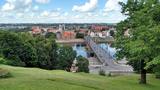 |
The second biggest city in Lithuania and from 1920 – 1939 - a temporary capital. The Old Town, The Town Hall (16th century), St. Peter and Pavil cathedral - basilica (15th century), Thunder building (15th century), Laisves alley, Ciurlionis Art and Devil Museum. |
|
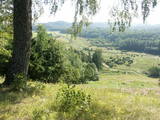 |
This territory was established so as to preserve the natural and cultural landscape of the most distinct part of the Alūksne highlands – a landscape which is made up of the highest hillocks in the area – Dēliņkalns Hill, Dieva Hill, Saules Hill, the Drusku castle hill, and the Kornetu-Peļļu sub-glacial river bed (one of the most significant terrain differences in Latvia). There are lakes, too – Lake Pilskalns, Lake Dzērve, Lake Ieva, Lake Raipals, etc. There are also significant biotopes – hillside and gully forests, various kinds of swamps and meadows, damp forests, etc., all with their own species of flora and fauna. There are nature trails and tracks for cross-country and downhill skiing in the area. There are three restricted natural areas in the territory – Korneti-Peļļi, the Avotu forest, and Dēliņkalns Hill. |
|
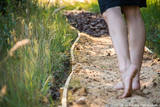 |
Enjoy nature with all of your senses in the Survilai village tourism farm, which is a Swiss village in the Jonavos district. Walk down paths barefoot! The paths are covered with pine cones, puddles, peat, clay, granite, smooth glass, pine needles, hay, an obstacle course, etc. The path is more than a kilometre long, and you will feel unbelievable and positive emotions, as well as an inflow of energy. |
|
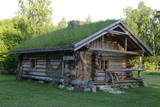 |
The ancient sauna house is a great place for rest and relaxation in Hiiumaa. The house is built of thick logs and has a sod roof. The house has a sauna. |
|
 |
Находится за Гробиньским водохранилищем на берегу реки Аланде (ул. Пиладжу, д. 3). Туристический клуб «Ога» с 1 мая 2013 года планирует здесь организацию разных связанных с жизнью викингов мероприятий, во время которых можно будет войти в образ викинга, отправиться в поход на корабле викингов (в соответствующей одежде) по реке Аланде, а также познакомиться с окрестностями, которые связаны с тематикой викингов. Рядом с поселением установлена деревянная фигура викинга с рогами (от коров, пасущихся на Витиньских лугах на берегу Лиепайского озера). |
|
 |
The farmstead grows apples, strawberries, black currants, red currants, etc., berries and fruits; there is a big selection of processed goods: natural juices, nectars and syrups. There are offered apple, strawberry, red currant, gooseberry, sea-buckthorn and chokeberry saplings; consultations are given for making out a commercial garden and taking care of it. Excursions around the commercially grown plants. |
|
 |
This was an island after the Rīga hydroelectric power plant created a reservoir, and before that it was a peninsula on the Left Bank of the Daugava. During World War I, there were massive battles between Latvian Riflemen and a much larger German army on Death Island. On December 25, 1916, the Germans used poisonous gas against the Latvian troops. In honour of this, the architect Eižens Laube designed a monument to fallen Latvian riflemen on the northern shore of Death Island. It was unveiled in 1924. Death Island can be reached by boat, and the trenches and graves there are of interest. There is a pier for boats on the north-western shore of the island, and nearby is a location for leisure. Some of the trenches and dugouts have recently been restored. The battles were described by Aleksandrs Grīns in his masterpiece, “Snowstorm of Souls.” |
|
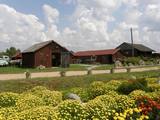 |
We offer a private collection of ancient tools, household items and technologies which we began to assemble in 2002. Right now we have more than 5,000 objects of cultural and historical objects on display, as well as a lovely garden with countless compositions of colourful flowers, fountains, an Eastern meditation bridge, ponds, a pergola, leafy areas, etc. The garden covers more than 2 ha, and it is located 1 km from Lazdukalns. |
|
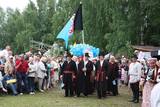 |
Mulgima or Mulgi is a cultural and historical region in the south of Estonia. The part of Viljandi county located south of the rivers Raudna and Tenasilma was considered to be region of Mulgimaa. In ancient times, Mulgi farmers were famous for their sharp minds and determination, which helped to buy land from German-Baltic nobles and become rich farmers. The icons of Mulgi culture - the dialect, the well-known men's long black jacket and the traditional Mulgi porridge - have survived to this day. |
|
 |
The Lojas farm in the Mazsalaca Administrative District is a mixed-use farm, including grain farming (wheat, barley, rye, rapeseed) and manufacturing of straw granules as litter for animals. The farm breeds beef cattle. |
|


