
| No | Name | Description |
|---|---|---|
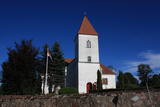 |
Built around 1625. For several centuries it was the main worship place for the Suiti community, supporting the community's spirituality and identity. In 1882 the church was expanded into the form of a cross that is seen today. Inside the church you can see work done by the Dutch wood carver Johann Mertens around 1715. The organ was built by F. Weisenborn in Jēkabpils in 1893, and the altar painting dates back to 1910. The bricked graveyard of the Schwerin dynasty is under the church. Contact it in advance if you wish to see its interior. |
|
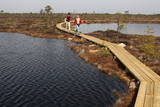 |
The word “Soomaa” means “land of the swamps” in Estonian. There are several major swamps in this area, along with rivers, lowland meadows, wetland forests, and other biotopes that are of key importance in terms of the diversity of species. Major floods occur here in the spring, which is known by locals as the “fifth season''. The fifth season is the best time to explore the landscape of Soomaa. |
|
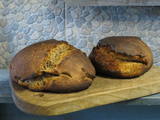 |
Sweet and sour rye bread is baked here on the hearth of a wood-fired oven, following an old family recipe and using home-grown, historical varieties of rye flour. The dough consists of rye or barley flour, salt, sugar, caraway seas and natural yeast. You can help to bake the bread, taste and buy it, and tour the farm’s museum. The farm grows its own grain in an environmentally friendly way. Available for purchase: sweet and sour rye bread, sweet and sour rye bread with peas, garlic, seeds, hemp, or without sugar. |
|
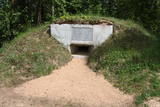 |
This testimony to World War II can be found in the Blīdene Parish. It is one of the very few objects of its type to still be in good condition.
|
|
 |
This farm is engaged in dairy farming and rearing chickens; the obtained eggs and milk is processed in its very own dairy plant. You can taste various dairy products, including ice-cream in the farm, and also get to know the entire production process. You can also order meals for a picnic and apply for a dairy product masterclass. |
|
 |
This reserve was set up to protect local swamps and surrounding wetlands. Please note that before you can visit the reserve, you must register with the local administration and visitor centre in the village of Tooma.
|
|
 |
SIA Mikaitas is a family company that was established in 2005 and breeds purebred sheep. It provides seed for other herds to breed fast-growing lambs with excellent taste. The farm breeds the Oxforddown breed of sheep and sells lambs of various ages, breeding sheep and rams, yarn, wool products, processed sheepskin, sheep, mutton and various meat products. |
|
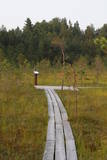 |
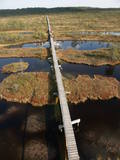
The small Andrupene swamp is found to the North of the Andrupene Farm Museum in a deep area between hillocks. It is a high-type swamp with an open central part, and it is 130 m long and 120 m wide. There are stands of white alder alongside the swamp. In 2009, the administrators of the Rāzna National Park restored a wooden educational pathway that had been established originally by the Andrupene Elementary School. Today there are stairs, a viewing platform, wooden pathways, and information stands. |
|
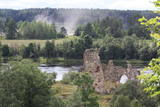 |
Found on the right bank of the Daugava where the little Karikste river flows into the Daugava, all that remains of the castle today is a set of ruined walls and foundations. The castle was built by the Livonian Order in 1224, and it was inhabited until the mid-17th century, when it was sacked during the Polish-Swedish war. The ruins offer a good view of the local gravel road that goes along the right bank of the river valley.
|
|
 |
This farm keeps Thuringian breed goats and makes goat's milk cheese, as well as a various snacks. In addition, herbs and medicinal plants used for teas and natural cosmetics are also grown here. |
|
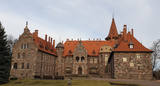 |
The Cesvaine Castle is one of Latvia’s most beautiful castles. Built in the style of Eclecticism, it is said to have been presented by its owner, Adolf von Wulff, to his wife. The castle was built between 1893 and 1896. On the banks of the Sūla River alongside the castle is the Cesvaine Park, including the afforested Cesvaine castle hill. The Cesvaine castle roof reconstruction is complete! Visitors may tour the castle accompanied by a Cesvaine Tourism Centre guide. Restoration of the castle interior will ccontinue throughout 2020. Periodic closure of the castle can be expected. Please phone in advance to arrange a visit T. +371 26172637. For more information visit www.cesvaine.lv |
|
 |
Visitors to the brewery can learn how beer is brewed and taste the beers and mead drinks that are produced there. |
|
 |
The cafe in Engure which specializes in different seafood dishes – no fewer than seven types of fish dishes – filets, salads, canapés, fish cakes, marinades, pierogi, etc. Latvian cuisine: Cold soup, marinated lamprey, baked plaice, baked cod, sautéed pork, crepes, potato pancakes. Special foods: Būda solyanka. |
|
 |
The old Kolkasrags lighthouse is just a set of ruins right now. The
lighthouse at the tip of the horn was built in the 16th century and
renovated several times. The ruins are slowly decaying because of storms
and ice during the winter. They had been standing well away from the
shoreline once, but now are slowly disappearing under water.
|
|
 |
The barn was built in the second half of the 19th century. The building has a permanent exhibition, where you can see how land management and bread baking took place in the manor. We bake bread if you order in advance |
|
 |
The barrow which offers a good view is at the northern end of the Dunduri meadows – at the end of Melnragi. It is an artificial barrow which follows along with the bed of the little Slampe River. The meadows are home to livestock allowed to live in the wild, and you can see a bit of the restored Slampe. The view is particularly interesting during flooding season, when the surrounding wetlands become saturated. This is a location for bird-watching.
|
|
 |
This is basically a grain farm, but in 2006 it also began to work as a dairy farm. In 2008, the farm began to produce cheese and cottage cheese. The farm has more than 200 dairy cows, using the milk to produce milk, yogurt, cheese and ice cream. |
|
 |
The Cider House is located in the very centre of Sabile, right next to the historic Sabile Wine Hill. At the Cider House you will be able to taste a glass of cold Sabile cider and to taste and purchase wines made by various Latvian winemakers. |
|
 |
Only indirect evidence of the former tank base that was here is still available (see the story).
|
|
 |
The renovated historic distillery at Mooste Manor (1909) is home to the Estonian Photo Tourism Centre. The guesthouse on the second floor of Mooste Distillery offers cosy rooms with all modern conveniences. |
|


