
| No | Name | Description |
|---|---|---|
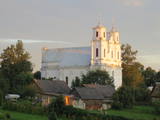 |
The largest town in South-Eastern Latvia is on the banks of the Daugava River, which is the border between Latvia and Belarus at this location. The border runs down the middle of the river. Piedruja has two parts – Piedruja and Aleksandrova, which are separated by a central street (the V 631 road). Piedruja emerged from the Druja town that was on the left bank of the Daugava. During the 17th century, the two parts were owned by the Stapekha dynasty of Lithuanian aristocrats. It is worth strolling through the town, because the low-level wooden houses are reminiscent of buildings that are exhibited in open-air ethnographic museums. Piedruja is neat and tidy, with two churches and the Daugava rock that are part of a local hiking trails. Aleksandrova has a tourist accommodation, “Piedruja,” which offers special soirées in the Lettigalian, Russian and Belarusian style. Please be aware that you need a temporary permit to enter the border zone. The Border Guard facility is in Piedruja and at a place where there was a Daugava crossing point comparatively recently. |
|
 |
The tower offers a look at the historical centre of Limbaži , the castle ruins, and the landscape all the way to Lake Dūņezers. The Limbaži castle was part of Latvia’s earliest fortifications, and its unique gates survive to this very day. Keys to the tower can be found at the museum. This is part of the ZBR. |
|
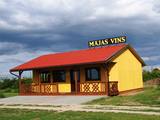 |
The owner uses Latvian products to make and offer more than 20 different wines, including some that are made of exotic flowers. You can taste and purchase wines made of berries, fruit, vegetables and flowers, including white jasmine, the elderberry tree, dandelions, the large cranberry, etc. There is a lily garden alongside which is the largest one in Eastern Europe and offers plants for sale. The day lily garden offers a look at globally famous types of day lilies which can be purchased. Many of these have been developed by the originator of the garden, Varis Baņģieris. More than 1,000 types of day lilies can be seen and purchased. The garden is open from 9:00 AM until 7:00 PM every day in July and August, when the flowers bloom. The owner also offers tastings of homemade wine that is called "Vējkalnietis." |
|
 |
This farm produces tomatoes, apples, pears, raspberries, strawberries, etc. Visit the farm in the spring to see blooming pear and apple orchards and fields of raspberries. During the autumn you can help to harvest fruits with special "kangaroo pouches" and wheelbarrows. |
|
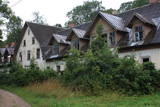 |
Ļoti savdabīga vieta, ko nekādi nevar dēvēt par tūrisma objektu. Vidsmuiža bija viena no Latgales lielākajām muižām, kuras dominante bija 18. gs. celtā un vēlāk pārbūvētā grāfu Borhu muižas kungu māja. Tagad redzamais muižas kompleksa veidols tapis 19. gs. otrajā pusē. Tajā ietilpst kūtis, staļļi, kalpu māja, klētis, sarga mājiņas, kas izvietotas ap parādes pagalmu. Pēdējais tagad ir stipri aizaudzis. Vecākā saimniecības ēka ir mūra klēts (iespaidīga!), ko cēla 18. gs. Regulāra plānojuma muižas parku veidoja 18. gs. franču dārzu stilā. Kungu māja ir „pamesta” un apskatāma tikai no ārpuses. |
|
 |
The memorial site with a 1936 monument produced by the sculptor Kārlis Zāle is located in Smārde near the Smārde-Tukums road. It commemorates 38 soldiers who fell during World War I. Between 1915 and 1917, the front line was near Smārde. Many men were killed, and they were buried at the local swamp. It was only after the war that they were reburied in Smārde, Kūdra, Ķemeri, and Sloka. |
|
 |
The cafe is situated in the guest house Zitari on the first floor, in the town of Roja, alongside the road, 500 m away from the sea. |
|
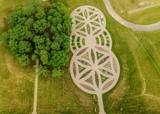 |
This museum was established in 2014 in partnership with the Siauliai University botanical garden. The museum is 85 m long and 40 m wide on a territory that covers 0.34 ha. |
|
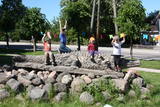 |
This 1995 sculpture by Oļegs Skarainis is at the corner of Dinsberģa and Talsu streets in Dundaga, near the local dairy. It is dedicated to the strong men of the town, including former Dundaga resident Arvīds Blūmentāls (1925-2006), who lived in Australia, was a great crocodile hunter (some 10,000 in all), and served as a prototype for Paul Hogan in the famous movie “Crocodile Dundee.” |
|
 |
Guest house “Hilda Villa” is located in Estonia, in Viljandi town center. Guest house has special family room for 4 person and smaller families also. On the first floor there are Hilda's room and the Tenant's room, bathroom, living room, and kitchen. On the second floor there are 3 bedrooms for accommodation, 2 showers, and 2 toilets. |
|
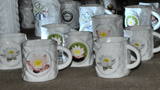 |
Since 2007, visitors have been able to tour a porcelain factory that offers an exhibition of porcelain products. You can buy souvenirs or commission special products. Children will love the porcelain painting studio that is in the mansion of the nearby Vecpiebalga Estate. |
|
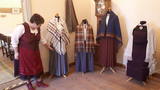 |
They work together since 1996. The members are knitting woollen socks, mittens, scarfs, sweaters, embroider sofa cushions, blankets, table cloths, paint on scarfs and ties, weaves blankets, towels, carpets, bookmarks, crochet toys, clothing, blankets as well as creates wickerwork and wooden ware, they demonstrate the baking process of traditional Latvian sklandrauši and tea making. The knitters from the organisation created the traditional mittens for the NATO summit guests in Riga. The visitors can view the different products, learn different crafts, bake sklandrauši and make different tea mixes themselves. They also offer excursions in the renovated Ance’s manor castle. |
|
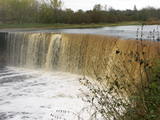 |
This is one of the greatest waterfalls in the Baltic States – 8 m high and up to 70 m wide. It is most impressive in the spring and after strong rains. The waterfall and its ~300 m canyon emerged from the limestone of the Ordovician Period. You may spot some fossils there. When the water is low, courageous people try to ford the river both above and below the waterfall. The limestone and the falling water have established a unique “tunnel” there.
|
|
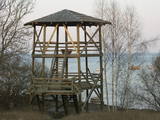 |
This tower is on the shores of the ancient Litorine Sea, with a lovely view of the unique seashore here – complete with small bays and capes. It is part of the Kaltene nature trail, which is around one kilometre long. The location is of particular interest during spring or autumn migration of birds. Two other bird-watching platforms are nearby.
|
|
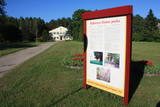 |
The Rubeņu (Rubenes) park dates back to the mid-1950s and is toward the north of Rubeņi, on the banks of the little Dzirnavupīte River. There are beautiful ponds, a stage, a rock garden and a playground for the kids. The cultural centre that is alongside the park features a monument to the poet Rainis which was unveiled during Poetry Days in 1969 and was produced by the sculptor Kārlis Baumanis. |
|
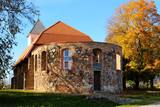 |
Dievnama mūri kā svētvieta glabā ne tikai svētuma starojumu, mierinājumu, bet arī smagus, rūgtus un iznīcinošus notikumus. Vairākkārt pārbūvēta, sagrauta, dedzināta, un tomēr atjaunota. |
|
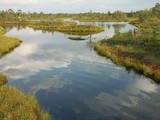 |
The Ķemeri National Park was established in 1997 and mostly involves wetlands – the shallow shores of the Bay of Rīga, an overgrown seaside lake, vast swamps, damp forests and fens, and flood-land meadows. The park is enormously important for protecting plants (25% of those recorded in Latvia’s Red Book are found in the park) and animals, particularly nesting and migrating birds. The Great Ķemeri Bog is one of the largest swamps in Latvia, and there are other swamps, as well – the Zaļais swamp and the Raganu swamp. The massive swamps are important, too, in the flow of sulphuric waters and medicinal mud. The once-famous Ķemeri Spa was based on the availability of these resources. Most of the cultural and historical objects in the Ķemeri National Park relate to the seashore as a place for leisure and recuperation. Educational nature trails, bicycle trails, hiking trails, bird-watching towers and other facilities are available. The visitors centre is at the recently renovated “Forest House” in Ķemeri. |
|
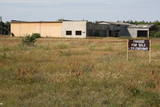 |
The job for the No. 15 Radio Technology Brigade at Saraiķi was to defend Soviet Latvia’s shoreline back in Soviet times. Today the facility is owned by the Defence Ministry, and the No. 17 Home Guard Battalion uses it for training purposes.
|
|
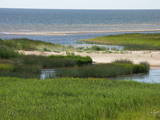 |
This is another important territory for the protection of reefs, is also opposite the Salacgrīva Administrative District, and covers 7,239 hectares.
|
|
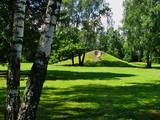 |
The monument dedicated to the Staburags cliff was installed in 2003. Designed by the sculptress Solveiga Vasiļeva, the monument is known as “The Ear of God,” and it is installed in the place where the reservoir of the Pļaviņas hydroelectric power plant flooded one of Latvia’s most interesting geological monuments. Staburags relates to many legends and stories told by rafters. It stood 18.5 m high and was a sandstone cliff on the left bank of the Daugava River, dating back to the last Ice Age. The Liepavots stream that trickled out of the cliff is now also underwater. Staburags and the flooded Daugava quarry were once among the most popular tourist destinations in Latvia. |
|


