
| No | Name | Description |
|---|---|---|
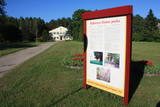 |
The Rubeņu (Rubenes) park dates back to the mid-1950s and is toward the north of Rubeņi, on the banks of the little Dzirnavupīte River. There are beautiful ponds, a stage, a rock garden and a playground for the kids. The cultural centre that is alongside the park features a monument to the poet Rainis which was unveiled during Poetry Days in 1969 and was produced by the sculptor Kārlis Baumanis. |
|
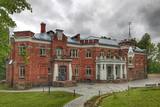 |
The construction of the state began in the early 20th century. The mansion was built of bricks and fieldstones between 1905 and 1911 in the styles of Historicism and Art Nouveau. The estate was owned by engineer and professor Stanislav Kerbedz from St Petersburg, the first Russian engineer to develop principles for the architectonic aspects of bridges. These were used during the latter half of the 19th century, and Kerbedz led the construction of the Nikolayev bridge across the Neva River in St Petersburg. Kerbedz’s wife, Yevgenia, was well known as a lover of art, and she brought various art objects to the estate from Italy. The Lūznava Estate was a popular place for gatherings of artists during the summers. Among those to visit was the distinguished Lithuanian painter and composer Mikalojus Čiurlionis. The estate is surrounded by a 23.7 ha landscape park with a system of ponds. Near the estate is a statue of the Madonna, which was carved by an unknown Italian artist. The statue was damaged and thrown into a pond during World War II, but it was restored in 1991. Reconstruction of the main building of the estate was complete in 2015, and today it is a modern and international centre for environmental education and the arts. |
|
 |
The LLC Arosa-R is a family enterprise which specializes in growing large-fruited bilberry-bushes and their saplings, as well as selling those. |
|
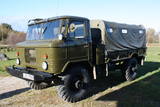 |
Edgars Kārklevalks, operator of a guesthouse Pūpoli, has a restored Soviet military GAZ-66 truck in which he offers historical and informational tours of Northern Kurzeme. The route includes former military territories.
|
|
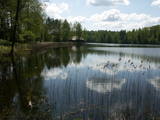 |
Lake Salājs is full of bays and islands. Alongside Lake Little Solojs, which is next to Lake Salājs, is the Milka castle hill and a leisure facility there. This is a beautiful area, and it is protected for environmental purposes. |
|
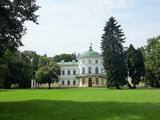 |
The Baisogalo Estate is one of the oldest ones in Lithuania and is known as a royal castle because it once belonged to the local lord. The ornate late-Classicism buildings were built in the mid-19th century and have survived. The 12 ha landscape park dates back to the early part of the 19th century, with an alley of chestnut trees leading to the estate from the local village. The central alley that starts at the gate weaves through two curvy bodies of water with a bridge and statues of lions. Various trees behind the estate are alongside curvy and narrow pathways. On both sides of the alleys are bodies of water, and deep in the park is a pond with an island. |
|
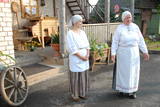 |
At this museum, you will learn all about the baking of bread from grain to loaf, and you can make your own loaves, too. You can taste bread and herbal teas. There are theatrical performances related to christenings, weddings, birthdays, etc. Local foods such as dumplings and soups made of dried mushrooms or lake fish are served. The museum sells freshly baked bread, as well as the work of local craftspeople. The hostess is a master baker and a member of the Chamber of Crafts. Latvian cuisine: Lake fish soup, cottage cheese dumplings and other traditional Lettigalian dishes. Special food: Soup of dried mushrooms. |
|
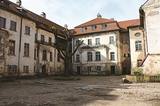 |
Dundaga baron once was one of the largest landowners of Courland, therefore during the second half of 19th century around the estate formed centre of economic and social life. Dundaga Central Square is dominated by its water tower, behind which starts Dakterleja, where from 1844 to 1854 worked one of the first ethnic Latvian doctors and linguist, J. Bars. Until the sixties of the 20th century from the Dundaga through Mazirbe and fishermen villages to Ventspils ran a Narrow gauge train. Today Dundaga attracts tourists with its spectacular castle, the Lutheran church, crocodile sculpture, Eizenberga pottery workshops and other objects. |
|
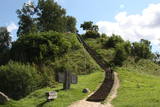 |
Eine der ältesten Ortschaften Litauens. Schon im 14. Jh befand sich hier eine Holzburg. Der 20 m hohe Merķine-Burgberg an der Mündung der Flüsse Merkys und Nemunas. |
|
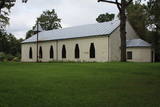 |
Jau pēc dievnama veidola var spriest, ka vēl ne tik sen – padomju laikos ēka bija izmantota citām vajadzībām. Pēc 2. pasaules kara to atsavināja draudzei, bet torni – uzspridzināja, dievnamā ierīkojot noliktavu. 20. gs. deviņdesmitajos gados draudze uzsāka baznīcas atjaunotni un tagad tā kalpo savam pamatmērķim. |
|
 |
The Pīlādži farm is in the Durbe Parish of the Durbe Administrative District. It is primarily a grain farm, but also breeds livestock and grows flowers and vegetables. |
|
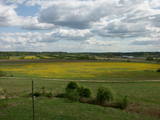 |
From the Asote castle hill, which is on the right bank of the Daugava River near Jēkabpils, there is a fine view of the Daugava River valley, the Ābeles Island, and the Kaupre castle hill that is at the northern end of the island.
|
|
 |
Atrodas dienvidos no Vienības nama. Skvērs veidots 19. gs. otrajā pusē. Tajā atrodas vairāki ievērības cienīgi objekti: strūklaka (20. gs. 20. gadi), latviešu tautas dzejnieka Andreja Pumpura krūšu tēls, piemiņas akmens Nevainīgajiem sarkanā terora upuriem un Sv. Aleksandra Ņevska pareizticīgo kapela. Vienības ielas otrā pusē paceļas iespaidīgā Daugavpils universitātes ēka ar Raiņa pieminekli un saules pulksteni priekšplānā. |
|
 |
Latvijai neparastā izskata tornis tika uzcelts līdz ar Ziemeļblāzmas kultūras pils un parka atjaunošanas procesu. No torņa paveras plašs apkārtskats uz jau minēto parku, pili, Daugavu, Pārdaugavu un Daugavas vārtiem (Daugavas ieteka jūrā). Darbojas lifts. Tornis atvērts sezonas laikā. |
|
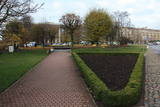 |
Истоки площади Роз уходят в 1911 - 1913 гг., когда на этом месте разбили открытый сад с > 500 кустами роз. В советское время рядом с площадью Роз был установлен памятник Ленину. Восстановленную в 2000 году площадь окружает Лиепайская Педагогическая академия, гостиница «Лива», Центр бизнеса и сделок De Rome (построен в XIX веке, архитектор Пауль Макс Берчи, бывшая гостиница «Рим») и Лиепайский дом латышского общества (камень в основание заложил Карлис Ульманис в 1934 г.). По бордюрам грядок роз размещены памятные знаки городов содружества Лиепаи. К площади Роз подходит улица Зивью (Рыбная), получившая свое название от когда-то существовавшего рыбного рынка. На улице Зивью находится Аллея славы латвийских музыкантов (с 2006 г.), где установлено 35 плит с бронзовым рельефом ладоней музыкантов, 10 плит, посвященные популярным латвийским музыкальным группам, а 5 – ушедшим в мир иной. Здесь же установлена самая большая гитара Латвии. |
|
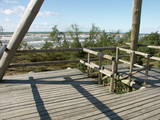 |
The Grey Dune of Pāvilosta nature reserve covers 42 hectares of land and has been designated to protect Latvia’s widest dune (1.5 km parallel the seacoast, and 812m in the direction from the sea to inland) and the biotopes and species found there. A two-storied watching platform is built to savour the scenery. In Soviet time, local fishermen used to dry seaweed in dunes for production of agar, and thus rich vegetation developed in the dune. The Gray Dune is part of a unique landscape with the sea view, the traditional architecture of Pāvilosta fishing town, and biotopes, including protected, which border the nature reserve: pine forest, embryonic dunes, white dunes, and wet beech where once can find springs. Biotope 2130, “Fixed dunes with herbaceous vegetation (grey dunes)” is found here. At present, pines are taking over the biotope, therefore some maintenance activities are required. The Grey Dune is most beautiful in the second half of July and in August when the blossoming Breckland Thyme (Thymus serpyllum) and Narrowleaf Hawkweed (Hieracium umbellatum) colour the dune in shades of yellow and violet. The most typical species here are Pasqueflower (Pulsatilla pretense), Grey Hair-grass(Corynephorus canescens), Blue Hair Grass (Koeleria glauca), Sand Pink (Dianthus arenarius). The Gray Dune earned wide recognition when a group of enthusiasts actively campaigned for six years to achieve the status of the nature reserve. Guna Grimsta, a group representative remembers that they organised events and activities throughout Latvia involving large part of the society, prominent personalities, church parishes, NGOs, school youth and university students. The activists were writing letters, making videos, doing research articles, composing music, collecting signatures and submitting proposals to achieve official status of the Grey Dune as an especially protected nature site. They organised seminars, concerts, art plenaires and exhibitions, educational excursions, joint-work, musical church services, meetings with high officials and their on-site visits to the Gray Dune. In 2006 the group received the title „Proudness of Latvia” awarded by the national TV3 broadcasting company and daily paper „Diena”. |
|
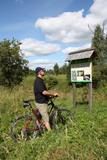 |
Taka veidota gar Gaujas labo krastu augšpus un lejpus Gaujienas un tā iepazīstina ar nogāžu mežu un dažādu pļavu biotopiem. Visā tās garumā izvietoti informatīvi stendi. Takas daļu lejpus Gaujienas var braukt ar velosipēdu.
|
|
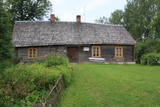 |
The distinguished Latvian author an painter Jānis Jaunsudrabiņš (1877-1962) spent six years of his childhood at Riekstiņi in Nereta. He was born into a servant family and moved to Riekstiņi together with his mother after his father passed away. The household inspired him for his "White Book." In honour of Jaunsudrabiņš, a museum was opened at Riekstiņi in 1967, and it is in an authentic Selonian farm with its spirit and aromas. You can tour the residential building and the homestead's granary and wheelhouse, also houshold building from 1820. The apple orchard has trees that are 100 years old and older. Nearby is the Ķišķi cemetery (on the side of the Vecumnieki-Ilūkste road), where members of the Jaunsudrabiņš family were interred and Jānis Jaunsudrabiņš was reburied in 1997. The Nereta Administrative District still has many single family farms and place names which Jaunsudrabiņš mentioned in his books. |
|
 |
The craftswoman produces beautiful rag blankets, bags, as well as pillows with ranges and combinations of colours that are typical in Latgale. You will learn about the weaving techniques and be able to examine finished products. You can weave your own rag blanket and commission and purchase the products. |
|
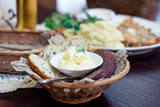 |
The “Pilsbergu krogs” guesthouse and café is 300 metres from the steep shores of Jūrkalne. It is in an historical building that has been restored. The Restaurant is open for the whole year. Foods from European cuisine as well as local dishes like local fish are served. Catering for tourist groups, banquet hall for up to 30 persons, restaurant hall for 25 persons and summer terrace for 30 persons. |
|


