
| No | Name | Description |
|---|---|---|
 3 days
|
The name of the Žemaitija region means "lowland." You will visit traditional and unusual farms to learn about gardening traditions and enjoy teas and herbs from a biodynamic farm. The lady of the house will teach you about traditional local foods. Next you will visit a place to discover the secrets of medicinal plants. An impressive exhibition about military history will be found at the Cold War Museum, which is on the territory of a former missile base. Then you will visit the Energy Labyrinth to enjoy peace and quiet while learning about how various geometric forms influence human emotions. Next you will visit a traditional farm with characteristic foods, beverages and songs. Along the way you will visit Telšiai, which is the informal capital of Žemaitija. Finally, you will visit a farm where traditional pastries are baked on a campfire, and a true Latvian sauna is offered. |
|
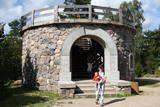 |
This arboretum park is in a lovely place – the Blue Hills of Ogre, where there is a tower with a good view of the Daugava River Valley. The landscape is enlivened by a pond and its streams. There are beautiful hiking trails throughout the park.
Unique species: The Amur Cork Tree (Phellodendron amurense) and the Field Elm (Ulmus minor), among others.
|
|
 |
Stādaudzētava piedāvā rožu, skujeņu, dižstādu, ūdensaugu, lapu krūmu un dzīvžogu materiāla iegādi un konsultācijas.
|
|
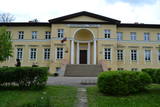 |
Tāšu – Padures muiža (Tasch – Paddern) celta 19. gs. sākumā kā Korfu dzimtas pils, kas 1852. gadā pāriet Keizerlingu dzimtas īpašumā kā medību pils, kas kalpojusi kā vasaras mītne, un ir izcils vēlīnā klasicisma paraugs. Iekštelpās saglabājušies vairāki senā interjera apdares fragmenti. Pēc pils pabeigšanas, ap to sāka veidot vairāk kā 10 ha lielu parku ar svešzemju kokiem. Šobrīd muižas ēkā atrodas Kalvenes pamatskola. |
|
 |
Karaims are a small nation of Turkish decent who practise The Karaim religion which started developing around 8th century in Persia. Their language is still used in modern-day Lithuania. In the museum there are rooms not only dedicated to Lithuanian Karaite communities but also Poland's and Ukraine's. |
|
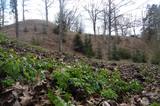 |
The Buse (Matkule) castle hill is next to the Imula River. The hill and the opposite bank of the river offer one of the loveliest views of small rivers in Kurzeme. They are best seen during the season when trees are bare so that leaves do not cover up the landscapes. There are trails for pedestrians in the area. |
|
 |
Jaunciems has always been a small village, and only a few homes are populated today. Nearby there are leisure locations on the right bank of the Irbe River. Jaunciems is linked to Sīkrags by the former tracks of the narrow-gauge train. There is also a bridge for hikers and bicyclists. |
|
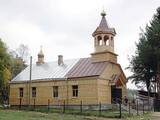 |
Viļāni Old-Believers Prayer House. The architect P.Pavlovs built Old-Believers Prayer House in 1930s.
The congregation was established very recently. Nevertheless the 14 meters high tower was constructed in
2004. The Prayer House is a very simple building but you will be pleased to see the magnificent icons. The
Prayer House has been renovated completely.
|
|
 |
Puša Manor - Chapel was built in the end of the 18th century; it is located
in the Pušas Manor park that was built in the middle of the 19th
century. Both are permanent local architectural monuments.
|
|
 |
This is one of the oldest Livonian villages, recorded in documents for the first time in 1387. The old road from the Dundaga Estate to Sīkrags existed in the Middle Ages. During the 17th century, Sīkrags was one of the most important small ports in Northern Kurzeme, receiving ships from England, Holland and Lubeck that carried coal, grain and other products. Before World War I, there were five sprat smokehouses in the village, and some 55 fishermen lived there during the 1920s and 1930s. Among those to have been born in Sīkrags was the Livonian cultural activist Hilda Grīva (Cerbaha, 1910-1984), seafaring captain Kārlis Anbanks (1884-1937), Baptist preacher Kārlis Lāceklis (1904-1970), linguist and tradition specialist Pēteris Dambergs (1909-1987), and graphic artist Baiba Damberga (b 1957). Today the village is a cultural monument of national importance. It is crossed by a bike route, with a commemorative stone where the narrow-gauge railroad station once stood. Sīkrags, like neighbouring villages, is in the Slītere National Park. |
|
 |
Mācību drava "Kāre" piedāvā iepazīties ar bišu valstības noslēpumiem. Interesanta iepazīšanās ar brīnumiem un noslēpumiem bišu saimes dzīvē. Apmeklētājiem ir iespēja ietērpties speciālos aizsargtērpos un bitenieka vadībā iepazīties ar dzīvas bišu saimes smaržu. Veselībai un dzīvespriekam iespējams iegādāties - medu, bišu maizi, bet romantiskai noskaņai - smaržīgas bišu vaska svecītes. |
|
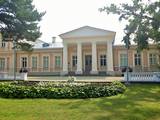 |
Dating back to the 19th century, this is a characteristic and beautiful park in Lithuania. There is no shortage of exotic trees in the park, including maples, lindens, elms, firs, oaks, etc. The pride of the park is Lithuania's fattest fir tree with a diameter of 1.2 m, as well as a linden tree with six branches that, over the course of time, have become vertical trunks on their own. Entry to the park is via a pergola that is covered with ivies. |
|
 |
Sääniku farm recreation centre is located on the banks of the Kavilda former river course, and is a great place to spend free time with the family, enjoying activities and nature. You can taste the house beer, home-made bread and order meals here. |
|
 |
The cafe is situated in Jekabpils, at the edge of the Jēkabpils ring road (A6), on the right bank of Daugava river. You can have breakfast, dinner and supper in here. Latvian cuisine: Cold soup, homemade steak haché, crepes. |
|
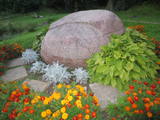 |
Located in the south-eastern part of Piedruja and on the banks of the Daugava River, the rock can be accessed via the local path or a local land road. The rock was sculpted by Vilnis Titāns, who engraved the name of the Daugava River in seven languages – Latvian, Livonian, Estonian, Polish, Russian, German and Finnish. Opposite the rock is Druja, which is in Belarus, as well as a large island that splits the river in two. A temporary permit is needed to visit Piedruja. |
|
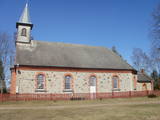 |
The Kaltene Lutheran Church dates back to 1567, when Duke Gotthard Kettler of Courland ordered the construction of new churches in Kurzeme. One of them was in Kaltene, and was known as the Church of St Catherine. In 1848, a clay church was built in place of the old wooden church. A sacristy was added in 1880, and the church was rebuilt and expanded in 1896. It suffered much damage during World War I because a Russian mine ship attacked it. The church was restored during the first half of the 1920s. The altar painting, “Christ and St Peter on the Sea” was painted in 1898 by M Pohl after a panting by R. Richter. The pulpit and organ date back to the 18th century and are cultural monuments of national importance. The organ was built by August Martin in 1843, and it was initially in a church in Gulbene. The instrument was brought to Kaltene in 1943 and is the oldest surviving instrument by Martin. The bell was manufactured in 2006 by the Liepājas Metalurgs company, and a new building for the congregation was built in 2012 and 2013. The first scenes of the feature film “Long Road to the Dunes” and the film “Forest of Bulrush” were filmed outside the gates of the church. Nearby is the Putniņi homestead. In 1921, Culture Minister Rainis visited the homestead. At that time there was a store there. The Germans burned down the homestead during World War II. (Source: Roja TIC) |
|
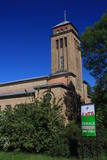 |
The Aknīste Catholic Church was built between 1937 and 1940, and its design is based on the Kaunas Church of the Resurrection in Lithuanian. The building features the rectangular and geometric forms that were typical of the age of Functionalism. Inside is a large wooden altar, along with a pulpit and two side altars (from the early 19th century) which were once found at the Rokišķi church. They were brought to the Aknīste church when the one in Rokišķi was redesigned. In 1997 the church was granted the Blue Flag of European cultural heritage. Alongside the church are the red brick gates of an old Catholic church, which date back to the latter half of the 19th century. Also there is the Selonian Park. |
|
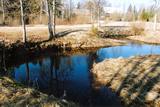 |
One of the largest karst areas in Estonia is found here. The unique Witch’s well is one of the most interesting parts of this area. During spring floods (not every year, and for only a short period of time), the well erupts with underground river waters to create an unusually powerful karst stream that can pump out as much as 100 litres per hour.
|
|
 |
This village is at the place where the Irbe (Dižirve, Īra) River flows into the sea, and it is on both shores of the river (sea side and land side). The name of Irbe was recorded for the first time in a 1310 border agreement between the bishop of Kurzeme and the Rīga Dome Capitol. The name of Lielirbe (Irvemūnde) was recorded for the first time in a document from an arbitration court in 1387. At the end of the 19th century, the small port at Lielirbe was an active centre for the sale and transport of timber materials. In the late 19th and early 20th centuries, the largest number of sailing ships among villages on the western shore of Kurzeme was built there. In 1939, the village had some 300 residents, more than 70 houses and a Baptist church which is now at the Ventspils Open Air Museum. A narrow-gauge railroad passed through the village, which had a post and telegraph office, two grocery stores, an elementary school, a choir and a brass band. Lielirbe was one of the largest villages to disappear after World War II. Cultural historian Valda Marija Šuvcāne (1923-2007) was born in Lielirbe, and her daughter, Baiba Šuvcāne, is continuing her mother's work by writing important papers about life along the Livonian coastline. By 2019, a bridge is to be reinstalled across the Irbe River. |
|
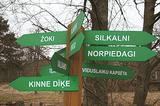 |
is seen as the newest village along the Livonian coastline. It was established during the 17th century. Košrags had 78 residents in 1826. The first reading school for Livonian children in the Dundaga seashore villages was opened at the Žoki homestead in 1832. One of the teachers was Nika Polmanis, who was the first Livonian to have completed a professional education. He also translated the Gospel of Matthew into the Eastern Livonian dialect. Košrags had a windmill, water mill and boat building facility. During the spring, job seekers from Saaremaa stopped here. A port was installed in 1932, and a breakwater to collect sea fertiliser followed in 1938. During the 1930s, Košrags was regularly visited by Finnish and Estonian linguists to study the folklore of the Livonians. The Norpiedagi homestead was built by Livonian activist Didriķis Volganskis (1884-1968). His son, Livonian cultural worker and pastor (in Finland) Edgars Vālgamā (Volganskis, 1912-2003) was born there. He translated the Andrejs Pumpurs epic "Lāčplēsis" into Finnish. Košrags today is a cultural monument of national importance. |
|


