
| No | Name | Description |
|---|---|---|
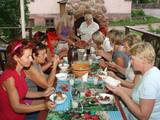 |
This tavern is in the centre of Alsunga, which is the capital of the Suiti people. The Suiti have always known how to work hard, sing well and eat tasty foods. The tavern offers for tour groups to taste a delicious Suiti meal made from ancient recipes, after which participants can learn how to cook those foods – carrot buns, soured porridge and other masterful dishes from this part of Latvia. A very effective performance by Women of Suiti will make the meal truly unforgettable. You’ll also be able to purchase carrot buns and sourdough bread that is baked only here. Latvian cuisine: Sourdough bread, dumplings, dried ribs. Special foods: Homemade carrot buns. |
|
 |
Wooden slat weaving workshop is located in Jelgava county, Sesava parish. Craftswoman is making different type of wooden slat baskets and basketry from pine, linden, aspen and black alder. There are several different categories of baskets, available in different sizes - picknick baskets, baskets for berry and mushroom picking, trays, baskets for firewood, laundry baskets, onion / garlic baskets, baskets for kids, and diverse baskets for daily use. Various inscriptions and drawings are also made on the weavings. They also accept orders for individual orders. In the workshop it is possible to see the wooden slat basket weaving process as well as have the opportunity to learn to make your own basket. |
|
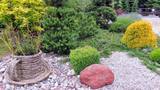 |
The botanical garden was established in 1993 in the lovely Dane River valley. It covers approximately 9.3 hectares, and in 2002, it was given the status of a dendrological park. |
|
 |
The farmstead Riveni specializes in fruitgrowing and the products of reprocessing those – dried apples, apple juice. |
|
 |
The farm produces six different kinds of blackberries. You can tour the surrounding fields, learn about how blackberries are grown, and taste and purchase valuable berries. Your children will love the rabbits and goats that are at the farm. |
|
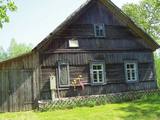 |
The House-Museum of the writer Michael Narics. Reveal the history of political repressions in the
USSR and Soviet Latvia; see creative works of the winners of competition organized by M. Narics Educational
Center.
Working hours: on request |
|
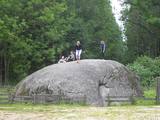 |
This territory was established to protect various kinds of rare butterflies A popular tourist destination in the Nīcgaļi forests is the great rock of Nīcgale, which is the largest rock in Latvia – a geological and geo-morphological monument of nature. The rock has a circumference of 31.1 metres, and it is 3.5 metres high, 10.5 metres long and 10.4 metres wide for a total size of 170 m3. |
|
 |
This exhibition has been assembled over the course of many years by its owner, Valdis Tumovs. He features war weapons, fragments of munitions, uniforms, everyday objects, military equipment such as a motorcycle, etc.
|
|
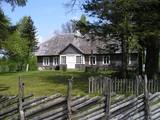 |
This museum was opened in 1991 at the birthplace of the aviator Stepon Darius. The house and granary have been restored, with exhibitions in both buildings. One speaks to the history of aviation in Lithuania and Darius' life, while the other shows ancient household objects. There is a campsite nearby where you can spend a longer period of time. |
|
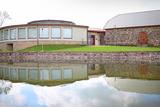 |
This is a modern and contemporary centre, including an old and restored granary. It offers an exhibition hall, an historical exhibition, a shop where you can purchase crafts, and a conference hall. Craftspeople from the region work here, and you watch them at work or try your own hand at what they are doing. |
|
 |
The craftspeople offer tours during which you can watch them at work. You can also produce your own souvenirs with various techniques, including the potter’s wheel and the engraving technique, making use of pre-prepared moulds. You can also commission and purchase ceramics products. This location is popular among children and wedding parties. |
|
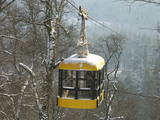 |
The aerial tram across the Gauja is the only vehicle of its type in the Baltic States. It was installed in 1969 with the help of engineers from Georgia. The crossing is 1060 m long, and the cable which crosses the river is just one cable without any supports. The tram rides about 40 metres above the river, and it offers an outstanding look at the local landscapes. During the evening, the tram is used by Bungee jumpers. |
|
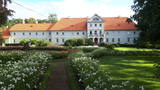 |
One of the oldest buildings at the Pope Estate is the old hunting castle that was built in 1653. The mansion was built in 1608 or 1620. The Neo-Gothic porch was added in 1840. The interiors of the mansion have been preserved since the 18th century and the 3rd quarter of the 19th century, including wood panelling, original decorated ceilings, a front door in the style of Classicism, and a Rococo stove. Sadly, one of the oldest buildings - the home of the estate's governor - burned down in 2018, but the rest of the estate did not suffer and retained its beauty. Visitors will be delighted about the aromatic garden of phloxes, as well as the impressive oak trees. Worth a look is the hillock behind the main building of the estate, near which there used to be a narrow-gauge railroad (the Pope Station). The other buildings cover a fairly extensive territory, and so it is worth spending a few hours to tour the village of Pope. The Pope Estate and its park are among the best-preserved estates in the area. Since March 1941, it has housed a school. Most of the trees in the park are common, but there are a few rare ones. |
|
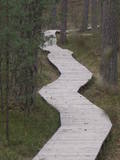 |
One of the most attractive and informative nature trails in the environs of Rīga. It leads the visitor around the 17-metre Ragakāpa dune, which is most interesting. People can learn about the habitats of the dune areas and the plants and animals of the area. Some of the pine trees are as much as 100 years old and more. The trail is 2km long in each direction and will take some two hours to traverse. This is part of the Ragakāpa nature park.
|
|
 |
The Lithuanian Pomiculture and Gardening Institute became a national scholarly institute in 1992. It engages in scholarly studies, as well as experimental manufacturing. The institute produces Lithuanian fruits and vegetables that are used to manufacture high-quality, natural and healthy products. |
|
 |
The Bažas swamp is the largest swamp in the Slītere National Park and is
entirely off limits to visitors.
|
|
 |
The café is in the market square of Vecpiebalga, opposite the Lutheran church. It works with local farmers and sells products from a local smokehouse. |
|
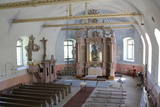 |
Храм построен в 1766 г., а колокольня возводилась в 1897 году. Орган, построенный в 1859 году органным мастером Ансисом Динсбергсом, считается старейшим органом Латвии работы латышского мастера. Запрестольный образ «Пасхальное утро» создан Янисом Розенталсом в 1912 году. Церковь можно осмотреть изнутри. |
|
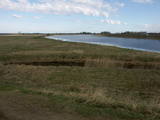 |
One of the most important locations for migrating water birds in terms of rest and feeding in Latvia is the Svēte flood-land, which overflows in the spring time, along with the Svēte polder. It has been calculated that when circumstances are good, tens of thousands of birds can be seen in the area – swans, geese, corn-crakes, pintails, predatory birds, plover-type birds, etc. |
|
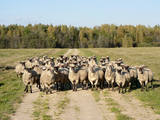 |
The farm, which has been developed around the servants’ home of the former Ķempēni Estate, breeds more than 200 Latvian dark-headed sheep. Visitors can purchase meat, wool and skins, also taking part in informational tours with tastings of various foods, as well as catching and tasting trout (this is available only to those who spend the night at the venue). |
|


