
| No | Name | Description |
|---|---|---|
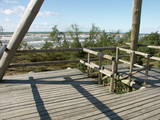 |
The Grey Dune of Pāvilosta nature reserve covers 42 hectares of land and has been designated to protect Latvia’s widest dune (1.5 km parallel the seacoast, and 812m in the direction from the sea to inland) and the biotopes and species found there. A two-storied watching platform is built to savour the scenery. In Soviet time, local fishermen used to dry seaweed in dunes for production of agar, and thus rich vegetation developed in the dune. The Gray Dune is part of a unique landscape with the sea view, the traditional architecture of Pāvilosta fishing town, and biotopes, including protected, which border the nature reserve: pine forest, embryonic dunes, white dunes, and wet beech where once can find springs. Biotope 2130, “Fixed dunes with herbaceous vegetation (grey dunes)” is found here. At present, pines are taking over the biotope, therefore some maintenance activities are required. The Grey Dune is most beautiful in the second half of July and in August when the blossoming Breckland Thyme (Thymus serpyllum) and Narrowleaf Hawkweed (Hieracium umbellatum) colour the dune in shades of yellow and violet. The most typical species here are Pasqueflower (Pulsatilla pretense), Grey Hair-grass(Corynephorus canescens), Blue Hair Grass (Koeleria glauca), Sand Pink (Dianthus arenarius). The Gray Dune earned wide recognition when a group of enthusiasts actively campaigned for six years to achieve the status of the nature reserve. Guna Grimsta, a group representative remembers that they organised events and activities throughout Latvia involving large part of the society, prominent personalities, church parishes, NGOs, school youth and university students. The activists were writing letters, making videos, doing research articles, composing music, collecting signatures and submitting proposals to achieve official status of the Grey Dune as an especially protected nature site. They organised seminars, concerts, art plenaires and exhibitions, educational excursions, joint-work, musical church services, meetings with high officials and their on-site visits to the Gray Dune. In 2006 the group received the title „Proudness of Latvia” awarded by the national TV3 broadcasting company and daily paper „Diena”. |
|
 7 days
|
Professional agricultural tour with visits to local farms typical of the region. We will meet and greet you in Vilnius and have a city sightseeing tour. Next day we go to Kaunas, for professional meetings and sightseeing of the city. On the way to Riga, we visit picturesque Trakai Castle situated on a lake. At Panevezys we have a visit to a professional apple grower. In Riga we have an Old Town sightseeing tour as well as a visit to the impressive Central Market. In Bauska we have a professional visit to a farm specilaizing in implementing innovative farming (grains, vegetables, potatoes). From Riga on the way to Tallinn, we visit Sigulda town and medieval Turaida Castle with great panoramic views to the ancient Gauja Valley. In Tallinn we have an Old Town tour through narrow cobbled streets followed by a professional visit to a dairy farm in Saku, meeting with the Estonian Farm Union and visiting another cattle and crop farm near Tallinn. |
|
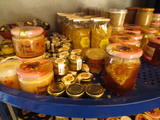 |
Old household where the owners are beekeepers. Upon request, provides an educational programme and visits for schools and events. |
|
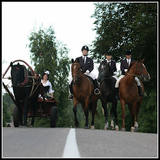 |
Kalnbundas offer possibilities for active rest – horse-back riding and horse riding. |
|
 |
The tower offers a look at the historical centre of Limbaži , the castle ruins, and the landscape all the way to Lake Dūņezers. The Limbaži castle was part of Latvia’s earliest fortifications, and its unique gates survive to this very day. Keys to the tower can be found at the museum. This is part of the ZBR. |
|
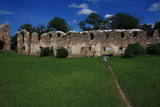 |
On the right bank of the Bērze River and in the western part of Dobele, the castle hill and its fortified forecastle were occupied between the 10th and 13th centuries, with an ancient town at its foot (currently the square between Tērvetes Street and the Liepāja highway). As was common, the Livonian Order used this ancient Semigallian castle hill to build a brick castle between 1335 and 1347. The castle was sacked during the 18th century, and its fairly impressive and beautiful ruins have been conserved. A viewing platform is part of the charm. |
|
 6 days
|
This route will allow you to see Latvia's most impressive medieval castles or their ruins, as well as outstanding manor houses from aristocratic estates dating back th the 18th and 19th century. The mansion of the Ungurmuiža Estate is one of the only wooden palaces left in Latvia from those that were built in the early 18th century. The ruins of the Cēsis Castle are among the most impressive Medieval ruins in the country. The tower of the Turaida Castle offers panoramic view of the ancient Gauja River Valley. About one-half of the route passes through the Gauja National Park. You will arrive at the place where the oldest crossing of the Baltic rivers exists - the rafts which transport people across the river are still powered by the stream itself. |
|
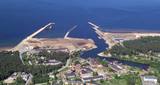 |
In the 19th century at the seaside of Skulte, a small village formed, which was inhabited by fishermen. The name “Zvejniekciems” (Fishermen’s village) arose from the population's main activity. In 1967 the Skulte part of Zvejniekciems was added to the Saulkrasti township. Nowadays Zvejniekciems is the home of Skulte Port, and the rocky beach of Zvejniekciems is located between the port and Saulkrasti Beach, while the village itself can be proud of the creative heritage left by the architect Marta Staņa (1913–1972). |
|
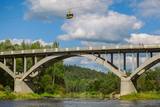 |
Gaujas tilts Siguldā ir vienīgais tilts Latvijā ar šādu unikālu tehnisko risinājumu. Pirmo reizi tilts uzcelts 1937. gadā, taču kara laikā tas tika sagrauts. 1950. gadā to atjaunoja. 2017. gada vasaras beigās noslēgsies tā rekonstrukcijas darbi. |
|
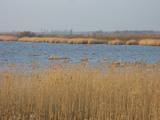 |
A shallow, eutrophic (more than 60% coverage), lagoon-type lake, which is a restricted area to protect the overgrowing lake and the damp meadows which surround it. There are some 60 species of nesting birds in the area. The system of dams on the southern shore of the lake can be used by visitors to look at the area.
|
|
 3 days
|
This is an easy 3-day route, suitable for any traveller ready to take some steps outside the capital and get into the woods. You will start the tour by taking a train from Rīga to Ķemeri. The walk will start in the Ķemeri resort park leading to the legendary sulphur spring and continue to the “Forest House” – the visitor’s centre of the Ķemeri National Park. The park is established for the protection of mainly wetlands – the shallow coast of the Gulf of Riga, the overgrown seaside lakes, the vast marshlands, mires (forests) and flood plans. Besides, there is the wooden plank Melnalkšņu swamp forest trail. Next, the Forest Trail takes one to the Lake Sloka, a shallow coastal lake with rich aquatic plants, sulphur springs and important migratory bird rest areas. On the banks of it, there is a 7 m high floating bird-watching tower. Further, the Forest Trail runs to the Gulf of Riga in the small fishermen village of Bigauņciems, where it joins with the Baltic Coastal Hiking Route (E9 European long distance path). From there on, the trail runs along the coast direction Jūrmala – the most popular resort town in Latvia with the widest sandy beaches. The tour ends in Ragakāpa Nature Park, which is established to preserve the dunes covered in old pine forests and natural diversity of the seaside. The Jūrmala Open-Air Museum is a place to get to know a traditional local fishermen’s farmstead. |
|
 |
The Lapmežciems People’s Centre was
built in 1957 and is home to the local
administrative district’s council at this time.
|
|
 5 days
|
Historians say that Liv tribes began to settle the territory that is now Latvia in the 10th century. They lived in Northern Kurzeme, at the mouths of the Daugava and Gauja Rivers, and from Ģipka to Oviši, where seaside fishing villages of Liv origin can still be found. Coastal residents have always eaten various sea, river and lake fish dishes, including smoked sole, Baltic herring, cod, bream or eelpout, baked lampreys, salted sprats, Baltic herring and common herring. Fresh and lightly salted Baltic salmon is a delicacy. Whole fish are baked on hot coals, including pike perch, trout, carp, catfish and European perch. Guests can participate in catching and smoking fish and tastings with bits of everything is available on degustations. Rye can be tasted in rye bread and sourdough bread, carrot buns and even pancakes and gingerbread. Barley buns are common in Vidzeme, as are tasty meat and fowl dishes. There will always be a pig's snout with peas or an oven-roasted piglet on New Year's Eve. Taverns serve wild game with lingonberries, mushrooms and other wild tastes. Side dishes include autumn vegetables, pumpkin, beans or grits, as well as sinfully tasty sauces. Enjoy traditional pies, sheet cakes, pretzels, apple cakes and honey bakes during celebrations or every day. You will enjoy desserts made of rye breadcrumbs, cranberries, lingonberries and sweet cream. Popular in Kurzeme are blackberry dumplings, and during summers, there are lots of desserts with fresh berries. Boost your health with aromatic herbal teas and honey, or enjoy some homemade wine or beer. |
|
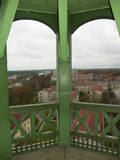 |
From the tower of St Simon’s Lutheran Church, you can see the central part of Valmiera and the banks of the Gauja River. During clear weather, you can see Zilaiskalns Hill. The church contains some cultural and historical treasures, as well as one of Latvia’s most resonant pipe organs.
|
|
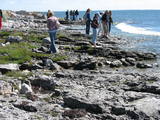 |
The national park was established to protect the 100 or so small islands that make up the archipelago of the local area. The largest island, the Vilsandi Island, is 6 km long and up to 2 km wide. You can rent a boat to get there, or, during appropriate conditions, you can walk across the sea and the small islands from the southern end of the Kuusnõmme peninsula.
|
|
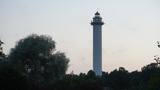 |
(formerly Pize and Pizā in Livonian). The current name of the village comes from a lighthouse (Mihailovskii majak) that was built during the age of the Russian Empire and named for the nephew of Tsar Alexander II. The lighthouse that is there now is the third one to be built on the site. It was built in 1957 and is the highest lighthouse in Latvia (57 m, can only be viewed from the outside). The Lutheran church in Mikeļtornis was built in 1893, and nearby is the Pize Saloon (1857), which is terrible condition. The saloon has a typical design from the 19th century and is the only venue of its type on the Livonian coastline. The first Livonian cultural activist, Jānis Princis (1796-1868), was born in Miķeļtornis, and he and son Jānis translated the Gospel of Matthew into the Western Livonian language. The two of them also wrote a collection of poetry, "Holy Songs and Prayers for Sailors." The only poetry book in Latvia prior to that was published by Blind Indriķis. A student of Vilhelms Purvītis, Livonian painter Andrejs Šulcs (1910-2006), was born at the Olmaņi homestead in Miķeļtornis. A monument to Livonian poets was installed at the local cemetery in 1978 and was the first monument dedicated to Livonians. There are plans to open an environmental object by artist Ģirts Burvis, "Century of Sailing Ships", in 2019. |
|
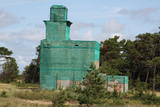 |
This is a closed and guarded territory on the banks of Lake Būšnieks in Staldzene. The former project building is on the shore of the sea.
|
|
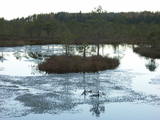 |
Teiči Nature Reserve — untouched territory, bogs, and birds. This is a significant bird resting place before seasonal migrations. Here you can see up to 1,500 cranes and 8,000 geese at once. The bog is a mating-place for black-cocks, therefore if you are near in an early spring, listen, and maybe you will hear these majestic mating calls. The trail can be visited only with the Nature Conservation Agency employee's escort from June 1 until October 31. |
|
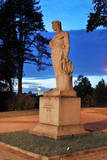 |
This 1939 monument was designed by Kārlis Zemdega and is dedicated to Agriculture Minister Arturs Alberings from the first period of Latvian independence. The monument shows a young man with a grain basket. The monument disappeared during the Soviet occupation, and a gypsum statue of a Pioneer was installed instead. In 1977, children found some parts of the old sculpture buried in the ground, and 10 years later someone found the head of the monument. After a restoration, the Sower sculpture is now in its historical location – in the Terneja Park alongside Rīgas Street. |
|
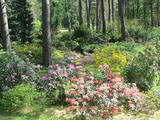 |
This arboretum was established in 1996, when dendrologists Raimonds Cinovskis and Ināra Bondare joined with the local government in Rucava in experimenting with plants on the Rucava castle hill. The first plants were planted in 1998, and ever since then the collection has been expanded in the town centre and outside the Rucava Elementary School. Each year new and exotic plants are brought in from all around the world. A traditional garden festival is held each year in May, when rhododendrons and magnolias are in full bloom. |
|


