
| No | Name | Description |
|---|---|---|
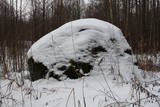 |
The historic stone, on which there is carved over 200 years old boundary-mark, sets the border between the Duchy of Courland and the Russian province. Nowadays, it sets the Babīte and Jelgava district boundary. The stone lies to the East of Kalnciems–Peat road (the south of the swamp Labais purvs) at the edge of a forest firebreak and it can be hard to find. To this end, the description of the road map may help: around 400 m south of the car parking lot at Lily Lake from Kalnciems-Peat road to the right (in the east) turns a forest road which leads down from hills Krāču kalni. It should be around 170 m to go until it abruptly turns to the right (to the southeast). Then you must go in this direction until after ~ 0.5 km to turn to the northeast where after further ~ 0.4 km of the current forest road intersection turn to the north. After ~ 0.4 km turn right (to the east) on a big firebreak, on the left (the north) side of which behind the drainage ditch during the non-leaf period there can be seen a rounded stone. Due to the poor condition of roads, the stone can be reached only on foot. |
|
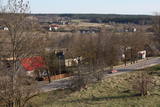 |
We recommend that you walk through the town of Kandava not only to enjoy the charm of a small town, but also to find fantastic viewing locations where you can see the town and the shores of the ancient Abava River valley from the Kurši (Ancestor) castle hill, Lielā Street, the Bruņinieki castle hill and Zīļu Street (School Hill), as well as from the area of the Ozolāji open-air stage.
|
|
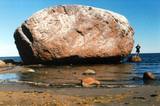 |
This is the largest rock in the Baltic States and, according to some sources, in all of the segment of Northern Europe which was affected by the last Ice Age. Its size is 930 m3! The rock is 7.5 m high, 16.5 m long and 14 m high, with a circumference of 48.5 m. The rock resembles a huge pebble from a distance, and it is on the sandy and rocky beach. Depending on the season, it can be out in the water. The Ice Age carried the rock to its current location from the southern shore of Finland. It is made of pegmatite.
|
|
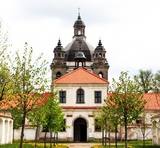 |
Ein hervorragendes Sakralensemble im Barockstil (17 – 18 Jh.), eine Kirche und ein tätiger Nonnenkloster. |
|
 4 days
|
This is for birders who can’t afford to take longer breaks to enjoy birdwatching. Short but rewarding trip during spring migration. Cape Kolka is a place where pass the largest numbers of migrating birds in the spring time. More than several tenth of thousand birds cross the Cape each hour. During active period of migration it is possible to see more than 100 different species daily just at this one place. There are several birdwaching places located at different biotops – seaside meadows, sea cost and lakes and wetlands. Kemeri National Park is one of the best places for woodepecker watching. In a short period of time it is possible to see about seven species. |
|
 6 days
|
For the introduction into the Latvian craftsmanship make a visit to the Open-Air Ethnographic Museum in Riga where skillful masters will show you traditional skills. Out of Riga visit birch juice and wine maker which tells and shows how the birch juice is extracted and how preserved. You could taste it as well. Then go the area connected with ancient historic legends. Visit the museum of famous Latvian hero Lacplesis to see there Lielvarde Belt where the story is written using ancient secret symbols. At Koknese have a Viking boat trip around the picturesque Koknese castle ruins. Then visit farm which grows hemp and makes traditional hemp butter, goats farm and home-made traditional beer producer. Latgale region is famous for its pottery schools and "black" ceramics. You visit few workshops on the way as well as Ludzas Crafts Centre which provides great insight into local traditions. At the typical Latgalian farm try traditional sauna ritual and have proper regional meal. Further on stop at the Aglona Basilica which is a pilgrimage place. But for stomach pleasures visit Bread Museum, farm which produces tasty cheeses and other healthy diary products as well as visit herbal tea maker and learn there few health tips. Sightseeing of Daugavpils historic centre, impressive 19th century' s fortress are followed by visit to Lead Shot Factory where is a biggest shot towers in Europe which still works. On the way to Riga visit impressive Baltic pearl - Rundale Palace. |
|
 |
The café is in the former administrative building of a collective farm in the centre of Gaigalava. It cooks dishes with ingredients from its own farm and others. |
|
 |
Wooden slat weaving workshop is located in Jelgava county, Sesava parish. Craftswoman is making different type of wooden slat baskets and basketry from pine, linden, aspen and black alder. There are several different categories of baskets, available in different sizes - picknick baskets, baskets for berry and mushroom picking, trays, baskets for firewood, laundry baskets, onion / garlic baskets, baskets for kids, and diverse baskets for daily use. Various inscriptions and drawings are also made on the weavings. They also accept orders for individual orders. In the workshop it is possible to see the wooden slat basket weaving process as well as have the opportunity to learn to make your own basket. |
|
 |
Reta galda vīnogu kolekcija un degustācija, ainaviska dārza apskate un stāstījums par ķirbjaugu, čilli un tomātu šķirņu kolekciju. Kolekcijā ir 120 šķirņu tomātu, 20 šķirņu paprikas un aso piparu, 140 šķirņu ķirbjaugu. Degustācijas galds - sukādes, čilli, interesanti ievārījumi un pašu fermentētas tējas. |
|
 |
The café is in the centre of Lielvārde and offers a full feeding service, including breakfast, dinner, supper. Latvian cuisine: Cold soup, fresh cabbage soup, baked carp or catfish, steak haché, grey peas with bacon, pancakes. |
|
 |
Pie ceļa, kas no Bernātu ciema centra ved uz jūru, redzamas augstas ar mežu apaugušas kāpas. Uz vienas kāpas (ir norāde) novietots piemiņas akmens ar pirmā Latvijas Valsts prezidenta Jāņa Čakstes 1924. g. teiktiem vārdiem: “Te jābūt kūrortam.” Atrodas Bernātu dabas parkā. |
|
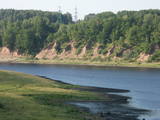 |
In Aizkraukle, drive down Enerģētiķu Street to the Selonian side (there will be small “pockets” at the side of the road) to see one of the best views of the Daugava River valley, reminding us of what this fateful river was like before the power plant was built. You will see that the river has eroded the steep cliffs on the right bank. The further part of the valley is part of the Daugava Nature Park.
|
|
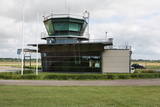 |
The current Ventspils airport began its life as a military object. Today regular passenger flights to and from Rīga have been suspended, and the airport is only used for small planes.
|
|
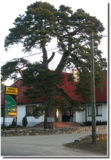 |
The Great Pine of Bigauņciems outside
the Dižpriede café,
|
|
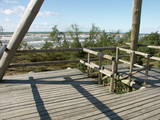 |
The Grey Dune of Pāvilosta nature reserve covers 42 hectares of land and has been designated to protect Latvia’s widest dune (1.5 km parallel the seacoast, and 812m in the direction from the sea to inland) and the biotopes and species found there. A two-storied watching platform is built to savour the scenery. In Soviet time, local fishermen used to dry seaweed in dunes for production of agar, and thus rich vegetation developed in the dune. The Gray Dune is part of a unique landscape with the sea view, the traditional architecture of Pāvilosta fishing town, and biotopes, including protected, which border the nature reserve: pine forest, embryonic dunes, white dunes, and wet beech where once can find springs. Biotope 2130, “Fixed dunes with herbaceous vegetation (grey dunes)” is found here. At present, pines are taking over the biotope, therefore some maintenance activities are required. The Grey Dune is most beautiful in the second half of July and in August when the blossoming Breckland Thyme (Thymus serpyllum) and Narrowleaf Hawkweed (Hieracium umbellatum) colour the dune in shades of yellow and violet. The most typical species here are Pasqueflower (Pulsatilla pretense), Grey Hair-grass(Corynephorus canescens), Blue Hair Grass (Koeleria glauca), Sand Pink (Dianthus arenarius). The Gray Dune earned wide recognition when a group of enthusiasts actively campaigned for six years to achieve the status of the nature reserve. Guna Grimsta, a group representative remembers that they organised events and activities throughout Latvia involving large part of the society, prominent personalities, church parishes, NGOs, school youth and university students. The activists were writing letters, making videos, doing research articles, composing music, collecting signatures and submitting proposals to achieve official status of the Grey Dune as an especially protected nature site. They organised seminars, concerts, art plenaires and exhibitions, educational excursions, joint-work, musical church services, meetings with high officials and their on-site visits to the Gray Dune. In 2006 the group received the title „Proudness of Latvia” awarded by the national TV3 broadcasting company and daily paper „Diena”. |
|
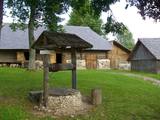 |
This is a unique open-air museum in South Estonia with displays on farming and school life in the late 19th and early 20th centuries. Its 5 ha grounds comprise a school, a court and a poorhouse with outbuildings, a communal granary, dwelling houses, and a Dutch windmill. Farm tools and machinery are also displayed. |
|
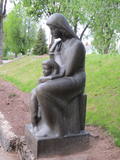 |
Located at the Rūjiena High School, this Kārlis Zemdega sculpture was installed in 1936 in honour of a local teacher, Jūlija Skuiņa, who drowned in 1936 at the age of 24. There are various legends about her death, one of which talks about a tragic love story involving the Rev Roberts Slokenbergs. |
|
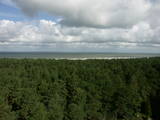 |
This lighthouse is in Ovīši, which is an ancient Livonian village. The 38-metre lighthouse on Cape Ovīši was built in 1814 and modernised in 1860, and it is the oldest functioning lighthouse in Latvia today. Visitors will get a great view of the shores of the Baltic Sea and the forests which cover them. The lighthouse also offers an exhibition devoted to the history of lighthouses in Latvia.
|
|
 |
Aitu audzēšanas saimniecībā ir ap 300 aitām. Saimniecības un aitu apskate, konsultācijas aitu audzēšanā un ganāmpulka izkopšanā, praktiski padomi. Šķirnes aitu, gaļas jēru un vilnas iegāde. |
|
 8 days
|
This tour offers a look at modern farms that based their work on ancient jobs and skills. Everything that is grown and processed in Latvia's countryside is found at the Central Market in Rīga, where this tour begins. It is one of the largest and oldest markets in Europe. From there you will travel to several farms to taste candy made of natural juices, cheese, grain foods, yogurt and ice cream. You will visit a traditional farm with a technology museum. Each farm will offer a brief introductory tour. Along the way, you will visit the Rundāle Castle and its park and rose garden, which were designed by the 18th century architect Rastrelli and are a true jewel of Baroque and Rococo architecture. In Bauska you will visit City Hall to see a collection of old measuring items, the Bauska Castle and the Bauska brewery. In Lithuania you will visit farms that grow lavender, medicinal plants and hemp. They will be happy to sell their products to you. The town of Anykščiai offers a trail above the trees, and the Krenave archaeological complex is on the UNESCO heritage list. At the conclusion of the tour, you will visit the Trakai lake castle that was built in the 14th and 15th centuries, as well as Vilnius. |
|


