
| No | Name | Description |
|---|---|---|
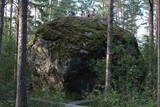 |
Der dritgrößte Feldstein im Baltikum (584 m3, 7 m hoch, Durchmesser bei dem Grund – 32 m ). Auf estnisch bedeutet „Hausstein”. Befindet sich am Rande des Pikanõmme – Majakivi Pfades (4,5 km lang). |
|
 |
The Līgatne Paper Factory is located at Pilsoņu Street 1 in Līgatne. The factory was first built in place of an old paper windmill by two tradesman from Rīga who also built dormitories for residents. These structures are an important component in the urban environment of Līgatne. The rapid flow of the Līgatne River allowed the factory to produce writing paper, stationary and wrapping paper. In 1858, the factory was brought by a local nobleman who brought in new equipment from Scotland. If some 100 people worked at the factory during the first half of the 19th century, then that number rose to 600 by the end of the century and 800 at the beginning of the 20th century. Writing paper was the primary product from the factory, although there were sometimes special orders. During World War I, for instance, the factory produced paper on which the Russian military printed its maps. This allowed the factory to hold an important role in the Russian market. During the Soviet era, the factory at Līgatne produced notebooks and other products that were sent all over the USSR. Today the factory mostly produces wrapping paper of various kinds from waste paper. The Līgatne Paper Factory is the only functioning entity of its kind in Latvia, and there are guides available to give you a tour. The historical centre of the campus on which the factory sits is a cultural monument. The Līgatne Tourism Information Centre (_371-6415-3313) offers tours of the centre during which you will learn about the lives of the factory's workers and administrators in the late 19th and early 20th century. Back then there was major construction work at the factory to build residences for workers, a school, a childbirth facility, a hospital, a club, a guesthouse and other buildings which have survived to the present day. |
|
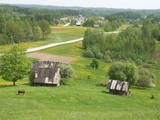 |
One of the most distinct sub-glacial depressions in Latvia, with 11 lakes of various sizes and depths. This is a magnificently lovely territory, with particularly good views from the Drusku castle hill. On a clear day, one can even see the Hanja highlands of Estonia. The restricted territory was set up to protect boreal and hillside forests I the area.
|
|
 |
Your visit to the Sēlija tree farm will include an exciting story from the owner, Mendriķis, about apple trees. You can tour the orchard, warehouses and processing facilities, enjoying a glass of apple juice or listening to the story about winemakers while sipping a glass of apple wine. |
|
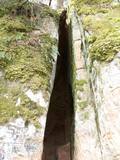 |
The Vējupīte ravine is meant for those who are not afraid of long and steep wooden stairs of the type that lead you up and down the ravine. From the Līvkalns guesthouse, you can climb the stairs downward, where you will find a shallow (3.6 m) but high (6.1 m) cave – the Pēters Cave. It is something of a gap or a niche. Another 10 minutes or so downstream (toward the Gauja) will lead you to the deep Pūces ravine and its Kraukļupīte River. The Satezele castle hill is at the confluence of the two rivers (90 x 75 m). A wooden castle was there during the feudal era in the early 13th century. Its main entrance was on the western side of the castle hill. You can get to the hill from the depths of the ravine via a wooden staircase. The Kraukļi ravine, in turn, is accessible if you climb down the same stairs and continue on your way toward the Gauja. The ravine is found on the left bank of the Vējupīte, and its sandstone walls are up to 11 m high. The Kraukļi cave, which is 5.2 m deep, is on the wall. Another 10-15 minutes (crossing the Vējupīte on a wooden bridge), and you will find another staircase leading you to Paradīze Hill (see the description above). |
|
 |
The pizzeria is situated in Talsi, not far from Talsu lake. Stender’s pizzeria with its nice comfortable setting offers special Stender’s pizzas which are baked according to the old traditions of pizza-making, incorporating the best of nowadays’ recognitions. Undoubtedly, it is impossible to do without pancakes and pots, as well as second-course dishes. Number of seating places:30 |
|
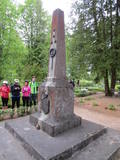 |
Near Karva along the old Alūksne-Ape road, the monument was unveiled on November 12, 1937. It was designed by the architect Verners Vitands and contains the text “Soldiers from the Valmiera Brigade who fell during Latvia’s liberation battles in 1919; I rested my head on the moss and defended my fatherland.” The monument was torn down in 1975 and restored in 1944. |
|
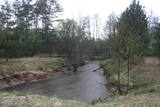 |
Nature restricted area is located to the South from former railroad Ventspils-Liepaja and includes approximately 6 km of Uzava River (and the old drainage system). The territory was used for agriculture during Soviet time, now it starts overgrow by scrubs. The protected nature values – rare bird species, including corncrakes, variety of grassland habitats and plant species. Territory is not useable for tourism activities. There is a possibility to get good insight into the North part of restricted area from the road Alsunga – Berzkalns where information stand is located.
|
|
 |
The property is located in the traditional fisherman's village, and local dishes and crafts are respected here. Guests are offered home-made products, as well as master classes for cooking and crafts, and are introduced to rural life. |
|
 |
The farm makes goat’s milk cheese and other goat’s milk products. Goats, sheep, rabbits and domestic birds are bred here. You can purchase products by ordering in advance, excursions on the farm are organised during summer. |
|
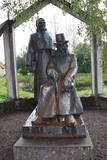 |
The monument is next to the Vecpiebalga Cultural Centre. Its architect was Ausma Skujiņa, and the sculptress was Maija Eņģele. |
|
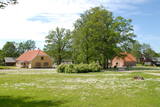 |
The Turaida Museum Reserve is found at the place where the deep gullies of a number of small streams split up the right bank of the ancient Gauja River valley. The Turaida Museum Reserve features monuments of Baltic importance, and their history dates back more than 1,000 years. Among the treasures are the Turaida Estate (21 buildings), the grave of the Rose of Turaida, the Turaida Lutheran Church (one of the oldest wooden churches in Latvia, 1750), and the Turaida Castle. Nearby is Folk Song Hill, where various thematic events are organised. |
|
 |
The café is in the Oga shopping centre, offering cheeses that are the “business card” of the city. |
|
 |
Находится~ в 4 км, не доезжая до Априки (установлен указатель) – Гибортское кладбище. Слепой Индрикис (1783 – 1828) был латышом, опубликовавшим первое собрание стихов на латышском языке (1806 г.). Индрикис был слепым с 5-летнего возраста и был необразован. Его стихи записал и издал в упомянутом году священник Априкского прихода K. Г. Элверфелдс. На кладбище установлен памятный камень (1935 г.) и созданное Вилнисом Титансом «Аустрас кокс» с надписью шрифтом Брайля. |
|
 |
Hauptstadt von Hiiumaa. |
|
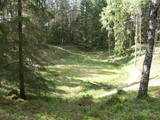 |
There are three craters here, and the biggest one, known locally as Põrguhaud, or Grave of Hell, has a diameter of 80 m and a depth of up to 12 m. There are barriers around the crater that are several metres high. The other two craters are hard to spot. The craters around 6,000 years old. No scraps of the supposed meteorite have been found, however, and so the origins of the craters cannot be confirmed with certainty.
|
|
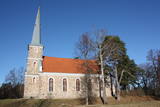 |
A wooden church was built here in 1766, and the new brick church was built on the foundations of the old church and consecrated in 1868. The tall steeple of the church helped ship captains orient themselves during the daytime. An altar painting by Gunta Liepiņa-Grīva, "Christ and Peter on the Sea," was consecrated in 1993 to replace the former painting, which was lost. The blue-white-green Livonian flag was consecrated at the Mazirbe manse (now a recollection centre) on November 18, 1923. Near the manse are several rocks which stand witness to the Black Plague in 1710 and 1711. The text in Latin said that Livonians on the coastline were conquered by Swedish King Karl IX and the bubonic plague. The texts on the rocks have eroded away, but records of them were made. The Mazirbe cemetery has a monument to Old Taisel, a monument to the parents of captain A. Bertholds, and the legendary grave of a werewolf. |
|
|
|
This is a lovely place in Sigulda which has been painted (as the word "gleznotāji", which means "painters" suggests) and photographed for centuries. This is basically not a hill at all, it's just the place where the shore of the ancient Gauja River valley is split by the mighty Vējupīte ravine. You will have an excellent view of the Turaida Castle and the river valley. There are leisure facilities and a viewing platform there. You can ride to Paradīze hill via an electric car. |
|
 |
Aktīvā atpūta svaigā gaisā, dabā. Dabas taka, atpūtas vieta, grilla vietas, lapenes. Lāzera cīņas jeb Laser tag ir spēle svaigā gaisā, ģimenes vai draugu kompānijā. Iegūsiet pozitīvas emocijas un kārtīgu adrenalīna devu, spēlējot augsti tehnoloģisko spēli reālā laikā un vietā. Lāzera cīņas ir visiem labi zināmā peintbola analogs, bet atšķirīgs ar to, ka Laser taga spēlē spēlētājus-pretiniekus “neitralizē” ar drošiem un nekaitīgiem lāzera šāvieniem no lāzera-ieroča, bet pati spēlētāja “neitralizācija” notiek, kad speciāli devēji (sensori), kuri ir nostiprināti uz spēlētāja apsaites, reģistrē pretinieka lāzera-ieroča staru, kas nozīmē, ka nav ne krāsu bumbiņu, ne sāpīgi sitieni, ne zilumi. Šī koncepcija padara Laser tagu pieejamu ne tikai vīriešiem, bet arī sievietēm un bērniem. |
|
 | ||


