
| No | Name | Description |
|---|---|---|
 |
On the left bank of the ancient Gauja River valley, between the Paparžu ravine and the ravine along which the Sigulda-Turaida road passes through the valley there are the ruins of a castle built by the Order of the Brethren of the Sword. Construction on the castle began in 1207, and three decades later, in 1236, the castle was rebuilt for the needs of the Livonian Order. The Sigulda Castle suffered much damage during wars in the late 16th and early 17th century. During the Great Northern War, it was burned down and never restored. What is there today is the south-western segment of the castle's convent building, as well as the tower of the main gate. Beyond that is the internal forecastle, where there is an open-air stage for the annual Sigulda Opera Music Festival and other public events. There are also impressive views of the ancient Gauja River valley, Krimulda and Turaida. Reconstruction of the ruins is currently ongoing, and after the work is completed a second tower on the left side of the stage will be available to visitors. The plan is to install crossings around the walls of the convent building. Presently the ruins are available on a 24/7 basis and free of charge, but after the restorations are completed in 2012, admission will be charged. |
|
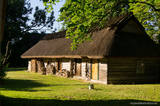 |
Third biggest island in Estonia. Full of beautiful grown junipers, little dolomite outcrop on the coast of the sea and fishermen villages on the coastline. |
|
 |
This trail offers education about the forest for children of all ages, families with children, and friends of the environment. The trail is located in the Īle Parish of the Auce Administrative District, 2 km from the Pokaiņu forest. |
|
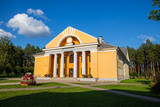 |
Seda is one of the most unusual towns in Latvia. It began its life as a housing area for people from the local peat moss factory, and that happened in the 1950s and 1960s. This is a “vivid” example of Soviet architecture, with a central square (complete with a monument to the Leader) and streets radiating from it. Worth a visit is the cultural centre at the end of Uzvaras Street. It is a great example of so-called Stalinist Classicism architecture. |
|
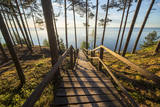 |
The trail reveals one of the rare bluffs of the Gulf of Riga – the Ēvaži Bluff (up to 15m high, a beautiful scenery opens from its watching platform) and the seashore forests. The trail starts from the main road and crosses a biotope “Wooded dunes of the coast” (according to Habitats Directive, Annex II), which is frequently observed by the sea. One can climb down the stairs to an extraordinary beach with narrow seashore and Black Alders growing almost in the sea. There are occasional puddles which make shelter for Natterjack Toad (Bufo calamita), a protected amphibian. Deeper pools are inhabited by three-spined stickleback (Gasterosteus aculeatus), they are food for fish-eating birds. In the second half of the summer, Common Shelduck (Tadorna tadorna) can be observed in the sea. About two kilometres to the South, there is Melnsils, one of the Liv fishing villages, famous for the stories about a channel which was once dug to drain coastal lakes into the sea, as well as about Trommel, the chief of robbers. The trail is in the Slītere National Park. |
|
 1 day
|
Tūrisma gide Ineta Jansone piedāvā ekskursijas grupām pa Raganu purvu. Izveidota taka uz sēra dīķiem (koka celiņi 800 m garumā). Ekskursijas laikā Jūs uzzināsiet par augstā tipa purvu un unikālu biotopu – sēra avotu izplūdes vietu Ķemeru Nacionālā parka teritorijā. Šeit sastopami savdabīgi purva ezeriņi, piesātināti ar sēra baktēriju radītām nogulsnēm. Ezeriņu krastos sastopami īpašu sugu augi. Sēra dīķu apkaimē var sajust gaisā sērūdeņraža smaržu. |
|
 |
Viitna Tavern is one of the few 19th C tavern and post station buildings preserved in Estonia to date. Originally landlords and other rich folk had their rooms and a horse stable in the building’s left wing; today it is a canteen and Estonian handicraft shop. The right wing was for peasant folk chambers and a stable; today it houses a restaurant featuring national dishes on its menu. |
|
 |
Stādaudzētava piedāvā rožu, skujeņu, dižstādu, ūdensaugu, lapu krūmu un dzīvžogu materiāla iegādi un konsultācijas.
|
|
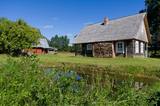 |
Dabas un meža ieskauta lauku māja ar 4 h lielu teritoriju atpūtai laukos. Caur pagalmu tek upīte Nova. 3 km attālumā atrodas Novaraisčio ornitoloģiskajā rezervātā. Rezervāta mitrājos dzīvo simtiem dzērvju. Ik rītu tās lido virs mājas un vakarā kliegdamas atgriežas. Plaša zaļā zona piemērota dažādu pasākumu rīkošanai. Iespējama nakšņošana teltīs. Īpaši gaidītas ģimeneS, kas novērtē senās lietuviešu tradīcijas. |
|
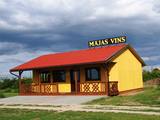 |
The owner uses Latvian products to make and offer more than 20 different wines, including some that are made of exotic flowers. You can taste and purchase wines made of berries, fruit, vegetables and flowers, including white jasmine, the elderberry tree, dandelions, the large cranberry, etc. There is a lily garden alongside which is the largest one in Eastern Europe and offers plants for sale. The day lily garden offers a look at globally famous types of day lilies which can be purchased. Many of these have been developed by the originator of the garden, Varis Baņģieris. More than 1,000 types of day lilies can be seen and purchased. The garden is open from 9:00 AM until 7:00 PM every day in July and August, when the flowers bloom. The owner also offers tastings of homemade wine that is called "Vējkalnietis." |
|
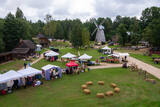 |
The venue features tools, farm machines, mechanisms and everyday objects that are typical of Latvia’s countryside. These are both in the yard and in the buildings of the enterprise. You can help to bake bacon rolls and loaves of bread in areal country oven. The owners will be happy to provide you with an informative tour. Water mill that is used for grinding grains: coarse milling, pearling, and making groats. At the annual Sowing Festival and Harvest Festival, the exhibited steam-powered machine and threshing machine can also be seen in action. During festivals, countryside markets and tastings also take place. |
|
 11 days
|
The tour begins in Riga with its Art Nouveau district and Old Town. Make your way to Sigulda by train. A hilly road passes Gutmana Cave, Turaida Castle and Krimulda Castle which stand on the hillsides of the Gauja river valley. The road continues to Limbaži, which is a typical Latvian provincial town. Further on you reach the Baltic Sea coast and Salacgriva, which is famous for its fishing traditions and lamprey. Outside Salacgrīva town there are rare coastal meadows and lagoons. After crossing the Latvian-Estonian border point, the road winds through old coastal villages - Ikla, Treimani, Kabli and Häädemeeste before rejoining the Via Baltica. At Pärnu explore Ruutli pedestrian street and the old fortifications. It is time to cross to the islands - the route passes through the small island of Muhu. Visit the local fish cafe at Livi and ethnographic fishermens’ village of Koguva. Then the route leads to Saaremaa island over a causeway. The main sites on the route are 'Valjala maalinn' – one of the most attractive hill forts in Estonia, the Valjala church, and meteorite craters of Kaali. By bus you head to the Estonian capital, Tallinn, charming with its medieval Old Town. From there take a tour of a former Soviet submarine base at Paldiski, a memorable reminder of recent history. |
|
 |
The company is in a building that was built in 1911 and produces milk, kefir, buttermilk, cream, cottage cheese, sweet cottage cheese crèmes, butter, yogurt and cheese. A store alongside the co-operative offers Straupe Dairy Co-operative products, as well as cheeses manufactured by its partners – Smiltenes Dairy and SIA Latvijas Piens. This is one of five companies in Latvia that is allowed to manufacture one of the EU’s guaranteed traditional characteristics product, “Summer Solstice” cheese. The products have been awarded the “Green Teaspoon” and “Latvian Goodies” status. Group tours are offered a chance to taste the products and learn about the co-operative’s operations. |
|
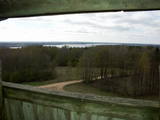 |
This is one of the highest points among the hillocks of the Selonian area of Zemgale – Borīškalns Hill. From the tower, you will see Lake Sauka, as well as the forests and farmland which surround it. The “Kalna Ļūdāni” farm is nearby, and its owner uses his livestock to help to maintain the surrounding landscape.
|
|
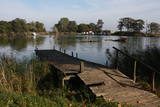 |
1855, als einen Schiffahrtsweg getieft wurde, wurde im Haff unerwartet eine Bernsteinablagerung gefundet. In der Zeit zwischen 1860 und 1890 wurde dort 2250 Tonen Bernstein gewonnen, einbezogen einzigartige Bernsteingegenstände aus der Jungsteinzeit und der Bronsezeit. |
|
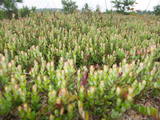 |
This is a diverse territory in terms of biotopes and landscapes, and the restricted area was established to protect nesting and migrating birds in the area. One part of the swamp has a cranberry farm – one of the first artificially established farms of its type in Latvia.
|
|
 |
The garden is located on the very bank of the River Gauja, near the Valmiera Castle ruins. A story about the use of plants in preparing meals. Bread, gingerbread baking, cheese making programmes. |
|
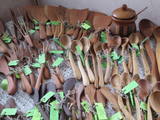 |
The spoon workshop offers useful objects such as wooden spoons, cutting boards, butter knives, pans, spatulas, etc. You can produce your own wooden spoon and look at finished spoons made of more than 17 different types of wood from Latvia. During the summer the owners offer “pancake tours” with tasty jams. You can purchase spoons and homemade wine. |
|
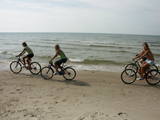 |
The “Nida-Pērkone” protected marine territory is one of the most biologically diverse marine territories along the shore of the open part of the Baltic Sea, and it is enormously important for environmental protection. The most important reef territories are found here. During migration season, most species of migrating birds that are found in Latvia cross the area. The territory is particularly important to protect the goosander and the little gull. The territory is opposite the Rucava and Nīca administrative districts and covers 36,703 hectares. It overlaps the marine section of the Pape Nature Park and the Bernāti Nature Park.
|
|
 |
The café is in the former administrative building of a collective farm in the centre of Gaigalava. It cooks dishes with ingredients from its own farm and others. |
|


