
| No | Name | Description |
|---|---|---|
 12 days
|
The duration of this route is 9 days with an option to extend it for 12 days. The target audience for this route - independent travellers with transportation like bicycle and canoe boat. The total length sums up to ~ 446 km cycling and ~ 7 km canoeing. Itinerary: Rīga - Gauja National Park - Otepaa - River Ahja - Tartu - Lahemaa National Park - Tallinn. |
|
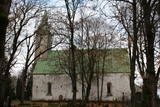 |
Vienīgā baznīca nacionālā parka teritorijā. Tā atrodas Kirblas (Kirbla) ciemā – uz neliela pacēluma, kas Baltijas ledus ezera laikā bijusi sala, kuru no visām pusēm ietvēris ūdens. Kirblas baznīcas pirmsākumi ir meklējami 16. gs. un par tās celtniecību saglabājušies dažādi interesanti nostāsti. Tas ir viens no mazākajiem Igaunijas dievnamiem (29 x 11 m). |
|
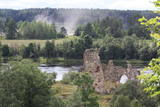 |
Found on the right bank of the Daugava where the little Karikste river flows into the Daugava, all that remains of the castle today is a set of ruined walls and foundations. The castle was built by the Livonian Order in 1224, and it was inhabited until the mid-17th century, when it was sacked during the Polish-Swedish war. The ruins offer a good view of the local gravel road that goes along the right bank of the river valley.
|
|
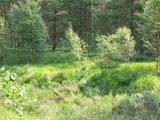 |
The word grīnis in Latvian refers to a very unusual type of forest – pine trees growing on sandy soil. There are two types of this environment – the heather type and the grass type. This is the result of long-lasting interaction between nature and humankind, and such sites are found in just a few places along the shores of the Baltic Sea in Latvia. A very rare plant which grows in the area – cross-leaved heath – was the main reason why a nature reserve was established here in 1936. An abandoned former rail line between Ventspils and Liepāja crosses the reserve from the North to the South. Visits to the reserve are strictly prohibited. |
|
 |
Located in the centre of Ventspils next to the Town Hall Square. Enjoy typical Latvian cuisine in a pleasant atmosphere. |
|
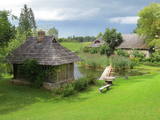 |
Organic farming principles which maintain the biological diversity of the surrounding region will be explained to visitors during a tour which also offers consultations on environmentally friendly farming. Organic produce is available for purchase, and visitors can relax on the waterside - fishing, enjoying a sauna and making use of local accommodations. A herd of wild cattle can also be observed.
|
|
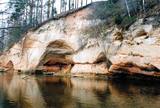 |
This is one of the most beautiful ancient river valleys in Estonia – 12 km long with nearly 40 revealed Devonian sandstone cliffs. Among these, the most important ones are Viira müür, Kalamatu müür, and Põdramüür.
|
|
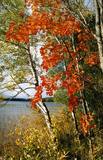 |
This area protects the landscape of the Lielauce hillocks, which are a part of the Eastern Kurzeme highlands. Lake Zebrus and Lake Svēte are in this territory. On the north-eastern shore of Lake Zebrus one can see the Ezerlūķi castle hill. On the eastern shore of the lake is a boating area, along with a viewing tower and a set of information about the area. The territory includes protected biotopes such as stream swamps and swampy forests, along with protected birds and species of bat. |
|
 |
Einen malerische Sandsteinfelsen bis 600 m lang und 21 m hoch am linken Flussufer vom Gauja. |
|
 |
Kalakuningad offers smoked fish directly from the oven, fresh fish during the season, as well as marinated fish in various sauces. Products can be purchased in Pärnu market in the store Kalakuningad, as well as directly in the place of preparation, the Lindi village Pärnumaa. |
|
 |
Ogu un augļu dārzs, dažādu ievārījumu, sulu, sīrupu ražošana un tirdzniecība.
|
|
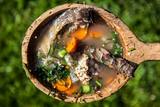 |
You can learn how to cook fish soup here, and the recipes are based on hundreds of years of fishermen's traditions in the Upper Aukštaitija region. You'll learn all about local dining traditions, local lifestyles and traditions since the 13th century. You can go fishing, as well as mushroom and berry picking. |
|
 3 days
|
Это один из 6 маршрутов путешествий в серии «Насладитесь деревней!», который приглашает Примерное время прохождения маршрута: четыре – пять дней, в зависимости от количества выбранных достопримечательностей и времени, отведенного для их осмотра. |
|
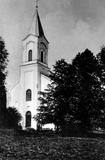 |
The first building of the church was built in 1641. The fourth building of the church was only built in 1856 – during the times of Pastor Johann Wilhelm Knierim. Its altar painting – The Crucified Christ (Golgotha) was painted in 1856 by Jozeps Millers, who was influenced by the altar piece in Munich Louis Church created by his teacher Peter Cornelius. An epitaph of Baroness Auguste Amalija von Pistohlkros, the sister of the owner of Bīriņi Manor and the patroness of the church, was immured in the memorial wall. Construction of the tower was completed on 11 June 1856, as evidenced by a memorial plaque on the wall of the church with an inscription “Erbaut von August Pistolkors 1856”. The church was consecrated in 1864. And a year later an organ by Martin Company with 8 registers, which was extended to 14 registers in 1903, was installed in the church. Unfortunately, the organ was destroyed in WW2. Saulkrasti (Pēterupe) Evangelical Lutheran Church survived both World War 2 and the Soviet period. The Soviet era was one of the most difficult times for the church, because many churches in the area were destroyed, pastors were discharged and the congregation fell apart. The Pēterupe congregation remained. As an architectural monument the church was lucky enough to undergo roof repairs of the tower even during Soviet times. Funds were granted by the Chairlady of the Executive Committee Ņina Manzūrova. |
|
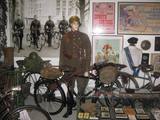 |
This collection contains bicycles from five different armies and five different eras in the history of Latvia. They include a World War I bicycle from the Russian Empire, a bicycle from the Latvian army, two World War II German bicycles, and a Monark-brand military bicycle from Sweden that was donated to the renewed Latvian army in the 1990s. The exhibition also features items that are related to the use of military bicycles – seals, awards, and information about the bicycle units of Latvia’s Home Guard.
This is the only bicycle museum in Latvia, and its exhibits are unique, as well.
|
|
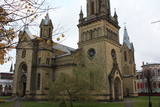 |
Atrodas starp Kr. Valdemāra un Kuršu ielām. Viena no iespaidīgākajām un greznākajām pilsētas celtnēm, kas būvēta neoromantikas formās. 19. gs. beigās katoļu draudze nevarēja saņemt atļauju jauna dievnama celtniecībai, tādēļ uz vecās ēkas uzbūvēja jaunu, kur vecā baznīca tapa par lielākās ēkas sānu kapelu. Baznīcas sienas un koka griestus rotā attēli ar Bībeles sižetiem. Dievmātes kapelā saglabājies mazās baznīcas (no 18. gs.) centrālais altāris. Baznīcas griestos ir iekārts burinieka modelis, ko dāvinājuši vētras laikā izglābušies jūrnieki. |
|
 |
This viewing tower is on a narrow peninsula among Lake Lukna, Lake Višķi, and Lake Boltars. From it, you can see all three lakes, the hillocks of the area, as well as Ambeļi and Višķi. Come here when the bird-cherry trees are in bloom!
|
|
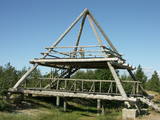 |
This is the only viewing platform of its kind. It is north of Pāvilosta, between the sea and Latvia’s largest gray dune. The second level of the platform offers a good view of the habitats which surround the dune, as well as the seashore and the largest seashore rock on the shores of the Baltic Sea – the Pāvilosta sea rock. You can also see the northern part of Pāvilosta. When it is windy outside, you’ll see kiteboard riders showing their tricks.
|
|
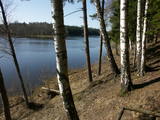 |
Lake Valgums is 3 km long and 27 m
deep, and it dates back to the last Ice Age.
|
|
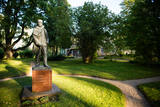 |
The memorial museum for Edvards Veidenbaums (1867-1892) was established at his homestead, “Kalači.” The great poet and translator lived there from the age of five and also died there. Alongside the museum is an exhibition hall that offers thematic exhibitions. A monument designed by the sculptor Laimonis Blumbergs is in the garden of the museum and was installed in 1961. There is also a granary in which Veidenbaums lived during the summer. The poet was buried in the local Liepa cemetery. |
|


