
| No | Name | Description |
|---|---|---|
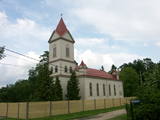 |
Located at 10 Sēravotu Street. The historicism style building is built from wood in 1889 and it is the newest of the three churches in Ķemeri. It is possible to see the church from the inside on the days of worship services. On other days-from the outside. |
|
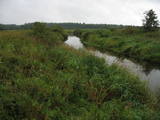 |
Palieņu pļavas starp Rūjienu un Rūjas ieteku Burtnieku ezerā, kurām raksturīga liela augu un putnu sugu daudzveidība. Tās robežojas ar bijušiem Rūjas zivju dīķiem, kas šobrīd aizaug ar mežu. Rūjas palienes var vērot gan braucot ar laivu pa Rūju, gan arī no ceļa, kas ved uz minētajiem dīķiem. Tur izvietots informācijas stends.
|
|
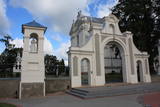 |
The Krāslava Catholic Church was built between 1755 and 1767 after a design by the Italian architect A. Paracco, and it is considered to be Latgale’s most outstanding Baroque monument. The interior can be toured, and you can also visit the restored cemetery where members of the Plater family of noblemen are buried. |
|
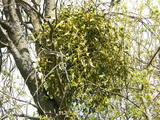 |
This is a mostly forested territory which is home to one of the largest areas of the white mistletoe, which is a semi-parasitic plant. It is best to observe this unique plant when it has no leaves. Latvia is the northern limit to the white mistletoe, which is why it is not all that common. It is interesting that even more of this rare specie can be seen outside of the nature restricted area. |
|
 |
The town of Subate was first listed in documents in 1570, when Duke Gotthard Kettler of the Duchy of Courland sold the Subāte marketplace to Count G. Plater-Sieberg. When the Plater-Sieberg dynasty converted to Catholicism in the mid-17th century, Lutherans in Subate protested by moving to the eastern bank of Lake Subate. That was the property of the Prode Estate (only ruins remain at this time), which was owned by the Osten-Sacken dynasty. In 1685, the Osten-Sackens built a Lutheran church for the “refugees,” and Jaunsubate was established around it. Both parts of the town were merged again in 1894. During Latvia’s liberation battles in 1919, Subate was liberated by Lithuanians, at which time the town was divided up between Latvia and Lithuania (though the border between the two countries was set at the previous line in 1921). The historical centre of Subate was established between the 16th and the 19th century, and it includes four churches for various congregations and low wooden buildings which stretch along narrow and curvy streets. The town is on the shores of a sub-glacial depression with Great Lake Subate and Lesser Lake Subate therein. This provides the town with unusual landscapes for Latvia. |
|
|
|
(V-1279) linked Kuldīga and Alsunga before a new road was built. The lovely gravel road weaves through forests and farmland. During appropriate weather, it can be used as an alternative road to learn about the landscapes of the Suiti region. You can also bike down the road. |
|
 |
The restaurant is in the southern part of Liepāja and features an open-type kitchen that allows clients to watch the chefs at work. Latvian cuisine: Mushroom soup, fish soup, crepes, potato pancakes, lamb chop, grilled pork filet, steams tongue of veal, leg of lamb, cottage cheese dessert. Special foods: Cod soup a la “Olive” or a special ice cream cake. |
|
 7 days
|
This study tour is designed to show Latvia's rye traditions as their central focus. This tour has been developed in cooperation with the Latvian Bakers’ Association. Rye is both the basis of the Latvian diet and a powerful symbol of Latvia's culture and culinary traditions. Itinerary emphasize traditional rye bread-baking and eating, as well as insights into the history of the rye grain from Latvia's earliest archaeological record to the present day. Itinerary include visits to working farms, grain mills and culturally and historically important locations. This study tour is designed for groups and may be adapted to the needs, interests and timeframe of each client. Tour cost includes meetings with experts, site visits and admissions, accommodations, specified meals, sightseeing, transportation within Latvia and guides-interpreters. |
|
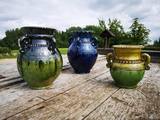 |
The craftsman produces pottery typical of Vidzeme, but with the range of colours that is typical of Latgale. These products fit in very nicely with the lovely landscape of Racupkalns. You can take a tour, watch the master at work, and work with clay yourself. You can also watch as he opens a Lettigalian ditch kiln. You can commission and purchase the products, as well. |
|
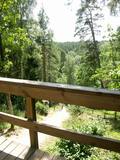 |
This is one of the most lovely and expressive castle hills in Latvia, with a very fine view of territory all the way to Lithuania. According to Ernests Brastiņš, a researcher of castle hills in Latvia, this was the site of the Semigalian Sidrabene castle. There are no improvements in the area.
|
|
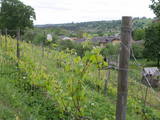 |
Already in the 10th century, an ancient village was located at the Sabile hill fort. After the division of Course land, Sabile was won by the Livonian Order, which built a stone castle (not preserved) here. Sabile is first time mentioned in written sources in 1253. During the 15th century an urban area started to develop at the castle. Town right was awarded to Sabile in 1917. Today Sabile is a small town, surrounded by many notable monuments. Roma culture is an integral part of Sabile and therefore, Sabile is also known as the Latvian capital city of Roma. Sabile has long been known for its wine-growing and oenological traditions, which have been reborn and enjoyable during the Sabile wine festival. |
|
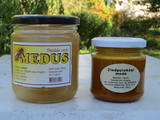 |
The owner offers honey made of various flowers, forest plants, heather and linden blossoms, pollen, bee bread, propolis, and other beekeeping products. He will be happy to give you a tour and tell you about his work. |
|
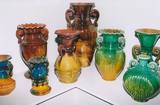 |
This museum is devoted to the career of the ceramist Polikarps Čerņavskis. His work featured light, yellowish and very bright glazing. Guided tours of the museum are available. There are demonstrations of the use of the potter’s wheel. Ceramics can be purchased, and visitors can attend the opening of the kiln. Special works can be commissioned.
|
|
 8 days
|
In Riga enjoy Old Town with narrow cobbled streets, Art Nouveau district, visit the Central market to catch a local spirit. Going out of Riga - visit Kemeri National Park, special for its sulphur springs. Walk Kemeri Bog Trail. Enjoy recreation centre at the lake Valgums - Bare Foot Trail, Labirintus, swimming in the lake, spa treatments and excellent restaurant. Then the route goes to the Pure Chocolate Museum and turns to the ancient Abava Valley where grapes were grown from 16th century. A little part of the historic Wine Hill is there but new gardens and wineries are developed into recent years. Visit Pedvale Open-Air Art Space and then picturesque Kuldiga with well preserved wooden architecture. At country house in Skrunda see how shitake mushrooms are grown and try some meal from them. Liepaja is vibrant city with significant military heritage now accessible for everyone, beautiful white sand beach. Special meal to try there "Liepajas mencins" (Liepaja Cod). Then there is a visit to goats farm and tasting of their produce. Walk along the steep banks of Jurkalne. Explore Ventspils with its many parks, Livonian Order Castle, promenade, breakwater, well maintained beach. The route goes to the place where the open sea meets the Gulf of Riga - Cape Kolka and then along the coast towards Riga. On the way visit fishermen at Engure. See their fish making process and try the fish . Visit historic sea and spa resort Jurmala with pretty 19th centuries villas, have a lunch at the local restaurant, specialist in potato meals. |
|
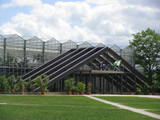 |
The National Botanical Garden in Salaspils ranks as the largest botanical garden in Latvia and in the Baltics with a territory of 136 hectares. The National botanical garden collection consists of about 14 thousand different varieties. More than 5,000 plants are found in the arboretum, as well as various other exhibitions, such as orchards, rosaries, ornamental plants. Botanical Gardens can inspire you to uprade your own garden assortment with new plant varieties and offers the experience of learning about botanical knowledge in nature. In addition, it presents opportunity to expand your personal photo archive with an exclusive background photographs and close-ups. There is a playground for children, comfortable cycling paths, nordic walking paths, picnic possibilities. |
|
 |
В давние времена проспект Курмаяс был главной дорогой, ведущей на пляж. Вдоль проспекта стоят роскошные дома и виллы рубежа XIX – XX века, принадлежащие аристократам – обожателям моря и побережья. Здесь установлены отлитые в бронзе скульптуры из гимна Лиепаи «Город, в котором рождается ветер» - «Лодочник», «Янтарные латыши», «Ворона» и др. В конце проспекта возвышается памятник погибшим морякам и рыбакам (установлен в 1977 г.). Он символизирует женщину, которая ждет возвращения домой своего мужчины. На проспекте Курмаяс 16/18 находится Лиепайский историко-художественный музей. Музейный фонд (всего более 100 000 экспонатов)разместился в построенном в 1901 году в стиле эклектизма (с элементами готики) доме, который строился по эскизам берлинского архитектора Эрнеста фон Ине и проекту П. М. Берчи. В экспозиции представлена каменная стела – единственная подобного рода находка в странах Балтии с могильника под Гробиней (могильник Скандинавов). |
|
 |
A cosy café in the centre of Liepāja. Offers coffee, delicious cakes and great food. Every morning at around 5 a.m., the croissant master starts to work in order to have fresh croissants ready to serve for 9 a.m. |
|
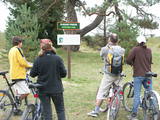 |
This is a route for hikers and bicyclists, starting at the village of Vaidava and then moving along the eastern shore of the narrow Lake Vaidava, which has steep cliffs around it. The trip covers the Veļķi baronial estate, the “Swedish pine”, the famous Vaidava (Metimne) hillfort, a series of streams, the great Rubene rock, the Vaidava baronial estate on the western shore of the lake. After that, the trail leads the visitor back to the starting point.
|
|
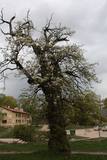 |
This is the thickest wild pear tree in Latvia. The tree is particularly beautiful when it is blossoming.
|
|
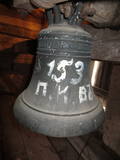 |
The church was opened in 1651 after half a century of sometimes interrupted construction. It was fully rebuilt and took on its current appearance in 1876. The church contains one of the most important church objects in Latvia – the oldest pulpit in the country (1590). It was designed in the style of Mannerism. The church also has a bell from a wrecked chapel of the local knighthood. The bell was manufacture in 1450 and was installed at the church in the 19th century. It is the oldest church bell in Latvia. The German painter F. Wolff painted the altar painting, “Christ on the Cross,” and it, along with the altar, have recently been restored. |
|


