
| No | Name | Description |
|---|---|---|
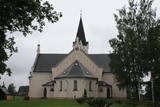 |
The church was built from 1801 until 1804 by Fridrihs Veits from Cēsis. At the centre of the altar is a painting, “Christ on the Cross,” which dates to the latter half of the 19th century. The bell was cast in 1895, and the organ was built in 1914. In front of the church is a 1930 monument to those who fell during World War I and Latvia’s liberation battles (sculptor Kārlis Zāle, architect Aleksandrs Birzenieks). Restoration of the façade and interior of the church was finished quite recently. |
|
 |
Mazs vietējais uzņēmums, kas ražo dažādus gardumus no ogām, augļiem un dārzeņiem. Interesenti tiek aicināti iegriezties ražotnē, lai iegādātos dažādus interesantus saldumus vai nobaudītu pašu gatavotu saldējumu. Iepriekš piesakoties, draugu grupām, ģimenēm u.c. kolektīviem ir iespējams piedalīties produktu degustācijās vai meistarklasēs. |
|
 |
The café is located right by the old brick bridge of Kuldīga and boasts a wonderful view over Ventas Rapid, the widest waterfall in Europe. Offers grilled dishes in summer, as well as burgers, steaks, shashlik and pastries. |
|
 12 days
|
The duration of this route is 9 days with an option to extend it for 12 days. The target audience for this route - independent travellers with transportation like bicycle and canoe boat. The total length sums up to ~ 446 km cycling and ~ 7 km canoeing. Itinerary: Rīga - Gauja National Park - Otepaa - River Ahja - Tartu - Lahemaa National Park - Tallinn. |
|
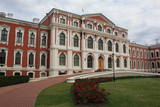 |
The Jelgava Castle stands between the Lielupe and Driksa rivers. The Baroque castle was designed by the well known Italian architect Francesco Bartolomeo Rastrelli, and this was the most important piece of early work that he did. The Latvian Agriculture University is housed in the castle today. A museum was established in 1968. +371-6300-5617. The socle story of the south-eastern wing has the graves of rulers from the Duchy of Courland – members of the Kettler and Byron dynasties, which ruled from 1569 to 1791. There are 18 restored sarcophagi here. |
|
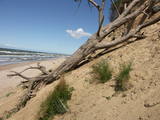 |
Ancient legends say that ship sank in the sea near the old cemetery during a storm and during a worship service. The pastor and members of the congregation volunteered to use a rowboat to save the crew of the ship. Some of the men were rescued, while others were washed ashore. In honour of this tragic, but also happy solution, the captain called the place Feliksberga, or the Lucky Shore. Later it became known as Pilsberga, and it was renamed Jūrkalne only in 1925. |
|
 |
Established in 1992, the Mežacīruļi farm is in the Zaļenieki Parish of the Jelgava Administrative District, alongside the basin of the Lielupe River. The farm initially had 7.2 ha of land, 3 cows, 20 head of sheep and 6 sows. Today it has 700 ha of land, 300 dairy cows, and a series of hothouses to grow lettuce and herbs. |
|
 |
Kaļķis is a populated area where
dolomite is still extracted from quarries in
the region (Kalnciems2 is one such
quarry). Some of the quarries are flooded.
|
|
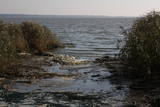 |
Das beinah 100 km langes und bis zu 36 km breites aus dem Süßwasser bestehende Haff, das im Norden mit der Ostsee verbunden ist. Das Haff trennt vom Merr die eindrucksvolle Kurische Nehrung. Ins Kurische Haff mündet der größte Fluss Litauens Nemunas ein. |
|
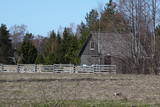 |
This village appears in historical documents from 1310. A census in 1582 and 1583 recorded eight farms in the village, while a 1731 census conducted by the Dundaga Estate found only three. In 1826, each farm had 16 or 17 people, with some 60 in total. A census in 1935 showed that all 49 Livonians in Saunags spoke the Lithuanian language, but only 11 of them spoke the language at home. There was a store that was owned by Kārlis Tilmanis, who also owned a factory where sprats were salted. Also born in Saunags was the seafaring captain Arvīds Ludeviks (1912-1996). In May 1945, he captained a tugboat, the Rota, in an attempt to bring Latvian refugees to Sweden. The ship was detained, and the captain was sent to Siberia. Another seafaring captain from Saunags was Visvaldis Feldmanis (1938-2017). |
|
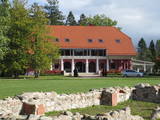 |
About an hour's drive from Riga, in the territory of the old Annas manor, is the internationally recognised design hotel "Annas Hotel". Inspired by the old traditions of Latvian cuisine, the chef creates a new menu every day, allowing you to enjoy a special and extraordinary meal. Latvian cuisine: Stock with chanterelles, rabbit dishes. Special foods: Blackberry-balsamic soup with cottage cheese ice cream. |
|
 3 days
|
This tour will take you on a walk through the Curonian Spit from Nida to Smiltynė. The Curonian Spit National Park is located on a long, sand-dune spit that separates the Curonian Lagoon from the Baltic Sea coast. A sand beach of ~50 km is running on the western side of the dune spit, while the shore of the Curonian Lagoon is shallow and characteristic of ridged bays overgrown with reeds. The Baltic Coastal Hiking Route starts in the centre of Nida near the port. In Nida, it runs along the Curonian Lagoon promenade, offering beautiful views of the spacious waters. From Nida to Bulvikio Cape, the Baltic Coastal Hiking Route winds along small forest paths leading up and down pine-covered dunes; in the village of Preila, the trail runs along the promenade of the lagoon. Between Pervalka and Juodkrantė, the Baltic Coastal Hiking Route leads along a beautiful, sandy beach. You can take the Raganų kalnas (Hill of Witches) trail in Juodkrantė. The route alternates between the Baltic Sea coast, the dunes and the Curonian Lagoon until it finally reaches the ferry, which will take you to Klaipėda. |
|
|
|
Atrodas Ostas ielas rietumu galā. No laukakmeņiem veltīto kompozīciju uzstādīja 1938. g. (idejas autors – bijušais Ventspils ostas kapteinis V. Ābelnieks) un tā ir piemiņa visiem zvejniekiem un jūrniekiem, kuriem atdusas vieta ir jūras dzelme. |
|
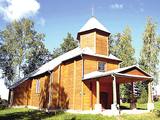 |
St. Anthony Roman Catholic Church of Pilcene (Piļcine) is the oldest wooden church in Latgale, built
in 1670. It is prominent because of its half columns, hexagonal tower, semicircular windows, and a dome
with a cross and antique interior.
|
|
 |
Latvijai neparastā izskata tornis tika uzcelts līdz ar Ziemeļblāzmas kultūras pils un parka atjaunošanas procesu. No torņa paveras plašs apkārtskats uz jau minēto parku, pili, Daugavu, Pārdaugavu un Daugavas vārtiem (Daugavas ieteka jūrā). Darbojas lifts. Tornis atvērts sezonas laikā. |
|
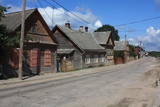 |
Die Siedlung wenigstöckiger Holzhäuser entstand im 19.Jh. Hier kann man für Latgale typische geschlossene Innenhöfe, Veranden, Holzverzierungen und Dekors sehen. Die Holzarchitektur der Stadt litt schwere Schäden in Bränden 1866 und 1938. Als das historische Zentrum der Stadt kann man den Marktplatz betrachten, als herausragende Dominate den Burghügel von Ludza, um den herum sich das Netz der Straßen der Stadt gebildet hat. Ende des 14. Jh. befand sich auf dem Burghügel eine alte lettgalische Holzburg, an deren Stelle der Livonische Orden die mächtigste Steinburg Latgales erbaute. 1654 wurde diese von den Streitmächten des russischen Zaren Alexej Michailowitsch zerstört. Vom Burghügel aus bietet sich einer der interesantesten Blicke über Latgale und die älteste Stadt Lettlands mit ihrem historischen Zentrum. |
|
 |
Im Minzehäuschen hat man die Möglichkeit, verschiedene Minzetees, Kekse, Meringues, Honig mit Minze und Minzesirup auszuprobieren. In kreativen Workshops wird Pfefferminzseife hergestellt, bemalte Teller, Kerzen mit Decoupage und viele andere Dinge. Die Hausherrin stellt aus Minze Mehl und Gesichtstonic her. |
|
 |
Latviešu dziedātāja un rakstnieka Marisa Vētras (īstais vārds – Morics Blumbergs) (1901. – 1965.) piemiņas akmens pie viņa dzimtajām mājām „Dārtiņām”. Norādes uz akmeni nav, tādēļ objektam var pabraukt arī garām. |
|
 |
The farmstead Riveni specializes in fruitgrowing and the products of reprocessing those – dried apples, apple juice. |
|
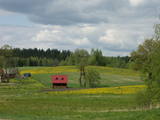 |
Samērā liela teritorija ar mozaīkveida ainavu - mežiem, atklātām ainavām un ezeriem (Salmejs, Kaučers, Stupānu ezers, Limanu ezers u.c.), kas atrodas Latgales augstienes Feimaņu pauguraines rietumdaļā. Aizsargājamo ainavu apvidus veidots šejienes dabas un kultūrainavas (apdzīvotās vietas, Tišas vecticībnieku lūgšanas nams, krucifiksi) un daudzveidīgo biotopu (t.sk. - sugu) aizsardzībai. Apvidū atrodas arī samērā populārs tūrisma objekts - Šnepstu pilskalns.
|
|


