| No | Name | Description |
|---|---|---|
|
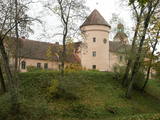
The manor’s castle was built in the middle of the 18th century (belonging to the noble kin of baron Medem) as a huntsmen castle. Later, in the 19th century, it was rebuilt by adding a second floor. The kitchen was situated in the vaulted basements of the castle and when the food was ready, it was brought upstairs in the elevator. The gantry entrance of the castle (late baroque) and marble buttons above it picturing the coat of amrs of the union of Medem and Keizerling noble kins, is one of the most valuable example of arts monuments of the 18th century. To this day there are various outhouses preserved- a threshing barn, a granary and a smithy, as well as the park. In front of the castle one can see a magnificent oak, which was supposedly planted by K.Ulmanis. From 1837 the manor’s castle has also served as a place for Vilce primary school. |
||
|
To the North of the Cesvaine Castle is a park that is crossed by the rapidly flowing Sūla River. The Cesvaine castle hill is on the northern bank of the river, is around 15 m high and is covered by trees today. The grave of the owner of the castle, Adolf von Wolff, is there. It is said that he wanted to have his casket dragged to the gravesite on a sled. He died during the summer, but that was done anyway. The park features a wide diversity of trees and bushes, some of which the owner brought home from his extensive travels. |
||
|
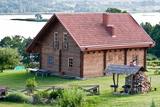
Lake Rāzna (57,8 m2) is often called the sea of Latgale. It is the biggest lake in Latvia. Rāzna is situated
on the hill Rāznava. You should see beautiful landscapes, high peaks and Latgalian castle hills. Enjoy the
recreation places beside the lake, the National park of Rāzna and its surroundings. The place is included in
the European Union network of protected areas NATURA 2000. The lake has 10 islands and two gulfs. The
level of the water reaches 163.8m.
|
||
|
The bakery and cafe in Saulkrasti – not far from Saulkrasti railway station. The baker offers pierogi, cakes and other baked goods, as well as dishes for all meals. A second café can be found at Raiņa Street 7 in Saulkrasti. Latvian cuisine: Cold soup, potato salad, sauerkraut, homemade steak haché, grey peas and bacon. Special foods: Pizzas cooked in a wood-fired oven. |
||
|
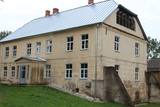
The construction of the state began in the early 20th century. The mansion was built of bricks and fieldstones between 1905 and 1911 in the styles of Historicism and Art Nouveau. The estate was owned by engineer and professor Stanislav Kerbedz from St Petersburg, the first Russian engineer to develop principles for the architectonic aspects of bridges. These were used during the latter half of the 19th century, and Kerbedz led the construction of the Nikolayev bridge across the Neva River in St Petersburg. Kerbedz’s wife, Yevgenia, was well known as a lover of art, and she brought various art objects to the estate from Italy. The Lūznava Estate was a popular place for gatherings of artists during the summers. Among those to visit was the distinguished Lithuanian painter and composer Mikalojus Čiurlionis. The estate is surrounded by a 23.7 ha landscape park with a system of ponds. Near the estate is a statue of the Madonna, which was carved by an unknown Italian artist. The statue was damaged and thrown into a pond during World War II, but it was restored in 1991. Reconstruction of the main building of the estate was complete in 2015, and today it is a modern and international centre for environmental education and the arts. |
||
|
From the highest point in the Alūksne highlands, you will see an unusually beautiful view of the surrounding forested hillocks and the small areas of meadows and farmland. Sadly, there are no improvements to the location, which can be difficult to access. It is on private property.
|
||
|
Торговый канал, протяженностью неполных 3 км, в советское время являлся закрытой зоной со статусом режима приграничного района. Лиепайский порт был известен еще в XIV столетии. В конце XVII века здесь выкопали канал, который соединил море с Лиепайским озером - теперешний Торговый канал. Заканчивается он Зимним портом и двумя молами, из которых Южный мол служит излюбленным местом для прогулок и рыбалки. В южной части Торгового канала тянется Променад, на котором установлены Янтарные часы. |
||
|
Very expressive form of relief with wide look over the neighborhood. On its peak there's ruins of the castle of bishop Hermanis which was built in 1224. The world's oldest firearm was found here. |
||
|
This beautiful farm near the hillocks of Lake Kālis grows raspberries, strawberries, cranberries and blackberries. During the season, you can pick, taste and buy the berries. Informational tours are also available. |
||
|
This centre offers recreation in a lovely venue on the banks of Lake Zvirgzdi without overnight accommodations. There is a lovely sandy beach for swimmers, as well as boating and fishing. Children can ride a water bike. Active leisure with a country sauna. There is a guesthouse with two rooms for eight people, as well as six camping trailers, 18 sites for tents, and an opportunity to rent a boat. |
||
|
The café is on the edge of the Jēkabpils-Rēzekne road (A12) in a lovely location by a pond where guests can fish for perch, pike, tench and carp. Eastern cuisine and fish dishes are offered. |
||
|
Visitors can use a potter’s wheel to create a cup, engrave their name and return to pick up the finished product after it has been fired in the kiln. Here you will learn all about the history of pottery. You can buy finished products and enjoy tasty herbal teas. |
||
|
Approximately 200 metres to the North-East from the Liv People's Centre, along the Mazirbe-Košrags road, there is the Seppes homestead. The little log granary was built in the 1920s and 1930s by an Estonian fisherman and builder who arrived in Mazirbe from Saaremaa. He was called Jēkabs Jaga. On the other side of the road is the Kalši home, which was built in the early 20th century. It has been restored, but the bricks that were made in a local kiln were preserved for its walls. |
||