
| No | Name | Description |
|---|---|---|
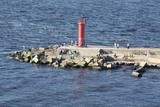 |
The Eastern breakwater was installed in the mid-19th century to reduce silt in the river valley and to regulate the flow of water. It is made of wooden pilings that are covered with rocks. The breakwater is 2.2 km long and has been rejuvenated as a popular place for hiking, leisure and fishing throughout the year. Birds can be watched from the breakwater, and sometimes people are lucky enough to spot a seal. At the start of the breakwater are two rocks with engraved text to say that the site was visited by Russian Tsar Alexander II in 1856 and by his heir, Nikolai Alexandrovich, in 1860. This points to the importance of the Rīga port in terms of Baltic Sea trade routes at that time. |
|
 |
This location is on the north-eastern shore of Lake Rāzna. The lad of the house offers Lettigalian foods, interactive activities to learn about the surrounding environment, as well as guide services. |
|
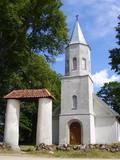 |
Renda is a very old town, first mentioned in historical sources in 1230. During the 13th century, Renda was one of the centres of the ancient Courlandian land of Vanema. When Courland was split up in 1235, Renda was taken over by the German Order, and local residents were forcibly drafted into its military. During the age of the Duchy of Courland (1562-1795), the region flourished despite wars, the bubonic plague and other problems, particularly during the rule of Duke Jacob (1642-1682). During the 17th century, Renda became something of a manufacturing centre, churning out timber products, with local lime kilns, watermills, flax weaving facilities, a glass factory and a boiling house for saltpetre and soap. Wine, perfumes and barrels were produced in Renda, as was cast iron for nails and many other things. The court at the Jelgava Castle loved the sour wines from Renda. All of this was destroyed during the Great Northern War (1700-1721). During the 19th century, a chemicals factory was built on the site of the burned Renda castle, and nearby was one of the largest leather tanning plants in Kurzeme, along with a manufacturing facility for turpentine. Cultural life began to develop in parallel to this. Renda suffered much during the two world wars and the subsequent Soviet repressions. The so-called Courelian Battalion of partisans went into the forests after the occupation to continue their struggle against the Soviet regime. Renda today is a small and quiet village with the Lielrenda Estate, a local church, the “devil’s boat” at the Abava River, and the Īvande waterfalls. |
|
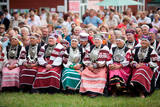 |
Setomaa in South-East Estonia is a unique area for its people (the Seto) and culture. The historic location in the borderland between East and West, straddling two languages and cultures has shaped the local language, life style, clothes and food. A very specific type of singing – leelo – is incorporated in the UNESCO list of Masterpieces of the Oral and Intangible Heritage of Humanity. |
|
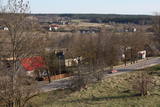 |
We recommend that you walk through the town of Kandava not only to enjoy the charm of a small town, but also to find fantastic viewing locations where you can see the town and the shores of the ancient Abava River valley from the Kurši (Ancestor) castle hill, Lielā Street, the Bruņinieki castle hill and Zīļu Street (School Hill), as well as from the area of the Ozolāji open-air stage.
|
|
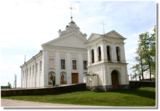 |
The Bebrene Catholic Church is opposite the Bebrene Estate on the side of the Ilūkste-Birži road. Work on the church began in 1797, but it was only completed in 1883. The outside of the church is in the style of Classicism, while the interior was designed in Baroque forms. The interior of the church can be viewed during worship services. |
|
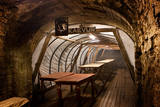 |
The most fascinating part of the Park is its underground museum. Guided underground tours take visitors to where miners used to work and rest and stored their explosives, and include a real train ride and learning about various pieces of equipment and technology. A delicious miner’s lunch can be booked in advance and enjoyed in a genuine miners´ underground canteen. |
|
 |
The café Bastions is located in the historic centre of Valmiera on former medieval fortifications. Their menu offers Latvian cuisine and an extensive variety of breakfast, lunch and dinner meals. The café collaborates with local farmers and producers. During summer, enjoy your meal on the beautiful outside terrace overlooking Lake Dzirnavu. |
|
 |
Organically certified farm. Produces greens, vegetables, micro-greens, vegetables and berry powder (gauze, balanda, dandelion, nettle, driven). Grown all year round. Offers product delivery in Riga, Valmiera, Cesis and Sigulda. |
|
 |
The biggest ostrich farm in Latvia, located near Kuldīga, provides the opportunity to purchase healthy and valuable ostrich meat products and go on an excursion in the ostrich and goat farm. |
|
 |
Skaidrīte Bauze is one of Latvia's most famous mitten knitters, with more than 185 pairs of mittens in her collection to demonstrate the wide range of Latvian ornaments and colours. Visitors can look at the collection, listen to information about it, and look at a garden with many different plants and wooden sculptures that are the work of the owner of the farm, Haralds Bauze. |
|
 2 days
|
Gauja ir Latvijas populārākā ūdenstūristu upe. Laivotājus šeit vilina skaistie smilšakmens atsegumi, upes mierīgais tecējums, dabas un lielā kultūras pieminekļu daudzveidība. Minētajā posmā upe plūst cauri Gaujas senlejai, kas ir viena no iespaidīgākajām Baltijas reljefa formām. Maršruta tehniski sarežģītākā vieta ir Ķūķu krāces, kur nereti gadās pa kādai apgāztai laivai. Lielākais upes kritums ir posmā no Amatas ietekas līdz Līgatnei, tādēļ daudzi braucēji izvēlas Cēsu – Līgatnes posmu. |
|
 |
Meklējams Virgas centrā. Asprātīgā piemiņas zīme (tēlnieks R. Gabaliņš, mākslinieks R. Kalniņš) – zābaks ar diviem pretēji vērstiem lielgabaliem un lodēm vēsta par Ziemeļu kara laika notikumiem, kad 1701. g. Virgā bija izveidota zviedru karaspēka nometne. Stāsta, ka karalis Kārlis XII savu zābaku pazaudējis citā reizē un vietā - Spilves kaujā pie Rīgas. |
|
 4 days
|
A tour of professional farms to offer a look at modern and technologically developed farms. During the introductory day, participants will tour Rīga, which is part of the UNESCO List of World Heritage, and the Rīga Central Market, which is one of the largest closed markets of its type in Europe. The next day there will be a meeting with specialists from the Latvian Agriculture Ministry and agricultural NGOs. Next we will tour an ecological facility for farm waste, which is a pan-European initiative in the context of which heat that is manufactured is used to heat greenhouses, thus ensuring an ideal environment for farming (flowers and tomatoes). We will visit innovative farms that collect birch juice for products such as biological birch juice wine (rose, semi-sec), biological birch juice foaming wine, birch juice lemonade, and syrup. The next morning will begin with a visit to a farm that produces high-quality vegetables and potatoes, successfully dealing with the storage and sale of it produce, as well as with logistical aspects of the process. Along the way, we will visit the ruins of the Koknese castle, which is on the banks of Latvia’s legendary Daugava River. We will also visit a farm that grows hemp for various food products. We will spend the night at an aristocratic estate that is now a complex for accommodations and spa treatments. The next morning, we will be off to one of Latvia’s newest beer breweries for a tour and tastings. Around noon, we will visit a farm that manufactures co-generated biomass head during the winter and heats greenhouses. We will return to Rīga in the evening. |
|
 |
The Forest House (Meža māja) was built
in 1933, and this is one of the most
outstanding buildings in Latvia from the style
of National Romanticism. It used to house an
enormously popular restaurant, “Merry
Mosquito" (Jautrais ods). The restaurant was
popular among the spa’s guests, but also
among prominent people of the day. A
children’s sanatorium was installed here after
World War II for kids from all over the Soviet
Union. When the Ķemeri National Park was
established in 1997, the building became its
headquarters and today it is a modern visitors’
centre.
|
|
 3 days
|
No Rīgas dodieties gar Daugavas labo krastu un apciemojiet Trušu Karalisti, kurā trušu mājiņas ir veidotas kā mazas muižas un pilis. Pēc tam dodieties uz Skrīveriem nogaršot mājas saldējumu un apmeklējiet Kokneses pilsdrupas. Nākamajā dienā apmeklējiet privātu mini-zoo ar dažādiem eksotiskajiem dzīvniekiem, pēc tam dodieties uz Raunas cepli, lai redzētu, kā top dažādi māla priekšmeti no sākuma līdz beigām. Vērts apskatīt Cēsis un tās viduslaiku pili. Izstaigājiet Līgatnes dabas takas, kur iespējams redzēt vairākus vietējos savvaļas dzīvniekus. Siguldā bērniem patiks piedzīvojumu parks. Siguldā atrodas arī divas viduslaiku pilis. Pirms atgriešanās Rīgā, apciemojiet zemnieku saimniecību, lai apskatītu kazas, ponijus u.c. dzīvniekus, kā arī nogaršotu kazas piena piena produktus. |
|
 |
The owner of the farm grows petunias, geraniums, balsams, asters, snapdragons and other plants, also designing beautiful pots of flowers. She organises seminars on biological farming. Visitors can purchase plants, pick black currants from a bush, and pick tomatoes from a vegetable bed. Tastings are available, and there are rabbits on display, as well. |
|
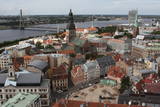 |
St Peter’s is one of the oldest historical monuments in the Baltic States, and it is also the best place from which to survey the historical centre of Rīga, which is part of the UNESCO list of world cultural heritage. You can see the central part of Old Rīga, City Hall Square, the Pārdaugava region on the opposite side of the river, and even – during clear weather – the Bay of Rīga. The tower of the church is 123 metres high, but the viewing location is at a height of 72 metres.
|
|
 6 days
|
This tour includes a walk along the Baltic Sea coast Lithuania through the Curonian Spit from Nida to Smiltynė (see a detailed description under tour No. 9) and continues further north from Klaipėda to Šventoji located at the Lithuanian/Latvian border. Klaipėda and Palanga are popular seaside resorts with lots of pubs, hotels, street cafés and musicians. Klaipėda is the only port city and the third largest city in Lithuania. Šventoji is also a popular seaside town located next to the mouth of the river Šventoji. Between Klaipėda and Palanga, the Baltic Coastal Hiking Route leads through the Seaside Regional Park (Lithuanian: Pajūrio regioninis parkas). It was founded for the protection of coastal and marine landscapes, biodiversity and local cultural heritage. The most famous place of the seaside is the Dutch Hat (also called Dutch Cap, Dutchman’s Cap or Holland’s Cap) – a 20 m high cliff, which used to serve as a landmark and guide for seafarers and fishermen. |
|
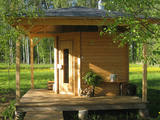 |
Sauna Museum is a private open-air museum founded in 2008. It is located 40 km from Riga by the Murjāņi - Saulkrasti road. The exhibition consists of six historic and one newly built sauna. They all work, but the hosts recommend to enjoy the black sauna. |
|


