
| No | Name | Description |
|---|---|---|
 |
The owners have restored a fourth-generation bread oven to continue the tradition of baking bread. The family bakes bread in the autumn and winter months, from September to April. In the events organised by the Ventspils Seaside Museum they offer to taste traditional Latvian dishes that are in line with the rhythm of the seasons. |
|
 |
Находится в Пастари, примерно на расстоянии 2,5 км от дороги Прейли - Виляны, в самом высоком месте с красивейшим пейзажем на Латгальскую возвышенность. Ветряная мельница голландского типа (с вращающимся механизмом крыльев) построена в 1902 году. В 2012 году были восстановлены крылья ветряной мельницы. По предварительной договоренности мельницу можно осмотреть изнутри. |
|
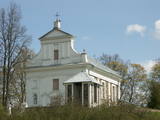 |
Construction of the church began in 1830 thanks to money donated by nobleman Ludvigs Šabanskis. The Baroque stone church is surrounded by a restored stone fence, and inside there are icons including "Heart of Jesus," "Christ's Suffering," and "St Joseph." The church is not open to the public on a daily basis. |
|
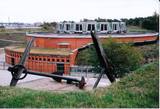 |
Schon seit der früheren Zeiten – ein Platz von der militärischen und strategischen Bedeutung. Für den Schutz des Hafens von Klaipeda wurde 1866 von preussischer Militär den Bau einer Festung angefangen. Im Laufe des 2.Weltkriegs wurde die Festung in die Luft gesprängt. Die Renovierung begann 1979. |
|
 |
Pļaviņās, pie Daugavas ielas, Daugavas krastā uz laukakmeņiem novietots plosta modelis ar stendu (2011. gads, biedrība „Kopsolis”), kur izlasāms stāsts ar plostnieka atmiņām un aplūkojamas vēsturiskās plostnieku fotogrāfijas. Daugavas posms starp Pļaviņām un Koknesi bija visgrūtāk pārvaramais plostnieku šķērslis ar krācēm un līdz 20 m augstiem, klinšainiem upes krastiem. |
|
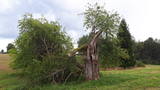 |
This is the thickest European wild apple tree in Latvia. It is just lovely when it is blossoming.
|
|
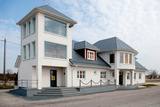 |
The Centre at Sõru harbour exhibits various vessels, smaller wooden boats are built and renovated here too. The three-masted schooner Alar is awaiting restoration. Part of the Centre complex is the Sõru Museum giving an insight into local sea-going history; workshops on coastal life and seafaring can be booked in advance. |
|
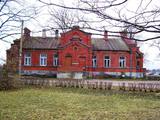 |
Adamovas Manor (ancient name –Adamhof, Odumova) is the cultural monument of the state importance.
It has two well preserved buildings of the 19th century. The Manor was built in 1851. Landlords
Korfs, Žemčužņikova and Karaulovs were the owners of the manor. There was discovered a mineral spring
in 1905. It was named in the honour of St. Helena. Mineral water gained the highest awards in London in
1912 and in 1913 in Paris. Currently, there is no mineral spring anymore. However, there is Adamova sanatorium
boarding-school for children with psychoneurological illnesses. A modern sports complex was built
in 2006 for organizing national sports competitions. We offer sauna, conference rooms, boat rental, and accommodation
for 120 people.
|
|
 |
Family farm near Valmiera with large fields, meadows and 400 cows. Production of cream, cottage cheese, yoghurt, cheese, ice-cream and other products from the farm's milk. |
|
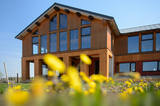 |
Holiday house Ugaraja Kotkaapesa is a cosy place where the owners offer homemade dishes to their guests from ingredients grown locally. The holiday house has a large lounge and sauna, and the area is suitable for hiking. |
|
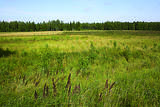 |
A legendary location which is said to have
been the site of a lake which, in 1838, was poured into the sea. When the
water was gone, remnants of ancient tree stumps and ships were found at
the bottom of the lake.
|
|
 |
The craftsman typically produces objects that are of use on an everyday basis. They have laconic forms and reticent decorations. You can take a tour of the workshop and kiln, watch demonstrations, and work with the clay yourself. You can purchase finished products, look at the beekeeping operation, and taste and purchase honey. |
|
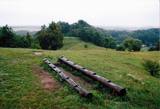 |
In the central part of the Žemaitija Highland, this park was established to protect local landscapes. Lithuania’s highest hillocks are found here – Mėdvegalis (235 m above sea level) and Šatrija (229 m). There are also other hillocks which offer a great view of the area – make up your own tour here.
|
|
 |
Piemājas saimniecība nodarbojas ar augļkopību un biškopību! |
|
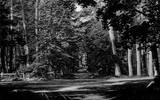 |
Construction of the Neibāde resort in 1823, started up hospitality traditions. The park, designed in an English style, was created by the gardener Akerbergs, who was brought from Estonia by Baron August von Pistohlkors. In the 1920s – 1930s the Pēterupe – Neibāde Seashore Aid and Improvement Society looked after the restoration and care of the monument and the park of the resort that was ruined during the war, the appearance of Saulkrasti, the organisation of different events and foundation of the theatre and the choir, led by Olga Cīrule. Saulkrasti open-air stage has always been a place for festivities. 16 July 1933 is a date that deserves special attention as it was on this date that the open-air stage became the place where Neibāde and Pēterupe were renamed Saulkrasti. The open-air stage was repeatedly rebuilt and improved. Both during the Soviet era, as well as later, this was a meeting place for locals on joyful moments, on moments of change and remembrance. The stage was the place of origin of the Popular Front of Latvia (Latvijas Tautas fronte) Saulkrasti branch. Now the stage is a meeting place and holds different events on summer weekends. Each year Saulkrasti town festival concert takes place on this open-air stage. |
|
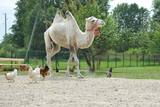 |
A park of exotic animals in Dundaga features alpacas, llamas, ostriches, a camel, a blue cow, etc. |
|
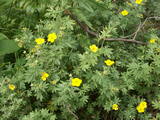 |
This is a swamp into which sulphurous waters flow, and it is on the left bank of the Abava River valley. This is the only place in Latvia where the protected shrubby cinquefoil is found in the wild. This bush covers approximately one-fifth of the restricted territory. It also includes forests, various kinds of meadows and sulphurous streams, including the one which is known as the Devil’s Eye. |
|
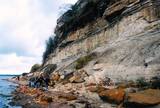 |
This cliff is made of sandstone (its lower part) and limestone (the upper part). It is up to 30 m high, and it is part of the Northern Estonian set of cliffs along the shore of the Bay of Finland. This is a popular tourism destination and viewing location. Recommended Hike along the bottom of the cliff (a rocky beach) in one direction, and then along the top of the cliff to get back (~2 km). From the top of the cliff, you can see a broad segment of the shoreline territory, all the way to Tallinn.
|
|
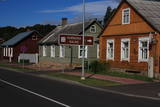 |
The central part of the town of Krāslava is an historical monument because its low-story and beautiful wooden buildings. The best views of the historical centre relate to the carp park near the Adamova trail, the Karņicskis hill, the bridge across the Daugava (Prospekta Street), and the Priedaine viewing tower on the left bank of the Daugava River. |
|
 |
The garden is opposite the Brenguļi brewery, where unfiltered and unpasteurised beers are made from locally grown grains and on the basis of the knowledge of ancestors. The beer garden offers light and dark Brenguļi beer, as well as Latvian dishes. Latvian cuisine: Grey peas with bacon, sausages with cabbage, Rūjiena ice cream. |
|


