
| No | Name | Description |
|---|---|---|
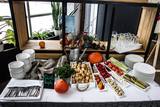 |
The restaurant offers a range of delicious and healthy meals from a range of international dishes with a wide variety of drinks, freshly baked biscuits, truffles, cakes and seeded breads are also available with lunch or dinner meals. There is a special daily offer available on weekdays and ability to organize a range of themed events, all catered for with food, drink and our freshly baked goods. A children’s menu is available for younger guests as well as playroom and a playground located next to the windmill. |
|
 5 days
|
After the establishment of the Livonian state, the pope consecrated this land in honour of the holy Virgin Mary. This created Terra Mariana or Māra’s Land. The road between Ludza, Rēzekne and Daugavpils runs along an ancient trading route that once connected Vilnius and Kaunas to Pskov and, later, to St Petersburg and Warsaw. Very beautiful and poetically picturesque with rivers and lakes that are in Latvia’s forested land and among hillocks that offer a wonderful look at the distant horizon – that is Māra’s Land, which is also known as the Land of Blue Lakes. Lake Rāzna is the second largest in Latvia, and when the weather is clear, Mākoņkalns Hill or Padebešu Hill is reflected in its water. Atop the hill are the oldest ruins of fortifications in Latgale, dating back to the Livonian era. Rēzekne is known as the heart of Latgale, because it has always been the centre for Lettigalian culture and education. People contributed donations for the 1939 construction of a monument to Māra of Latgale. It is dedicated to those who fell during Latvia’s independence battles and the liberation of Latgale. The monument also speaks to the Catholic identity of Latgale. The monument was rededicated on August 13, 1992, the date of the assumption of the Virgin Mary. A Catholic festival at Aglona and the monument to Māra of Latgale – these are integral components of this part of Latvia. The present day is marked out clearly by the new Gors concert hall in Rēzekne, and well as the Zeimuļš student interest education centre. Daugavpils is Latvia’s second city and an important centre for industry, culture, education and sports. The Daugavpils pellet factory is unique, and the oldest pellet casting tower in Europe is now open to visitors, as are the restored Daugavpils fortress and the new Rothko Museum. Not far from Daugavpils are the small Birķeneļi semi-estate and the Rainis Museum. Latgale was the “land of new days” for the poet, and the museum now hosts gatherings of young artists and craftspeople. The ancient tradition of ceramic art that is typical specifically of this part of Latvia is still thriving. |
|
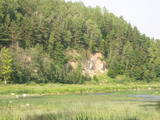 |
One of the most beautiful areas along the Venta River and its tributary, the Šķērvelis River. The river valleys and gullies along them are quite deep, and dolomite and sandstone cliffs can be spotted here and there. There are also rapids on the river. The largest cliffs in Kurzeme – the Ātraiskalns and Gobdziņi cliffs – can be seen on the banks of the Venta. The Lēni Catholic Church is near the restricted area. There are no tourist elements in the restricted territory at this time. The Venta is a popular destination for water tourists, however, from Nīgrande to Kuldīga. |
|
 19 days
|
The tour starts at former Hanseatic port town Gdansk with its pretty Old Town, then continues to Malbork, an impressive fortified medieval castle and on to laid-back Formbrok with a magnificient Gothic cathederal. The route crosses the Mazurianlake district where hundreds of lakes are connected to rivers and canals, best expereinced from the deck of a boat. Continue to Wigry National Park with walking trails and interesting archaeological and cultural remains. Further into Lithuania, Dzukija National Park has several well preserved traditional farmsteads and villages which are well worth a visit. It's a good place to experience Lithuanian crafts and traditions, for instance bee keeping. Then the route goes via Kaunas to the Curonian Spit formed by shifting sand dunes between its lagoon and the sea. Pretty little villages are located along its length. Next the route goes to the sea resort Palanga with a great Amber Museum and on to Latvia. Stop at Pape Nature Park, a diverse mosaic of nature’s ecosystems, where wild horses and oxen breed. Slītere National Park shows the historical development of the Baltic Sea. Cape Kolka is a prime spot for bird migrations, Slītere lighthouse provides a great view of the surrounding forests and traditonal Liv villages, one of the smallest ethnic groups in the world. The Ķemeri National Park includes different types of wetlands and vast bogs. It is famous for its sulphur springs. Walk a Great Heath trail there and try the curative spring water. Further on Gauja National Park is formed around the ancient valley of the Gauja river with picturesque sandstone cliffs from the Devonian period. Here are many historic monuments – medieval castles, churches and ancient settlements which you can see crossing the valley on a cable car. Ligatne Nature trails offer a chance to observe local wild animals. Saaremaa's landscape is characterised by large juniper growths, dolomite cliffs, windmills, medieval churches and the famous Kaali meteorite lake. It also retains a very Estonian soul. Sooma National Park has contrasting swamps. Walk a beaver trail there and try 'bog-shoeing'. Lahemaa National Park has a rugged coastal andscape with big boulders, traditional fishing villages, forest trails and romantic manor houses. From Tallin take a ferry to Helsinki, from where it is an easy trip to Nuuksio National Park, home to an endangered flying squirrel. The landscape here is dominated by valleys and gorges, rocky hills covered by lichen and sparse pine forest that is very different to the previous parks. Well-equipped walking trails have several scenic views. |
|
 |
This viewing tower is on a narrow peninsula among Lake Lukna, Lake Višķi, and Lake Boltars. From it, you can see all three lakes, the hillocks of the area, as well as Ambeļi and Višķi. Come here when the bird-cherry trees are in bloom!
|
|
 |
The confectionery, café, and shop is located on the main pedestrian street of Cēsis. They bake wedding cakes following grandmother’s recipes, prepare various pastries, and offer light lunches. They also cooperate with local producers. The most popular rye products: Latvian rye bread cake, traditional layered rye bread dessert, Kurzeme cakes, rye bread toast with herring, and cookies. |
|
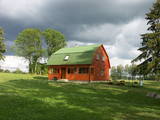 |
A summer house by lake Sila, in a separate building sauna and rest room with fireplace. Bathhouse - living room with open-fire, sauna, shower, double bedroom. Summer house – one room with twin beds, dry toilet. |
|
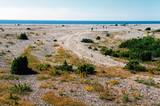 |
This is a “peripheral” island in the Bay of Finland, 9 km from the Dirhami port. The special fact about this island is that it offers fields of juniper, a rocky and grassy seashore that is around 2 km long, and limestone cliffs that are a few metres high along the northern and the eastern shores of the island. These are designated with the words Osmussaare pank.
|
|
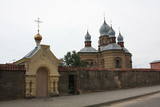 |
The Orthodox Church and Cloister of the Holy Spirit and the Orthodox Church of St Nicholas the Miracle Maker are found at Brīvības Street 200 in Jēkabpils. The Byzantine Church of the Holy Spirit was built between 1853 and 1886 to replace a wooden church which had been built in the latter half of the 17th century and burned down in 1773. Duke Jacob of the Duchy of Courland supplied the timber for the old church. The cloister was alongside the church. On Second Easter in 1903, the church caught on fire, and the only icon rescued was a painting of the Virgin Mary. The church suffered damage during World War I and was restored in 1933. Alongside the Church of the Holy Spirit is the oldest church in Jēkabpils – the oldest stone church in the city, which is named after St Nicholas the Miracle Maker and was erected in 1774. This is a very small church, just 17 x 19.5 m. The cloister of the Church of the Holy Spirit operates the church today, and it can be viewed from the inside. The stone fence that surrounds the complex is massive, but atypical of urban environments in Latvia.
|
|
 6 days
|
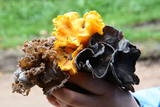
This is for people who enjoy forests, wildlife, local traditions and has a specific interest in the different species of funghi. Everyone could try their hand at mushrooming, identification and by the end of the day together with guide sort out the collected mushrooms. The tour passes several national parks and late back villages. The group will also visit to one of shitake mushroom growers for comparison reasons. |
|
 6 days
|
The tour presents UNESCO World Heritage Sites and the Intangible Cultural Heritage of Latvia and Estonia. Experience the famous traditions of song, national crafts, architecture and food of the unique Suiti and Seto ethnic groups. |
|
 |
Xранилище старинных предметов находится на втором этаже здания Туристического информационного центра в Нице. Здесь представлен более чем столетний народный костюм Ницы со всеми неотъемлемыми принадлежностями - юбкой, корсажем, кафтаном и шапкой с «ушками». В ницанском сундуке для приданого хранятся работы местных рукодельниц, которые продолжают местные ремесленнические традиции. Посетители могут ознакомиться с ницанскими одеялами, платками, скатертями и другими пригодными в хозяйстве вещами, а также с рукавицами и носками. |
|
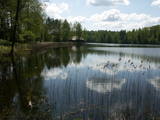 |
Lake Salājs is full of bays and islands. Alongside Lake Little Solojs, which is next to Lake Salājs, is the Milka castle hill and a leisure facility there. This is a beautiful area, and it is protected for environmental purposes. |
|
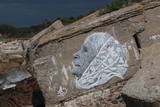 |
The Northern Forts of Liepāja are on the edge of the Baltic Sea, and some parts of them have been washed away. This is a small, but very impressive part of the Liepāja fortifications which once encircled the entire town. The underground bunkers of the forts are on two levels, and it’s worth visiting them in the company of a knowledgeable guide from Karosta (tours are organised from the Karosta prison). There’s a car park alongside the forts. It’s also worth walking down the beach for a distance of around four kilometres to the Northern breakwater. On the shore and in the sea, you’ll see two coastal defence batteries and some pretty impressive views.
|
|
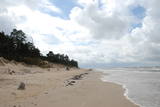 |
Бернати - самая западная точка суши Латвии. Рядом с автостоянкой установлен каменный знак скульптора Вилниса Титанса «Зеленый луч» (1998 г.). Бернатский мыс подвержен воздействию ветра и волн, поэтому здесь наблюдается вымывание морского берега. У дороги, которая из центра поселка Бернати ведет к морю, в конце дюн (имеется указатель), установлен памятный камень со словами первого Президента Латвии Яниса Чаксте, сказанными в 1924 году: «Здесь должен быть курорт». |
|
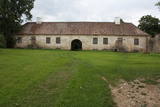 |
Kolga Manor with its impressive territory, several buildings and antique feel will not leave you unmoved! Kolga Manor was first heard about in 13th century but the manor we see nowadays was built style of Baroque in 17 - 18th century but in 1820's it was re-built in the style of Classicism. From the end of 17th century until 20th century it was the biggest Estonian manor. Now in these buildings is a guesthouse, a restaurant, conference centre and a museum. It's possible to hire a guide. |
|
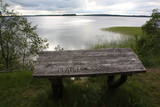 |
Nacionālā parka galvenā ainavas dominante. Ezers ir ~ 8,4 km garš un līdz 3,3 km plats. Tā austrumu krasti pārsvarā ir ar mežiem apauguši, ziemeļrietumu krasts – purvains, bet rietumu krastā parādās apdzīvotas sētas un simpātiskā Plateļu (Plateliai) pilsētiņa, kur meklējamas skaistākās skatu vietas. Ezera krastos ir labi attīstīta infrastruktūra - tūristu mītnes, ēdināšanas uzņēmumi (Plateļos), ūdenssporta un atpūtas inventāra noma. Ūdens dzidruma dēļ, Plateļu ezeru ir iecienījuši zemūdens niršanas entuziasti. Ezerā ir vairākas salas, no kurām interesanta ir Pils salas (Pilies sala), uz kuras no 15. – 16. gs. atradās muiža. Pastāv uzskats, ka senie Plateļu apkārtnes iedzīvotāji sākotnēji ir dzīvojuši uz salas, kuru ar krastu savienojis uz pāļiem celts tilts. Jāpiemin, ka 15 gs. pirmoreiz pieminētā Plateļu pilsētiņa atradusies uz Šventorkalņa (Šventorkalnis) kalna. Apkārt Plateļu ezeram ir izveidots ~ 24 km garš velomaršruts. Tā ir ļoti laba iespēja iepazīt parku videi un ceļotāja veselībai draudzīgā veidā. |
|
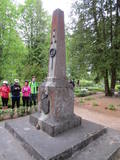 |
The monument is in the Bērtuļi cemetery and has a brass plaque that reads “With deep thanks to fallen heroes of the Latvian people. The 10th Rūjiena Vanagi district.” On the other side of the monument, the words “God, Fatherland, Nation” are engraved. The monument was restored in 1989. |
|
 |
A place where you can enjoy nature and food. The tavern Kogre got its name from Seven Fish Soup - crucian (koger), is the seventh fish. The owner is a fisherman, and together with his wife he prepares various dishes from his catch. |
|
 |
A cosy café in the centre of Liepāja. Offers coffee, delicious cakes and great food. Every morning at around 5 a.m., the croissant master starts to work in order to have fresh croissants ready to serve for 9 a.m. |
|


