
| No | Name | Description |
|---|---|---|
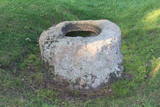 |
The Pinnu (Dievekļa) Sacrificial Stone is at Ulmale, some 300 m from the Liepāja-Ventspils highway (there are signs). This is a very beautiful and distinct bowl-type rock, and the indentation at the top is 15 cm deep and up to 61 cm in diameter. It is thought that this was an ancient cult location, particularly between the 16th and 18th centuries. |
|
 |
Here you will find a ceramicist who offers educational activities during which you can shape your own items and then put them in the kiln. The studio welcomes kindergarteners, schoolchildren, adults and senior citizens. The ceramicist has experience with people with special needs. Finished clay products are available at the studio.
|
|
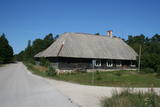 |
A school that was moved from Žocene was here during the 1850s, and it is alongside the Ģipka church. In 1938, a company from Dundaga opened a shop here to sell goods of basic necessity. (Source: Roja TIC) |
|
 |
One of the rare guides in Latgale who sings Lettigalian songs during the tour. This is an interesting, attractive and educational tale about historical events related to the Preiļi Estate and the surrounding town. |
|
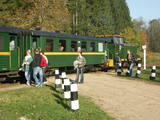 |
The narrow gauge rail line between Alūksne and Gulbene has tracks that are 750 mm wide and was once part of a rail line between Stukmaņi and Valka. Today it is the only passenger train on a narrow gauge railroad in Latvia, offering services every day. The Alūksne station was opened in 1903, and 33 km line with 10 stations and other stop scan be covered in approximately 90 minutes. A festival is held each year -- one that is very popular among fans of small trams. |
|
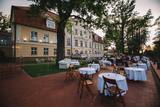 |
The restaurant is located in the Mālpils manor building that was renovated in 2008 and is a classicism architectural monument of the 19th century. The restaurant's menu changes and is updated according to the season. Combination of exquisite flavour nuances with an elegant manor interior. |
|
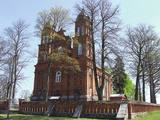 |
Sts. Simon and Judas the Apostles Roman Catholic Church of
Prezma. The brick stone church with its two towers was built in 1859.
The Monument of National significance.
|
|
 |
Amatnieku biedrība un dāvanu veikals “Pūralāde” atrodas Kandavas vecpilsētā, blakus promenādei. Veikaliņš piedāvā iegādāties Latvijas meistaru un mākslinieku radītos darbus gan dāvanām, gan savām mājām. Amatnieku biedrība organizē dažādu amatu apmācības un radošās darbnīcas. |
|
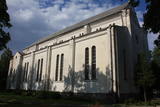 |
was built between 1930 and 1947. On both sides of the altar are sculptures of angels that date back to the late 17th century and were sculpted in Subate. They are the only elements of this kind in the Baroque decorative sculpture in churches in Kurzeme. It may be that the figure of the Saviour on the cross with a sleeping lamb at his feet was produced by the same artists. No one knows how the artworks arrived in Subate. The organ with its wooden pipes was manufactured by Juris Bokums. During the season, the interior of the church can be toured, and if you contact the church in advance, you can arrange for organ music performances. |
|
 |
The farm is located near Sangaste rukikula, amidst wild nature. At the farm you can enjoy delicious food, catch fish, go to the sauna, and spend the night. Both lovers of active recreation and people simply looking for a pleasant way to spend time will find suitable activities. |
|
 |
Kodas is a forward-thinking cider brand from Southern Estonia, known for its sustainable and precise approach to cider-making. They grow over 30 apple varieties organically, ensuring authentic flavors without artificial additives. Kodas emphasizes pure, undiluted apple juice in their ciders, collaborating with fermentation experts to refine unique production methods. Sustainability is central to their philosophy, with a zero-waste approach that transforms apple byproducts into spirits, purees, and more. Kodas rebranded in 2021, expanding its focus to include non-alcoholic beverages, spirits, and food products, all crafted with a balance of tradition and innovation. |
|
 |
Guest house “Hilda Villa” is located in Estonia, in Viljandi town center. Guest house has special family room for 4 person and smaller families also. On the first floor there are Hilda's room and the Tenant's room, bathroom, living room, and kitchen. On the second floor there are 3 bedrooms for accommodation, 2 showers, and 2 toilets. |
|
 |
This wooden pathway will introduce the visitor to a high-type swamp and a unique habitat – a place where sulphur streams flow into the Raganu swamp. The little lakes in the swamp are unique – they are the result of sulphur bacteria, and there is a special range of species in those lakes. The landscape is interesting, and the smell of sulphur pervades, mostly from sulphur ponds. The trail is 800m long and will require 20 minutes to an hour to traverse. The object is on the border of the Zemgale and Vidzeme regions.
|
|
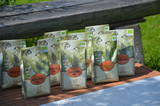 |
This is a family company in the Madona Administrative District, which offers natural herbal teas and spices. All of the ingredients come from
|
|
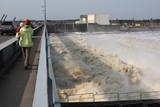 |
This is Latvia’s first major hydroelectric power plant, and construction along the right bank of the Daugava began in 1936. The plant was designed by the architect Eižens Laube. The first hydro-aggregate (17 MW of capacity as the largest plant in Latvia) was switched on in 1939. A second round of construction occurred between 1976 until 1979, the result being a new building on the left bank of the Daugava, increasing the capacity of the plant to 260 MW. Another round of reconstruction occurred between 1998 and 2001 on the left bank of the Daugava (the HES-2 plant). The Energy Museum is now there.
|
|
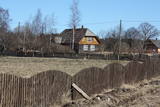 |
To the North-west from the Pitrags Baptist church (in the direction of the sea) is a fishing and farming homestead, Kurgati, which was established in the 1930s. This brought new building elements to the Liv Shore – a split roof end which was not typical of buildings in Liv villages. |
|
 |
This farm offers tours for children who can become friends of horses, look at Angus cattle and learn about a dairy farm. The children are transported in a specially adapted cart that is pulled by a tractor. The farm plans to purchase some alpacas in 2018. |
|
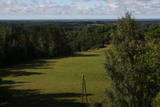 |
This is the highest church tower in Latvia, and from it you can see views of the Alūksne highlands. The view to the South is particularly impressive.
|
|
 |
The watermill was restored in the 1920s and renewed operations in 1992. It offers a look at historical mechanisms and the milling process, while the café offers pancakes made of the flour that is ground at the mill. Latvian cuisine: Herring with cottage cheese and boiled potatoes, pancakes with mushrooms, cheese, vegetables, meat, honey, cream, cottage cheese, ice cream and caramel. |
|
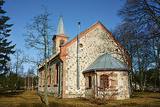 |
Kolka Evangelical Lutheran Church. A story has survived of one Danish trader saved in a shipwreck at Kolkasrags who in gratitude built a church in Kolka. The church had changed its location for three times in Kolka. The foundation of the church visible nowadays and built of boulders was laid by Karl Ludwig Ferdinand von der Osten-Zaken, the former owner of the Dundaga estate. It was built instead of the wooden church (or close to it) which was heavily damaged during the Crimean War. The first construction works were started in 1885 by the construction foreman Otto Sievert (Architect: T. Zeiler). In the Soviet time, the church was vandalized and it was used as a warehouse. It is worth to see the modern- style altarpiece |
|


