
| No | Name | Description |
|---|---|---|
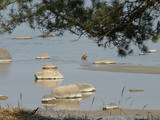 |
This is an area where migrating birds seek shelter and food all around the year. Seen most often here are the red-throated and black-throated loon, the common shelduck, the long-tailed duck, the velvet scoter and the little gull. The territory is also important for the protection of reefs. It lies opposite the Dundaga, Roja and Engure administrative districts, as well as the city of Jūrmala, and it covers 132,173 hectares of territory. The marine parts of the Engure Nature Park and the Ķemeri National Park are covered.
|
|
 |
The craftsman offers useful household products such as terrines, pots to make pickles, dishes of sugar and salt, bowls, etc. You can learn about pottery traditions and watch as the kiln is opened. |
|
 |
The Vecsiljāņi farm is in the Bebri Parish in the Koknese Administrative District. It is a dairy farm and also grows wheat, barley, oats, rye, corn and grasses. In 2010 the farm began to produce hard cheese under the brand name "Ievas siers." Visitors can taste the cheese and tour the farm and the cheese-making facility. |
|
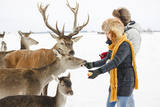 |
"Barono Vila" is a corner of paradise with a large and deep fishing pond, deer in enclosed meadows, sheep, forests rich with mushrooms and berries, clear lakes and the curves of the Sventāja River, which are popular among tourists. The restaurant offers fresh, tasty and high-qualified food made of venison and mutton, as well as oven-baked Lithuanian rye bread and the house speciality -- "Barona plov" cooked on a campfire. |
|
 |
“Pagrabiņš” is located in the Old Town of the city, in the historic town hall building. Its interior preserves historic vaults and stone walls that have been decorated with photo exhibitions. In summer, the guests can enjoy their meal on a terrace over the small River Alekšupīte. |
|
 |
Located in the centre of Madona, the café offers foods based on fruit and vegetables from its own garden. |
|
 |
Krodziņš "Mežavējš" atrodas Rīgas - Liepājas šosejas 101. kilometrā. Krodziņa ēdienkartē iekļauti latviskie ēdieni. Latviešu virtuve: Skābu kāpostu zupa, biešu zupa, skābeņu zupa, aukstā zupa, kartupeļu pankūkas, plānās pankūkas ar ievārījumu, šmorētas cūkgaļas ribiņas, zemnieku cienasts, mājas kotletes, auzu pārslu kārtojums, rupjmaizes kārtojums. |
|
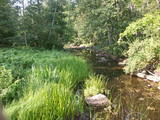 |
A distinct area of the lower reaches of the Vitrupe River, with small sandstone cliffs and many rare species of plants and molluscs. Visitors can visit the Ķirbiži Forest Museum and its information and botany trail. It weaves along both banks of the river and allows people to look at the most typical examples of flora in the region. The noble Vāloži oak tree is a key element there.
|
|
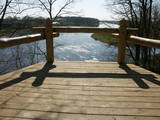 |
The Mežotne castle hill is on the left bank of the Lielupe River and opposite the Mežotne Castle. This was one of the largest Semigalian fortified castle hills during the 9th to the 13th century, and an ancient town alongside the hill covered 13 ha of land. The castle hill has been improved. A pontoon bridge across the Lielupe allows hikers and bikers to reach the castle (between May and October). Vīna Hill is approximately 500 m to the South of the castle hill, and a wooden pathway leads to it. |
|
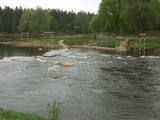 |
This is a territory that is unique at the Latvian and the Baltic level, one which stretches from Valmiera to the Gulbene District. Here we find the irregular Gauja River valley with a dense system of ancient rivers. The meadows on the banks of these rivers are important in terms of biological diversity. There are stands of oak and broad-leaf trees. Many rare and protected birds live and next here – the corn-crake, the woodpecker, etc. The territory is excellent for bird watching, nature studies, ecological tourism and various kinds of active tourism. |
|
 |
Saimniecība atrodas Kokneses novada Bilstiņos. SIA "Rīta putni" nodarbojas ar paipalu olu un gaļas delikatešu ražošanu. Reģistrēti divi zīmoli "Olalā" - paipalu olas un to produkti un "Bučers"- paipalu gaļas produkti. Saimniecībā ir veikals "BĀRS un BODE", kurā iegādāties svaigākos produktus un pavadīt mirkli ar saimniekiem un laiku ar draugiem, kā arī nogaršot paipalu olu omleti vai grilētu paipalu gaļu. Saimnieki rīko dažādas interesantas degustācijas. Ir arī dārzs ar eksotiskiem augiem un stikla siltumnīcu. Siltumnīca ir pieejama rezervācija nelielām svinībām, fotosesijai vai meistarklasēm. |
|
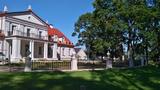 |
This mixed-type park dates back to the latter half of the 19th century and has remained all but unchanged. It is in a lovely place between two lakes, and its spatial structure was preserved when it was restored. The park covers 10 ha and has two parts. One is a fairly precisely rectangular territory alongside the state, surrounded by a stand of linden trees and introduced trees. The other part has a natural forest. The largest oak tree in the park has been declared to be a protected element of natural heritage. The mighty trunk of the tree is 6.3 m around, has a 2m diameter and stands 30.5 m high. |
|
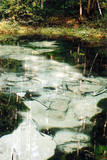 |
Three little lakes can be found on the left bank of the Pirita River with many erupting “eyes” of streams, each with its own colour (bluish-green, white, dark). This puts together various colour combinations. These are often known as the most beautiful streams in Estonia. Some pump out as much as 20-30 litres of water per hour. It is said that the waters are good medical resources, particularly for the eyes. There are improvements in the area of tourists.
|
|
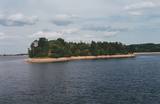 |
Before its flooding, the canyon of the Daugava River between Pļaviņas and Koknese was one of the most outstanding and beautiful parts of the Baltic terrain, and Oliņkalns hill was one of the largest castle hills in Latvia. The Andrejs cliff as up to 20 metres high, and it was part of the Daugava canyon. Before the area was flooded because of the construction of the Pļaviņas hydroelectric power plant, there were rapids near the hill that made it hard for rafters to sail down the river. Today it is a small island in the reservoir of the plant (it can be seen from the side of the Rīga-Daugavpils highway (A6) opposite Stukmaņi). It is separated from the shore by 300 metres of river, under which the Dūņas valley is now resting. A small part of the ramparts of the castle hill can still be seen on the island along with the ruins of an open-air stage and a few metres of the dolomite cliff that have remained above water. It is thought that the Alene castle was on the hill in the 13th century. Latvian mountain climbers installed a memorial stone in 1998 opposite Oliņkalns hill. |
|
 |
Ogu un augļu dārzs, dažādu ievārījumu, sulu, sīrupu ražošana un tirdzniecība.
|
|
 |
Baznīca šajā vietā – blakus Livonijas ordeņa pilij (nav saglabājusies) atradās jau ~ 1380. gadu. Tagad redzamais dievnams (patiesībā – atliekas) tika nopostīts pēc 2. pasaules kara un uzspridzināta 20. gs. 70. gados. Tā drupas ir iekonservētas un virs altārdaļas uzstādīts balts koka krusts. Atrodas Salaspils dienviddaļā starp Rīgas HES dambi un ūdenskrātuvi. |
|
 |
The Museum of Francis Trasuns „Kolnasāta”. The museum of the promoter of Latgalian revival,
prominent cultural worker, pastor and politician F. Trasuns (1864 – 1926) was established in his house „Kolnasāta”. There is also an exposition about Jānis Klīdzējs; a collection of old household items. „Kolnasāta”
is the place of many cultural events in Latgale.
Working hours: Mon– Fri : 8.00 - 16.00, Sat., Sunday : on request |
|
 |
The restaurant is on the seashore with a wonderful view of Jūrmala. The grill terrace is a stylised ship wheel. The restaurant partners with local farmers and fishermen. Latvian cuisine: Cold beet soup, fish soup, smoked eel with country cream, duck livers, cream of potato soup with chanterelles, roast pike-perch, venison with mustard sauce. |
|
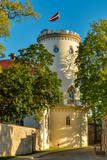 |
Cēsis is in the centre of the Gauja National Park, but it is not part of the park as such. There are many interesting places in Cēsis to visit and examine. The oldest part of the town is of key interest. The origins of Cēsis can be found at Riekstu hill, which is 18 metres high. Between the 11th and 13th century, there was a wooden castle here built by the Vendians. The hill is in the central part of the castle park, and it offers a good view of the park, pond and the ruins of the Cēsis castle, which can be accessed via a long cascade of stairs. The Cēsis castle (see below) was built in the early 13th century as a residence for masters of the Livonian Order, and it was one of the strongest fortresses in the Baltic territories. Alongside it is the New Cēsis castle, which was built in 1777 where the gate fortifications once stood. The Cēsis Museum of History and Art is in the building, alongside which is a visitors centre and the Cēsis Tourism Information Centre. From the tower of the castle, there is a fine view of the castle ruins, St John's Lutheran church and the northern part of the town. Opposite the New Cēsis castle are stables and a wheelhouse (both from the first half of the 19th century). The Cēsis Exhibition Hall is there today. You can look at the exteriors of the granary, the hut for coachmen, and the old brewery. On the other side of the street is the romantic Maija park, which was installed in the 1830s. The park is popular among parents with children, because there is a playground there. From this area, you can walk down some of the old streets of the town – Lielās Katrīnas, Mazās Katrīnas, Mazā Kalēju, Kalēju and Lielā Līvu streets, plus Līvu Square. The wooden buildings along the streets date back to the late 18th and early 19th century. Torņa Street, which weaves its way along the defensive walls of the Medieval castle, offers a look outside the church of a sculpture by Matiass Jansons, "As the Centuries Pass". Legend says that if you rub the lantern carred by the Old Man of Time, you can see the future. One of the most impressive buildings in Cēsis is St John's Lutheran Church, which was built in the late 13th century for the Livonian Order. It is a basilica built in the Roman style and with Gothic elements. The tower, which is 65 m high, was built in 1853. The building was reconstructed several times during the 20th century. Inside the building are grave epitaphs for masters of the Livonian Order and for bishops. The pulpit was installed in 1748, the oak altar followed in 1858, and the altar painting "The Crucified One" dates back to 1862. The stained glass windows around the altar are of great artistic value. The organ was built in 1907 by the E.F. Walker Company, and the instrument is one of the best concert organs in Latvia. A sun clock featuring the year 1744 is at the south-western corner of the church. It is worth climbing the church's tower. At the foot of the building is Rose Square, which began as a market square in the mid-19th century, remained in place until 1927, and was restored in 2008. This is the central square in the town today. During the Medieval Era, there were stockades here, along with the city's well. Rīgas Street has been the main street of the old town from the very beginning, and it is here that you will find the most architecturally outstanding buildings in town from the 18th and 19th centuries. They include the former Cēsis City Hall, the Fābers building, and the Princess building. At one end of the street is Līvu Square, where, during the 13th century, there was a church, a cemetery and a gate in the town walls. Today the square features a lighted fountain which is on the site of a 13th century well known as Lejas Šķimbēgs. At the other end of the street is a reconstruction of the foundations and surface elements of the Rauna gate that was a part of the town walls in the 14th and 15th centuries. The site offers a good idea about Medieval fortifications and the size and mightiness of gates therein. |
|
 |
The farm breeds purebred and crossbred cattle for seed, fattening and meat production. It sells piglets and pork, grows grains and potatoes, and engages in beekeeping. Six ponds are used to breed carp, tench and orfe. During the winter, fishing is possible in special basins that are based on the flooding of a curve in the Bērzene River. Valti offers a look at biological farming, beef cattle breeding, genetic work related to purebred animals, and fishing outdoors. The farm has a special seminar room and kitchen for seminars and training. The farm maintains the Oskars Kalpaks trail, which crosses a territory that is geological and landscape interest. |
|


