
| No | Name | Description |
|---|---|---|
 6 days
|
This tour combines local wine making traditions with an ancient charm of countryside with several medieval castles and baronial estates. The tour goes to Sigulda where on the steep banks of Gauja valley sits three castles. Visit Turaida and Sigulda medieval castles and then go to Krimulda Manor to try their wines. There is also a visit to a family wine maker in Sigulda. Next day there is an excursion of historic village of Ligatne and tasting of local wines located at the sand cave typical for the area. Further on the route there is an impressive Cesis medieval castle ruins and Ungurmuiza Manor which is an only preserved sample of wooden baroque manor architecture in the Baltics. Overnight is at former Dikli Manor which is now an upmarket hotel. Next day the route goes along the coast where is museum of the biggest liar in the world - Munchausen. You can also stroll along sandy beach there. Then visit farm of local winemaker and taste his various wines and then visit Birini Manor for a dinner and have relaxing stroll into their huge park before returning to Riga. |
|
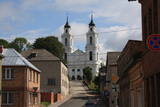 |
The first Catholic church in Ludza was built in 1687 and burned down. A new wooden Baroque church was built in 1738, and because of its colourful interior it became known as the loveliest wooden house of worship in Latvia. The church burned down during a great conflagration in 1938. Work on the church that is there began in 1939, but it was only completed in the early 1990s. |
|
 1 day
|
The smoke sauna is an important part of everyday life in the Võru community in Estonia. It is the centre of a rich set of traditions including the actual bathing customs, the skills of making bathing whisks, building and repairing saunas, and smoking meat in the sauna. The sauna is a building or room heated by a stove covered with stones and with an elevated platform for sitting or lying. It has no chimney, and the smoke from the burning wood circulates in the room. People usually go into the sauna together and remain until they are sweating. Water is thrown on the heated stones to produce hot steam-laden air and bathers beat their bodies with whisks to remove dead skin and stimulate blood circulation. After sweating, whisking, relaxing and possible healing procedures, people cool themselves outside and rinse their bodies with water. The procedure is then repeated. The smoke sauna tradition is primarily a family custom, usually practised on Saturdays, but also before major festivals or family events. Its main function is to relax the body and mind. Families take turns hosting each other. Usually an older family member is responsible for preparing the sauna, accompanied by the children who gradually acquire the necessary skills. The smoke sauna tradition is part of the UNESCO Representative List of the Intangible Cultural Heritage of Humanity. |
|
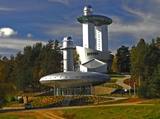 |
Das einzige Museum solcher Art im Baltikum. Das Ziel des Museums besteht darin, die Mensch(und litauisches Volk)-Kosmos-Beziehung zu zeigen. Ausbildungsprogramme, mythologische Steine. |
|
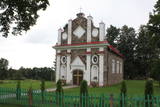 |
Meklējama Gosporos, starp Rīgas – Daugavpils šoseju (A 6) un Daugavu. Apjomā nelielais dievnams būvēts 1820. gadā romāņu stilā no laukakmeņiem senas kapsētas vietā. Tuvāk Daugavai ir izveidota aka, no kuras iztek Svētavots, kam piedēvē dziednieciskas īpašības. Pie baznīcas novietots dobumakmens. |
|
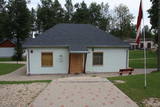 |
This is another place (at A. Brodeles Street 7) which must certainly be visited by those who are interested in the cultural environment of the historical region of Selonia. The museum was established in 2000, and much of its exhibition can be found at the depot of the former narrow-gauge railroad (the depot was built in 1948, and the railroad operated between 1916 and 1972). There you can see a restored locomotive, a passenger wagon, a trolley, etc. The exhibits reflect the lives of major personalities in and around Viesīte, also looking at events and the cultural heritage. There are wood processing and textile workshops at the museum. Outside the building is a fragment from the narrow gauge railroad, along with a water pump. |
|
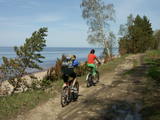 |
The largest NATURA 2000 territory in Latvia covers 6% of the country’s area. It is located in parts of the Limbaži, Valmiera and Valka districts, and it is a place of an enormously diverse range of landscapes, biotopes and species. The Salaca River is one of the most important rivers in the entire Baltic Sea region in terms of spawning grounds for salmon. The river valley and its sandstone cliffs attract many visitors. It is no accident that this is the second most popular river in Vidzeme for water tourism. The shore of the Bay of Rīga, which is not very long, also features a great diversity in landscapes and biotopes. At the northern end, we find the Randu meadows. In the central part there are sandy beaches, but at the southern end – 22 kilometres of rocky shoreline. The so-called Northern swamps are found on the border with Estonia, while the Seda heath is one of the most important places in the region for birds to rest and feed during migration. The reserve also features a diverse forest in which one can find all of the types of forest which are common in Latvia. Nature trails and viewing towers or platforms are found in the Randu meadows, on the banks of Lake Burtnieks, along the Planči and Niedrāji-Pilka swamps, on the banks of Lake Dziļezers and Lake Lielezers, and elsewhere. The Skaņākalns park in Mazsalaca is one of the most popular tourist destinations in Northern Vidzeme. The territory boasts many important cultural monuments, including one of the earliest known settlements in Latvia – a fishing settlement and burial ground which date back to the 5th to the 2nd millennium BC.
|
|
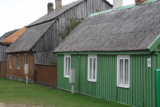 |
Pavilosta is a comparatively new city that has formed at the mouth of the Saka River in the Baltic Sea. True is the fact that in the medieval times the harbour of sea ships was located 6 km from the sea – at the junction of the Tebra and the Durbe Rivers. Important period in the life of the harbour was during the ruling of Duke Jacob, when sea ships arrived here. As a result of the Polish-Swedish war the Saka harbour had to be closed. The harbour that's visible nowadays in the mouth of the Saka River was formed in the middle of the 19th century at the so called Akagals fishermen village. In 1878 the river mouth was excavated and piers were built. Here two-masted ships were built. The World Wars destroyed the fleet, but the fishery traditions remained alive. In 1991 the populated area acquired the status of a city. Nowadays Pavilsota is a popular target for yachtsmen and windsurfers, as well as summer recreation place. Yachtsmen are awaited at the yacht harbour. |
|
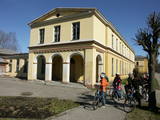 |
Kemeri (Kemmer) are mentioned in the literature sources for the first time in 1561. In the second half of the 18th century and in the beginning of the 19th century the curative properties of Kemeri sulphur spring waters and swamp mud are well known, therefore here representatives of the highest Kurzeme social circles arrive for treatment. The local foresters welcome the guests. During this time the first mud baths are organised. For some time the development of Jurmala and Kemeri beach is terminated by the Fatherland War of 1812. Two decades later – from 1833 until 1835 the benefits of Kemeri were enjoyed by General Governor of the Baltics Graf K. M. Palen, who addresses the Tsar of Russia Nicholas I for supporting further development of the health resort. Plead is supported and in 1836 Tsar allocates 700 ha of state land and grants 100 000 roubles for the construction of sanatorium and paving of the road from Kemeri till Sloka-Tukums high-way. Two years later (in 1938) the first state bath institution is opened. This is also considered the year of founding the health resort. In several stages the formation of Kemeri Landscape Park is begun, which is an important part of the health resort. In the middle and second half of the 19th century further development of the health resort is promoted by steamboat, as well as railroad traffic that are opened in 1877 from Riga till Tukums. In 1912 direct railroad line Kemeri-Moscow is opened. Early before World War I the number of patients reaches 8300 per year. The 1st battlefront of World War I is held in Kemeri swamp for several years and the health resort is significantly destroyed. Despite this fact after the war it develops rapidly and Kemeri becomes a beloved recreation place for the residents of Riga and one of the most modern health resorts in Europe. In 1924 a new bath institution with mud-baths is built in Kemeri, which at the time is one of the most modern in Europe, but in 1936 State President Kārlis Ulmanis opens one of the most prominent buildings of the first independent state of Latvia period – hotel "Ķemeri". Also after World War II – during the Soviet times the health resort is significantly expanded and almost 10 sanatoriums are established within its territory, in which about 100 doctors are employed. In 1971 Kemeri is awarded the status of All-Union health resort. From 1975 until 1985 the largest of sanatoriums is constructed in Kemeri – Līva (initially – Latvija), which has two blocks of eleven storeys. Up to 1200 patients at the same time could receive treatment at Līva, but within a year – up to 140 000 patients. The sanatorium is closed in the beginning of the 90ies of the 20th century as unprofitable. Up to 1994 five sanatoriums operate in Kemeri: "Čaika", "Daugava", "Dzimtene", "Ķemeri" and "Līva" (Latvija) and resort policlinic "Ķemeri". The latter period may be considered the declining fame period of Kemeri as a large-scale health resort. |
|
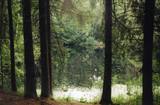 |
Another area where the manifestations water-soluble lime in the earth can be found. As the lime dissolves, there are empty areas underground which eventually collapse. To the East of Skaistkalne is a leisure area where dry and full holes of various sizes can be found.
|
|
 |
This is an ecological and biodynamic medicinal plant farm that is run by two sisters who produce herbal teas and spices. Educational programmes offer information about the plants and their medicinal properties. You can lease bikes to ride down the bike paths of the Žemaitija National Park. |
|
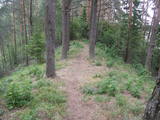 |
This is another so-called hill left behind by the Ice Age – five kilometres long with a height of between 15 and 30 metres and with high hillocks and steep hillsides. Te most distinct part of the hill can be found between Lake Pinti and Lake Šeški. The pine forests on the hillocks are a habitat with many rare and protected species. A trail has been established to tour Grebļa Hill, as well as Āža Hill and Kausu Hill, but it is recommended that visitors travel the trail in the company of a guide. The biological diversity of the area is made clear if one knows, for instance, that more than 500 kinds of butterflies have been found in the restricted territory.
|
|
 2 days
|
Here you will learn about home-based manufacturers, farms, companies and others in southern Vidzeme that produce various dairy products such as milk, yogurt, cottage cheese, cheese, ice cream, etc. From Rīga, take the Vidzeme Highway and turn toward Mālpils. On the way to Ērgļi and Jumurda, you’ll be delighted by the hillocks of the Vidzeme highlands and the lovely landscape that they represent. Near Ērgļi you will find Braki, the home of the classical Latvian author Rūdolfs Blaumanis, Meņģeļi, home of the Jurjāns brothers, and the Jumurda Estate. Drive on through Cesvaine, stopping to look at its impressive castle, and on to Madona, where you can have a delicious meal. From Madona, follow the lovely banks of the Daugava River to Koknese (Destiny Island, the Koknese castle, park and church), and on to Skrīveri, where the author Andrejs Upītis was born. There’s a homemade ice cream place and the factory that produces the universally known penuche candy that is sold under the “Gotiņa” brand name in Latvia. Then drive to Ogre for some Sierštelle cheeses and then back to Rīga. |
|
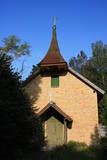 |
Atrodas Labraga – Apriķu ceļa malā. Kāds nostāsts vēsta, ka to 1896. gadā cēlis vietējais muižkungs, kurš vēlējies, lai viņa meitas laulības notiktu baznīcā. Dievnamā atrodas altārglezna "Kristus pie krusta un Sv. Marija Magdalēna", kas gleznota 19. gadsimtā (autors T. Šprengels). |
|
 |
The museum offers information about the history of chocolate, allowing you to learn all about the process, from raw materials to finished products. You can also prepare and taste your own bitterly sweet treat in the creative workshop. Products are available at the little store that is next door to the museum. |
|
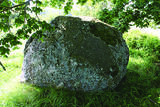 |
The great Black Plague rock, which has engraved text that can still be seen
to a certain extent – it tells future generations about the local pastor who died
from the plague, about how the parsonage was established at Sīkrags and then
moved to Mazirbe. The rock is also a monument to six pastors of the nearby
congregations. All the three stones tell about the horrors of the Black Plague in
1710, the texts have been engraved during the parson Peterson in 1711-1734.
|
|
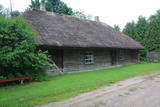 |
The museum was opened in 1977 in an old farmhouse with a reed roof. The museum features distinguished people from the surrounding area, events there, and the region’s history and traditions. |
|
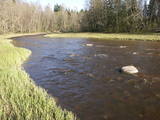 |
The nature park in the Ogre River valley is found along the middle section of the river. It has been established so as to protect the unregulated river valley and its surrounding territory, as well as biological diversity and habitats. For instance, this is an area in which rare park-type meadows can be found in Latvia. The Ogre is one of Latvia’s most popular rivers for water tourism in the spring, particularly downriver from the town of Ērgļi, where the technically complicated Braži rapids are found. |
|
 |
In Pärnu Farmers’ market you can buy produce of Pärnumaa and other small manufacturers of the region, as well as freshly baked bread and confectionary. |
|
 |
Iespēja atpūsties un relaksēties pirtiņā, baudot latviskos pirts rituālus. Sildīšanās un pēršanās ar pirtsslotām, augu skrubji un maskas, kāju vanniņas un zāļu tējas. Pēc pēriena – veldze dīķī. Pirts tā ir svētnīca miesai, garam un dvēselei. Piedāvājumā arī izglītojošā programma par augu spēku un to izmantošanu savai labsajūtai. Apmeklējums noteikti iepriekš jāpiesaka! Vietu skaits ierobežots! |
|


