
| No | Name | Description |
|---|---|---|
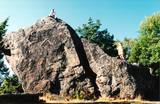 |
The Rock of Jana - Toma is claiming itself to be the highest (almost 8 m) rock in The Baltic. It is located in Kasispea village. |
|
 |
Offering – a beach created in the quarry as well as the relaxation zone. 2 volleyball playgrounds, swings, trampolines, inflatable attractions. For the youngest kids – water joys in a specially constructed water „eyecup”. In a separated quarry you are offered to fish - trouts, carps, brook trouts, sheatfish. It is possible for you to cook fish, fry, make fish soup. In this case, we offer you all the necessary things for cooking. Fishing takes place all year round. |
|
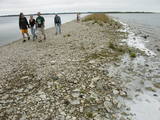 |
The Kassari Island is the fifth largest Estonian island, and it is found to the South of the Hiiumaa Island. There are two dams between the two islands, and a road for motor vehicles has been installed atop them.
|
|
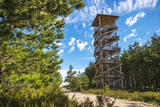 |
Koka skatu tornis atrodas blakus Kolkasraga priežu takai. No tā redzama ar priedītēm aizaugusi „stiga” – t.s. Šautuve, kuru padomju laikā izmantoja šaušanas apmācībām. No torņa skatu platformas labi saskatāma Kolkas bāka, kas atrodas 5 km attālumā no Kolkasraga. |
|
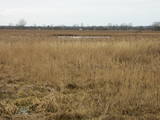 |
Most of this restricted area is made up of a shallow and eutrophic body of water in which many species of birds, including some that are rare and protected, nest. Specialists say that anywhere between 150 and 450 pairs of black-headed gulls nest in this area on a regular basis.
|
|
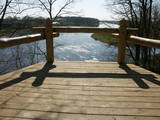 |
The Mežotne castle hill is on the left bank of the Lielupe River and opposite the Mežotne Castle. This was one of the largest Semigalian fortified castle hills during the 9th to the 13th century, and an ancient town alongside the hill covered 13 ha of land. The castle hill has been improved. A pontoon bridge across the Lielupe allows hikers and bikers to reach the castle (between May and October). Vīna Hill is approximately 500 m to the South of the castle hill, and a wooden pathway leads to it. |
|
 |
The beautiful, tidy and artfully laid out farmstead is situated in Jaunpiebalga district. The farmstead is naturally encorporated into the landscape, the old barn is renovated and its top floor is a place for the owner’s workshop and exhibition (she is a softwares artist). The old log house has also been renovated, and the sauna has been rebuilt. A small river flows through the farmstead, and there is also a Tuleja mound on the territory, which is a natural landmark protected by the state. |
|
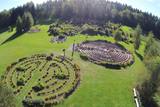 |
This park has five labyrinths with decorative plants, flowers and various kinds of medicinal plants. The longest path in the labyrinth is 1.7 km long. The total distance of the paths is 4.5 km. The park has three geometric figures -- a cupola, a mandala and a Merkabah. |
|
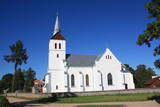 |
On sunny days, this white church absolutely sparkles. It is in the southern section of the village and can be seen from a great distance. Jesuits built the first wooden church at this location in 1759 in honour of St Peter and St Paul. The church that is there today was built nearly a century-and-a-half later, in 1893. The interior can be visited during worship services. Interred in the yard of the church is the Lithuanian pastor and wood carver Antons Rimovičs (1865-1933). The congregation building is opposite the church. |
|
 7 days
|
This study tour is designed to show Latvia's rye traditions as their central focus. This tour has been developed in cooperation with the Latvian Bakers’ Association. Rye is both the basis of the Latvian diet and a powerful symbol of Latvia's culture and culinary traditions. Itinerary emphasize traditional rye bread-baking and eating, as well as insights into the history of the rye grain from Latvia's earliest archaeological record to the present day. Itinerary include visits to working farms, grain mills and culturally and historically important locations. This study tour is designed for groups and may be adapted to the needs, interests and timeframe of each client. Tour cost includes meetings with experts, site visits and admissions, accommodations, specified meals, sightseeing, transportation within Latvia and guides-interpreters. |
|
 5 days
|
The "Baltic Way" route is in honour of a unique demonstration on August 23, 1989, when residents of the three Baltic States joined hands in a chain of participants that stretched along a nearly 600 km distance to link the three capital cities of Vilnius, Rīga and Tallinn. In historical terms, this route was used from the 14th or 15th century or even earlier than that. Grain-based foods in this region have a long history. Tasty and yeasty rye bread is common, and in Vidzeme, try it with some hemp butter. Barley is used to bake buns and for porridges. Wheat is used to bake water pretzels with caraway seeds. Visit farms and restored windmills to track the route of grain. A special cheese is part of Summer Solstice celebrations, and on a daily basis you can enjoy other tasty cheeses made of cow and goat milk. Various river and lake fishes are popular, as are local meat and fowl dishes and wild game with tasty sauces. A roast or a pot of soup cooked on a live campfire will have a lovely aroma, and it will be served with vegetables, greens, beans, peas and mushrooms. Wild plants such as sorrel, dandelion or young nettle leaves are added to soups and salads. Treat yourself with fresh honey, bacon pies, sheet cakes, pastries, rye bread desserts, honey cakes and gingerbread. You will find simple and traditional dishes, romantic meals in castles and estates, as well as a special knighthood repast with spices typical in the age of the Livonian Order. Slake your thirst with herbal teas, birch juice, berry beverages, tasty beer or wine or a glass of something stronger. |
|
 |
The Cemetery of the Brethren of
Lāčukrogs offers a final resting place to
men who fell during World War I.
|
|
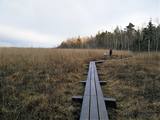 |
Taka atrodas Riekstusalas pussalā, netālu no putnu vērošanas torņa. Uz peldošiem pontoniem celtā laipa iepazīstina ar Kaņiera ezeru „tuvplānā”. Var iepazīt niedrājus, to putnus, labi redzamo ezera gultni ar zivju mazuļiem un kalcifilām augu sabiedrībām. Laipa aizved līdz salai, uz kuras aug kadiķi. |
|
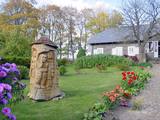 |
This museum is at the Griežioneliu farm in the Anīkšču region. It was opened in 1968 as an authentic farm with plants that come from that time. The history of the farm is related to biological heritage. |
|
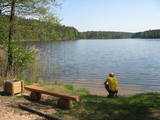 |
The aim of this territory is to regulate the natural and cultural landscapes of the upper reaches of the Daugava River valley, where there is a great deal of biological diversity. Nature trails have been installed in the park, as have bicycle routes. The river is good for boating in this area, too. The Curves of the Daugava nature park is part of the territory (see “Nature Parks”). |
|
|
|
Near the Priedīši homestead, there is a nature trail which allows visitors to study Lake Dziļezers and the surroundings. There are various lakes in this region which are found in a depression left behind by the Ice Age – Lake Dziļezers, Lake Riebezers, Lake Mazezers, Lake Auziņš, Lake Skuja and Lake Bruņķītis are all there. Along their shores, there are various kinds of forests, including ones with broadleaf trees that are under environmental protection. The trail is 3km in length and will take an hour or so to traverse. This is a part of the environmentally restricted territory of Lake Dziļezers and Lake Riebezers.
|
|
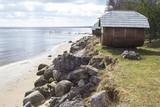 |
This is an ancient Liv village, known as Mustanumm is the last village in the south-easterly direction, and during the mid-20th century, just a few Livonians lived there. Of 307 inhabitants in 1935, only 15 were Livonians. At the beginning of the 19th century, there were six farms and a lagoon here, but at the end of the century there were 63 farms. The valley of the Baķupīte River and the sea had remnants of pilings that provided evidence about a Medieval port. Legends say that the sea robber Trommel had a castle on the left bank of the river during the 14th century. Sailing ships were once built in the region, as well. Two locations of cultural and historical importance in Melnsils are the ancient cult location that is the Baķi castle hill, and the castle hill of a sea pirate Trommel. |
|
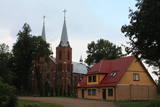 |
0,2 km austrumos no Vidsmuižas atrodas no šķeltajiem laukakmeņiem un sarkanajiem ķieģeļiem celtā (1910. - 1912. g.) Vidsmuižas katoļu baznīca. Tāpat kā Riebiņos esošā, arī šī ir uzskatāma par tipisku 19. – 20. gs. mijas Latgales lauku baznīcas paraugu. |
|
 |
Zemnieku saimniecībā "Rudzīši" iespējams apskatīt dažādus mājputnus - vistas, tītarus, dažādu šķirņu pīles un zosis. Mini zoo mīt arī cūkas, aitas un kazas. Tiek piedāvāta izjāde ar poniju, kā arī iespēja pārnakšņot brīvdienu mājā. |
|
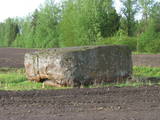 |
Rīgas - Daugavpils šosejas (A 6) 157. kilometrā skats jāpavērš Daugavas (rietumu) virzienā, kur cauri koku alejai klajā laukā 50 m attālumā no ceļa iegūlis Vaiķu akmens (7 m garš, 4,7 m plats un 1,7 m augsts). Akmens, kura tilpumu vērtē ~ 45 m³, pēc formas atgādina plakanu galdu. Nostāsti vēsta, ka to šeit atnesis velns. Kā jau šādiem akmeņiem „pienākas”, stāsta, ka te pusdienojis gan Krievijas cars Pēteris I, gan pats Napoleons. |
|


