
| No | Name | Description |
|---|---|---|
 |
The saloon is in the 250-year-old servants’ home of the Rundāle Castle, with a brick floor, pot-bellied stoves, a smokestack and other historical objects. Meals are served on antique dishes, and hot beverages are served in cups from the Kuzņecovs Factory. Latvian cuisine: Roast ham with eggs, potatoes with mushroom sauce, roast goose, crabs boiled with dill, pancakes with honey, bread soup with whipped cream, stacked bread, country teas, apple pie. Special foods: Pork shish kebab with oven-roasted potatoes. |
|
 |
This is an institution that offers leisure activities for people of all ages. Creative workshops and various lectures are focused on families to facilitate creativity. There are kites that allow children to release their dreams into the sky. |
|
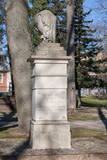 |
In 1877, Baron August von Pistohlkors, celebrating the merits of his ancestors in the foundation and development of Neibāde, ordered a monument to be erected in the park. After World War I, in the early 1930s, the monument was accidentally found during the cleaning of the bed of the River Ķīšupe. The monument was renovated by the Neibāde Aid and Improvement Society and officially reopened in 1933. The monument also suffered damage after World War II. Now the monument is restored and located in the park of the open-air stage. |
|
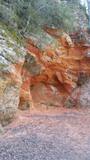 |
Sarkanās klintis savu vārdu ieguvušas pateicoties sarkanajiem iežiem. Tieši sarkanā ir mīlestības krāsa, tāpēc sarkanās klintis ir romatiska pastaigas vieta mīlniekiem. Smilšakmens klintīs redzamas plaisas, kas sašķeļ sarkanīgos iežus, radot neparastu dabas mākslas darbu. To virsma ir diezgan izrobota, kas veido klintīs nelielas alas un nišas. Sarkanajās klintīs ir arī daudz dažādu avotiņu. Pazīstamākais no tiem ir Rūcamavots. Tam ir šāds nosaukums, jo tas, nākot ārā no zemes, izdod nelielu rūkoņu. |
|
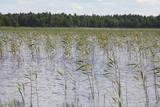 |
There is picnic area and information stand at the end of the forest path leading from Muiznieki to Klanu Bog. Klanu Lake was formed in the place of Littorina marine lagoon. Nature restricted area was established to protect biotopes in the area of Klanu, Dziru and Stavu Lakes. There is wide information about the area available on the information stand.
|
|
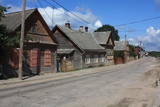 |
The wooden buildings with few floors emerged in the 19th century. Tourists can look at typical closed yards, verandas, wooden elements and decorations. The city suffered from fires in 1866 and 1938. The Market Square is the historical centre of Ludza, while the Ludza castle hill dominates the region. The streets of the city were established around the hill, which had an ancient Lettigalian wooden castle late in the 14th century. The Livonian Order replaced with the mightiest brick castle in Latgale. It was sacked in 1654 by the forces of Tsar Alexei Mikhailovich. The castle hill offers a lovely view of Latgale and the oldest city in Latvia and its historical centre. |
|
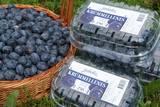 |
This beautiful farm near the hillocks of Lake Kālis grows raspberries, strawberries, cranberries and blackberries. During the season, you can pick, taste and buy the berries. Informational tours are also available. |
|
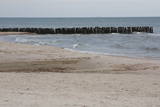 |
This is an enormously important territory for migrating birds. The most commonly spotted protected species of birds are the velvet scoter, the black scoter, the long-tailed duck, the little gull, the red-throated and black-throated loon, and the black guillemot. The territory is opposite the Dundaga and Ventspils administrative districts, and it covers 172,412 hectares.
|
|
 |
Das in 1671 gebaute Schloss wurde mehrmals umgebaut und die heutige Aussicht im Stil des Klassizismus hat das Schloss 1820 – 1923 erhalten. Der im 19. Jh angelegte Park mit einer Rotunde und einer Steinbrücke. Tematische Ausstellungen. |
|
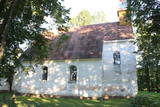 |
The Zasa Lutheran Church is in the northern part of the Zasa park, was built in 1750, and is a small Lutheran church. The organ, which was produced by the distinguished organ builder Andrejs Sūnākslis, was recently restored. The graves of German soldiers who fell during World War I are near the church. |
|
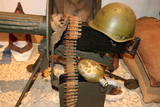 |
Found at Daugavpils Street 40 in Aglona, this is one of the largest private collections of military exhibits related to World War II in
|
|
 |
Piemājas saimniecība "Rudā lapsa", kas atrodas Ludzas novadā, interesentiem piedāvā iespēju iepazīt laukus, apskatīt mājdzīvniekus, saklausīt dabu, ļauties mierīgai atpūtai. Tiek piedāvātas telšu un piknika/ugunskura vietas. Ciemos tiek gaidīts katrs, kas vēlas atpūsties un izrauties no ikdienas skrējiena. |
|
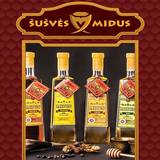 |
This venue offers tastings of honey beer and honey. You can buy all kinds of beekeeping products, natural wax candles and various types of honey beer. |
|
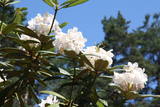 |
72 types of wild rhododendrons with 193 different species
This is the only specialised rhododendron nursery in the Baltic States. Specialists there work on different kinds of rhododendrons, seeking to produce decorative and winter-resistant types of the flower. The nursery also sells plants. In the facility’s pine forest, which covers 11.8 hectares, you can see a large collection of rhododendrons from all over the world.
There are 64 winter-resistant types of rhododendrons at “Babīte,” including “Alma Mater,” “Academia Scientiarum,” “Emeritus,” “Eduards Smiļģis,” “Dita Krenberga,” and others (these were developed by Rihards Kondratovičs). All of these are appropriate for Northern Europe.
|
|
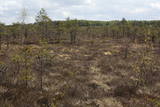 |
Territory established mainly for protection of bog myrtle and various bird species. An interesting fact is that bog myrtle or sweet gale is used as ingredient for making famous Riga Black Balsam. Brienamais purvs (wade bog) is hard to find and reach therefore it is not suitable for tourism.
|
|
 |
Jõeniidu is a small, lovely family farm offering accommodation and meals from vegetables grown on its farm and goat's milk. |
|
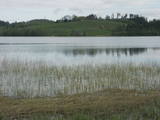 |
This nature park was established to protect the Burzava hillocks, Lake Adamova (a eutrophic lake), and the habitats and species that are found along the lake’s shores – bats included. The loveliest views of the area can be viewed from the hillocks that are on the northern shore of the lake. There are tourist accommodations on the shores of Lake Adamova where tourists can spend the night. |
|
 |
Since 1820 people have been brewing Estonian beer here using local ingredients, like groundwater, yeast and others. The Saku Brewhouse name comes from the previous brewery that worked until 1992. The brewhouse also has a museum where you can see beer production from centuries ago until this very day. During the tour it is possible to taste freshly made beer. Minors are not allowed to participate in the tour. |
|
|
|
Ein einzigartiges Örtchen beiderseits des Flusses Minija, wo der Fluss eine „Hauptstraße” ist. Litauens Venedig. |
|
 |
Augstā un purva vidusdaļā - pārejas tipa purvs, putniem nozīmīga vieta. Apmekļējumiem nav piemērota infrastruktūras trūkuma un sugu aizsardzības nolūkā. |
|


