
| No | Name | Description |
|---|---|---|
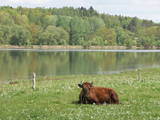 |
The nature park in the Daugava River valley is the only place between the cascades of the Daugava hydroelectric power plants there is still a chance to see the Daugava River valley and the ravines of its tributaries as they appeared before the area was flooded so that the power plants could be constructed. Particularly lovely views are found on the right bank of the river near the Aizkraukle church and castle hill. Forests, meadows, origins of streams and small dolomite cliffs in this area are all protected biotopes. Leisure facilities have been installed on the Aizkraukle castle hill, and the Aizkraukle castle ruins are not far away. |
|
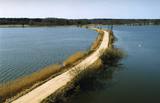 |
This territory is to the North of Skrunda, and it is an important location for water birds during their migration. Northern swans nest in the ponds, and sea eagles and other birds such as falcons and plovers use them for feeding. This is a good place for bird-watching, although it has not been particularly structured for that purpose. |
|
 1 day
|
This outing combines fine dining at one of the most beautiful estates in Latvia with an outdoor experience at a cranberry plantation tasting cranberry-based products. The Bīriņi Castle complex is part of Latvia’s national architectural heritage. The Neo-Gothic main castle building is surrounded by a picturesque park and buildings including the stables and the water tower, which showcase the country’s industrial heritage. The castle hotel is a very popular venue for wedding celebrations. The cranberry plantation in Laugas swamp at Gundegas Farm was started in 1989 as a research farm. Cranberries are well known for their refreshing taste and medicinal qualities. They are used both for culinary purposes and in traditional medicine. Today six types of cranberries are grown in Latvia. The cranberry plantation offers the opportunity for guests to ‘pick-your-own’ during the harvest in September. |
|
 |
Latvia's first grape selector, Pauls Sukatnieks (1914-1989) lived at Apsītes. The house has been restored and contains household and farm equipment, as well as Sukatnieks' library and office. The garden that surrounds the house has local and introduced colourful plants and trees, including rare ones. Visitors can look at the types of grapes that Sukatnieks developed, as well as his vineyard. Alongside the homestead is an information stand about birdwatching in the Dviete wetlands. You can tour the garden and house in the company of a guide. There is space for relaxation and picnics, and the homestead organises work sessions and educational events. |
|
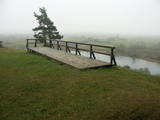 |
In Dagda, on the side of Daugavpils Street, there is a forested hillock that is the Lubāne castle hill. On the upper part of its southern side, there’s a viewing area which offers a view of the small Lake Lubenenis, the eastern part of Dagda, and the white tower of the local Catholic church. Legend has it that treasure is buried here.
|
|
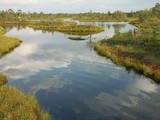 |
The Ķemeri National Park was established in 1997 and mostly involves wetlands – the shallow shores of the Bay of Rīga, an overgrown seaside lake, vast swamps, damp forests and fens, and flood-land meadows. The park is enormously important for protecting plants (25% of those recorded in Latvia’s Red Book are found in the park) and animals, particularly nesting and migrating birds. The Great Ķemeri Bog is one of the largest swamps in Latvia, and there are other swamps, as well – the Zaļais swamp and the Raganu swamp. The massive swamps are important, too, in the flow of sulphuric waters and medicinal mud. The once-famous Ķemeri Spa was based on the availability of these resources. Most of the cultural and historical objects in the Ķemeri National Park relate to the seashore as a place for leisure and recuperation. Educational nature trails, bicycle trails, hiking trails, bird-watching towers and other facilities are available. The visitors centre is at the recently renovated “Forest House” in Ķemeri. |
|
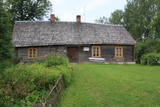 |
The distinguished Latvian author an painter Jānis Jaunsudrabiņš (1877-1962) spent six years of his childhood at Riekstiņi in Nereta. He was born into a servant family and moved to Riekstiņi together with his mother after his father passed away. The household inspired him for his "White Book." In honour of Jaunsudrabiņš, a museum was opened at Riekstiņi in 1967, and it is in an authentic Selonian farm with its spirit and aromas. You can tour the residential building and the homestead's granary and wheelhouse, also houshold building from 1820. The apple orchard has trees that are 100 years old and older. Nearby is the Ķišķi cemetery (on the side of the Vecumnieki-Ilūkste road), where members of the Jaunsudrabiņš family were interred and Jānis Jaunsudrabiņš was reburied in 1997. The Nereta Administrative District still has many single family farms and place names which Jaunsudrabiņš mentioned in his books. |
|
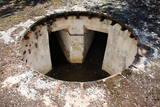 |
Today there’s a single-family farm and not much else, but at one time Olmaņi was the site of two important coastal batteries collectively known as “Krastnoflotskaya.” Until 1955, the one to the South of Olmaņi, there were four 152-mm Kane type cannons, which were manufactured during World War I and were widely used to protect the coastal territory of the Baltic Soviet republics of Latvia and Estonia during the rule of the Soviet regime. Small concentric ramparts of earth are all that’s left there today. After 1955, to the North of Olmaņi, another battery was installed with four MY-2 152-mm cannons. They had a range of 25 km. The battery remained in battle readiness until 1975, when it was turned into a reserve facility. It’s not easy to find, but it’s worth the search. The platforms for the cannons and the subterranean bunkers are still there. This was indeed one of the most impressive coastal batteries along the shores of the Baltic Sea.
|
|
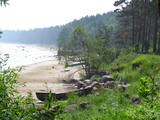 |
There are both sandy beaches with a good infrastructure and a rock beach in Roja. The rocky beach leads to a huge rock that is 2 m high and 12.5 m in diameter. The coastline is lovely with its scattered stones and its unhurried rhythm of time. At the place where the Silupīte River flows into the sea there are remnants of ancient wooden boats and iron nails. In 1939, Roja became the starting point for a closed zone, because the Soviet army and navy were sited there until 1993. The dunes at Krasta Street feature Soviet heritage, including a large cement wall from which border guards used to monitor the sea and catch those who violated the border. Behind the dunes was a base for border guards with everything they needed. Roja housed a Border Guard post and an air defence radio locator. (Source: Roja TIC) |
|
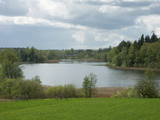 |
This restricted area protects the eutrophic Lake Istra and the biotopes that are alongside it – various kinds of forests and meadows. This is a particularly lovely part of the Latgale region. Interestingly, the so-called system of “rope farms” can still be seen in the nature park.
|
|
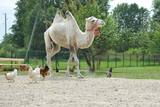 |
A park of exotic animals in Dundaga features alpacas, llamas, ostriches, a camel, a blue cow, etc. |
|
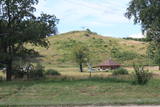 |
Ap 0,5 km ziemeļaustrumos no Stukmaņu muižas – Daugavas ielejas labajā krastā atrodas Vīna kalns – sens pilskalns. Tajā atrodas izpostītie Stukmaņu muižas īpašnieku kapi. Mazliet tālāk redzams klajš upes ielejas nogāzes posms, kurā savulaik darbojās slēpošanas trase. |
|
 |
The saloon is on the corner of two historic roads – the Rīga-St Petersburg road and the Cēsis-Vecpiebalga-Madona road. It uses ingredients from local farms and vendors. Latvian cuisine: Grey peas with bacon, dumpling, beet or wild mushroom soup, bean salad, herring with boiled potatoes and cream, farmer’s ramekin, roast pork, potato pancakes, crepes, bread soup, strawberry dessert, homemade ice cream. |
|
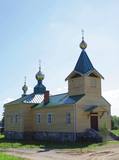 |
Tiskādi Orthodox Church is the cultural monument of the local significance. The construction works of the building lasted from 1829 to 1878. The
church was reconstructed in 2008. The church has antique icons and the library
of sacred literature.
|
|
 |
The owner of the Russian farm (Vene talu) prepares delicious Russian national dishes according to her grandmother's recipes. Guests learn traditions and enjoy plenty of food. There is also a tea salon, and masterclasses for Russian cuisine. |
|
 7 days
|
The tour from Riga to Tallinn combines natural and cultural heritage and includes lovely landscapes and 15 nature trails which cross marshlands, meadows and forests along the shores of the Baltic Sea, including several protected nature reserves. Many trails are equipped with viewing towers for birdwatching. Randu meadows near Ainazi contains one third of Latvia's entire plant species. A boardwalk leads through reeds to a viewing platform with views over the meadow and the sea. Saaremaa island is interesting with very different natural attractions to the mainland - dolomite cliffs, juniper heaths, a meteorite lake and rocky sea shore. The tour passes rural farms and traditional villages typical of the coastal areas. Hiiumaa island is a laid back place and retains a very Estonian atmosphere with an important bird reserve at Kaina Bay, unusual Saare Tirp as well as several small islets off its south-eastern coast. Back on the mainland, Paldiski peninsula gives a glimpse of the recent history with its former Soviet military base. |
|
 |
The museum offers information about the history of chocolate, allowing you to learn all about the process, from raw materials to finished products. You can also prepare and taste your own bitterly sweet treat in the creative workshop. Products are available at the little store that is next door to the museum. |
|
 12 days
|
This is the longest of the Forest Trail tours, where you will hike on many beautiful forest nature trails in Latvia and Estonia. These nature trails are part of the Forest Trail and this tour is suitable for self-drive tourists, who wish to hike different sizes of trails and get an impression of the forest diversity in both countries. You have the possibility to see the northern coniferous forests with spruces and pines, broadleaf forests, wet floodplain forests and picturesque forests growing on slopes and ravines. You will also see the most interesting tourist sights in Latvia and Estonia, which are close to the Forest Trail. In Latvia you will visit Sigulda, the historic Ligatne papermill village, medieval Cesis, the River Amata valley, which is located in Gauja National Park. Then you will drive to the less populated eastern part of Latvia – the Northern Gauja protected landscape area, Aluksne Town and hike in the Korneti-Peļļi subglacial depression, one of the most impressive ravines in Latvia. You can climb to Drusku castle mound – the highest and steepest of all the castle mounds in Latvia, When entering Estonia, you will see the highest point of the Baltics – Suur Munamagi Hill, where the observation tower is built. Further on the tour will lead you to the River Piusa valley, Obinitsa, with the culture of Seto people. You will hike in the historic Varska resort town, which is very close to the Russian border. Then you will reach Tartu and Lake Peipsi, which is the 5th biggest lake in Europe. You will hike in the Kurtna landscape reserve, see the Ontika limestone cliff, Valaste waterfall – the highest in Estonia. Finally you will hike in one of the beautiful wooded areas in Estonia – Lahemaa National Park. The tour ends in Tallinn, where you can enjoy the medieval Old Town and many other attractions. |
|
 |
A popular restaurant and bar, located in a long basement of a medieval wooden building in the Old Town of Liepāja. The menu includes steaks, stuffed pork fillet, lamb kebabs, local fish, and potatoes cooked in different ways. |
|
 |
Atrodas Cēsu rietumdaļā – pie ceļa, kas ved uz Cīrulīšiem. Piedāvājumā – plašs ēdienu klāsts no brokastīm līdz vakariņām. |
|


