
| No | Name | Description |
|---|---|---|
 |
This saloon is in a lovely place – the ancient Abava River valley between Kandava and Sabile. It is housed in an historical building with among the largest chimneys in the Baltic States. A camp for water tourists is alongside the saloon. Latvian cuisine: Chilled beet soup, dumpling soup, sorrel soup, sauerkraut soup, chicken livers, homemade steak haché, dried pork ribs, roast pork, grilled pork, potato pancakes with cream, crepes, herbal teas. Special foods: Cabbage stuffed with smoked meat, cottage cheese and onions. |
|
 |
On the right bank of the River Pēterupe is one of the historical areas of Saulkrasti – Pēterupe Village. It is believed that the village began to form around a chapel during the so-called Swedish or Catholic times. The chapel was named after the Apostle St. Peter, and therefore the river and the village also carries his name. Pēterupe Village can be considered the oldest village in the Saulkrasti region. The oldest witnesses of the origin of Pēterupe Village are: Rectory, Pēterupe Evangelical Lutheran Church, Outpatient Clinic and the wooden buildings in the old village centre. |
|
 5 days
|
This route involves unique views that have never been seen before in Latvia! The impressively steep shoreline of the Baltic Sea begins a few kilometres to the North of Pāvilosta and ends shortly before Ošvalki, stretching for nearly 20 kilometres in all. Its most impressive and unusual forms are seen between Strante and Ulmale. The entire route leads down the western boundary of the former Iron Curtain, because the Baltic Sea coastline was militarised during the Soviet era and unavailable to most people. Remnants of former military objects and old tank routes in the dunes can still be seen. The largest biotopes of grey dunes stretch for several kilometres around Ventspils and Užava. These are unusual landscapes that can seldom be seen elsewhere in Europe. You can walk more than 10 kilometres here and not see another soul. Route information from Latvijas Lauku forums |
|
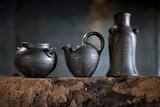 |
The potter uses the black (smoke) technique to create his artworks, and he uses clay from Latgale. He uses no industrial equipment in his work, and the kiln is fired with firewood. You can watch as he creates dishware on a foot-powered potter’s wheel and talks about the firing process. You can work with clay and purchase finished products. |
|
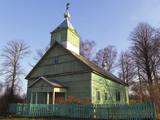 |
Guriliški Old-Believers Prayer House was built in the beginning
of the 20th century. It has a very old bell that was made in 1939.
|
|
 |
The farm grows herbal tea plants such as blue dragon, purple cornflower, peppermint, and lavender, as well as other plants. It also offers cosmetics such as the Beāte line of facial creams, as well as cornflower eau-de-toilette. You can take an informative tour, taste delicious teas, and purchase the cosmetics. |
|
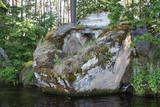 |
These are the ruins of World War II fortifications near what is now the Ķegums hydroelectric power plant. One blockhouse was found on the left bank of the Daugava River, approximately one kilometre to the South-Southeast from the plant’s dam. A second is also on the left bank of the river, opposite the Rēzijas campground. It has slid down the abraded shore of the reservoir and is partly underwater. It is mostly accessible by boat.
|
|
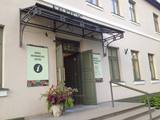 |
Located on the side of the Daugavpils-Krāslava (A6) road in Naujene, the museum features a replica of the room of a wealthy Latvian farmer with household objects from the 19th and 20th century. Younger visitors will be interested in Latvia's only diorama, "Underwater World," which will introduce them to the inhabitants of the Daugava River. An outdoor exhibition, "Daugava of the Heart," has information about the protected Curves of Daugava Nature Park and the protected Upper Daugava landscape region, as well as local cultural and historical values. The museum offers creative workshops and educational programmes. There is an apple orchard to the east of the museum. On the opposite side of the road, is the Juzefova (Juzepova) Park, which once was a baronial estate owned by Duke Bogdan Shahno. It no longer exists. The park has pathways, relaxation areas and information stands about the history of the park and the most interesting trees that are found therein. You will need at least one hour to walk through the park. |
|
 |
Größe Steinkreisen. In der Mitte befindet sich eine oder mehrere „Steinkapseln” für einen Verstorbenen. Wurden im Eisen- und Bronzealter errichtet. |
|
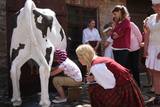 |
The granary and cheese-making building of the former Seiksāte (Berghof) Estate houses a museum that was opened in 1985 and demonstrates the route of milk from the cow to finished dairy products. You can try your hand at milking a cow and churning butter, and then you can taste what you have made. |
|
 |
A restaurant and a three-star hotel that is located in the former beer brewery of Kalnamuiža, in the valley of the River Abuls, in the territory of Smiltene Park. The restaurant offers Latvian cuisine and caters for seminars. |
|
 3 days
|
Это один из 6 маршрутов путешествий в серии «Насладитесь деревней!», который приглашает Примерное время прохождения маршрута: четыре – пять дней, в зависимости от количества выбранных достопримечательностей и времени, отведенного для их осмотра. |
|
 |
Tavern Vedu is located 10 minutes’ drive from Tartu, going in the direction of Narva. In the historic tavern you can taste delicious dishes from local ingredients. |
|
 |
The farm breeds fallow deer and trout, grows vegetables and fruit. Visitors can see the deer and wild boar, taste berries and fruits directly from the garden, participate in creative workshops and cooking master classes called "Izgaršo dzīvi". The hostess combines the regional culinary heritage traditions of Kurzeme region and contemporary cuisine. The food is prepared on live fire, using the deer, trout and vegetables from the farm. The host is a winemaker who makes every bottle with great care. Guests can enjoy tastings and stories in the romantic wine cellar. |
|
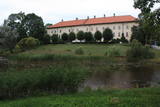 |
One of the largest castles in Kurzeme, this building has been preserved in fairly good shape. Work on its began in the mid-13th century, and it was commissioned by the heads of the Dome Cathedral in Rīga. In 1434, the estate was bought by the bishop of Kurzeme. The Maidel and Osten-Sacken dynasties owned it from the 16th to the 20th century. The Dundaga Castle burned down twice and has been rebuilt many times. The last reconstruction was in 1905, after the castle was burned down during the revolution. Of interest on both sides of the castle’s door are stone carvings of a knight and a bishop. In recent years, the hotel in the castle has been renovated, as has the second floor hallway and a terrace that is popular for weddings. There are many legends about the castle, including one about a wedding of elves and another about the Green Lady. Today the building houses the Dundaga School of Music and Art, a hotel, party rooms, the Dundaga Tourism Information Centre and various exhibitions. It is worth finding a guide to tour the castle. Groups of tourists can also order tastings of local foods. |
|
 |
Atrodas galvenās Kuldīgas gājēju ielas malā. Sadarbojas ar vietējiem zemniekiem un piedavā Kurzemes novadam raksturīgus ēdienus, kā arī ēdienus no dažādu pasaules valstu receptēm. |
|
 |
Ap 1,6 km garā un labiekārtotā Adamovas dabas taka iepazīstina ar Adamovas krauju un tās apkaimē esošajām dabas vērtībām. Takas sākums meklējams pie autostāvlaukuma, no kura paveras plašs skats uz Krāslavu un Daugavas senieleju. Adamovas krauja (aizsargājams ģeoloģisks piemineklis) ir viena no garākajām (ap 1,7 km) un augstākajām (25 - 35 m) Daugavas kraujām. Tā veidojusies sānu erozijas rezultātā, Daugavas ūdeņiem noskalojot Daugavas pamatkrastu Adamovas loka ziemeļdaļā. |
|
 |
A small food producer in Vidzeme, which is engaged in the processing of vegetables, fruits and berries, producing healthy snacks without sugar and flour. Offers tasting tours, master classes on vegetable truffles and healthy cakes, actively involving guests. Soon there will be a lunch offer - a special kale cabbage soup. |
|
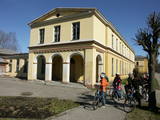 |
Kemeri (Kemmer) are mentioned in the literature sources for the first time in 1561. In the second half of the 18th century and in the beginning of the 19th century the curative properties of Kemeri sulphur spring waters and swamp mud are well known, therefore here representatives of the highest Kurzeme social circles arrive for treatment. The local foresters welcome the guests. During this time the first mud baths are organised. For some time the development of Jurmala and Kemeri beach is terminated by the Fatherland War of 1812. Two decades later – from 1833 until 1835 the benefits of Kemeri were enjoyed by General Governor of the Baltics Graf K. M. Palen, who addresses the Tsar of Russia Nicholas I for supporting further development of the health resort. Plead is supported and in 1836 Tsar allocates 700 ha of state land and grants 100 000 roubles for the construction of sanatorium and paving of the road from Kemeri till Sloka-Tukums high-way. Two years later (in 1938) the first state bath institution is opened. This is also considered the year of founding the health resort. In several stages the formation of Kemeri Landscape Park is begun, which is an important part of the health resort. In the middle and second half of the 19th century further development of the health resort is promoted by steamboat, as well as railroad traffic that are opened in 1877 from Riga till Tukums. In 1912 direct railroad line Kemeri-Moscow is opened. Early before World War I the number of patients reaches 8300 per year. The 1st battlefront of World War I is held in Kemeri swamp for several years and the health resort is significantly destroyed. Despite this fact after the war it develops rapidly and Kemeri becomes a beloved recreation place for the residents of Riga and one of the most modern health resorts in Europe. In 1924 a new bath institution with mud-baths is built in Kemeri, which at the time is one of the most modern in Europe, but in 1936 State President Kārlis Ulmanis opens one of the most prominent buildings of the first independent state of Latvia period – hotel "Ķemeri". Also after World War II – during the Soviet times the health resort is significantly expanded and almost 10 sanatoriums are established within its territory, in which about 100 doctors are employed. In 1971 Kemeri is awarded the status of All-Union health resort. From 1975 until 1985 the largest of sanatoriums is constructed in Kemeri – Līva (initially – Latvija), which has two blocks of eleven storeys. Up to 1200 patients at the same time could receive treatment at Līva, but within a year – up to 140 000 patients. The sanatorium is closed in the beginning of the 90ies of the 20th century as unprofitable. Up to 1994 five sanatoriums operate in Kemeri: "Čaika", "Daugava", "Dzimtene", "Ķemeri" and "Līva" (Latvija) and resort policlinic "Ķemeri". The latter period may be considered the declining fame period of Kemeri as a large-scale health resort. |
|
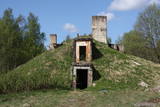 |
The former Soviet communications division at Plāņciems in the forests of Bārta is privately owned and is being dismantled at this time.
|
|


