
| No | Name | Description |
|---|---|---|
 |
The fisherman’s homestead that is alongside the Kolka Lutheran Church offers a look at how fish are smoked and prepared. You can taste the fish and purchase fish that were caught in the sea (mostly plaice). |
|
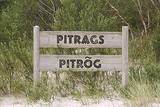 |
was first recorded in documents in 1582. The shallow water around the village contains many sunken ships. In 1826, Pitrags had 11 farms and 190 residents. A saloon was opened in the mid-19th century. In 1937, the village had 12 old farms and 38 fishing operations (mostly new farms). There were several fish processing plants in the village. One of the local residents was the distinguished Livonian language storyteller Marija Šaltjāre (Bertholde, 1860-1930). She shared more than 200 fairy tales and legends, more than 90 songs and games, etc. The Pitrags Baptist Prayer House was built in 1902. It was burned down during World War I, rebuilt in 1925, and renovated in the late 20th century. The Krogi homestead in the centre of Pitrags has a collection of 27 old types of Livonian coastline fencing. The owner also offers a chance to help with the smoking of fish and then to taste the resulting product. |
|
 |
Mācību drava "Kāre" piedāvā iepazīties ar bišu valstības noslēpumiem. Interesanta iepazīšanās ar brīnumiem un noslēpumiem bišu saimes dzīvē. Apmeklētājiem ir iespēja ietērpties speciālos aizsargtērpos un bitenieka vadībā iepazīties ar dzīvas bišu saimes smaržu. Veselībai un dzīvespriekam iespējams iegādāties - medu, bišu maizi, bet romantiskai noskaņai - smaržīgas bišu vaska svecītes. |
|
 |
The cafe is situated in the shopping centre Sala in Jekabpils, on the right back of the river Daugava. The cafe’s premises are comfortable and decorated with fresh flowers. It is a place where you can have either breakfast, dinner or supper. Working hours: 9.00 - 20.00 |
|
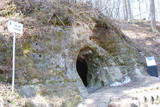 |
Ruins of a Livonian Order castle tower atop a steep hill alongside the Pärnu-Valga highway in Helme. The castle changed hands from Germans to Russians and Lithuanians to Swedes who eventually destroyed it in 1658. The spring at the foot of the hill is believed to cure seven diseases. |
|
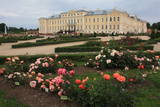 |
The palace was built as the summer residence of the duke of Courland, Ernst Johan Byron, and it was designed by the outstanding Italian architect Francesco Bartolomeo Rastrelli. The construction of the palace ensemble took place between 1736 and 1740. The decorative finishing of the interiors was carried out from 1765 to 1768 by the sculptor Johann Michael Graff and the painters Francesco Martini and Carlo Zucchi. The significance of the palace lies in its authenticity as it has not been modified through rebuilding since then. Intensive restoration works started in 1972 when the Rundāle Palace museum was established. The restoration was completed in 2018. |
|
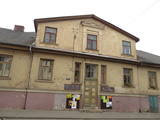 |
Saldus is mentioned in the historical documents already in 1253. Until the 13th century an ancient Cours castle Salden was located here, which is also represented in the coat of arms of the town. Around the 1341 Livonian Order built a castle near the Cours hill fort, where settlement formed. Its peak of development, like the other settlements of Courland, was during the reign of Duke Jacob 1642 – 1682. 1856 is mentioned as the year of the foundation of Saldus, when restoration of town perished during the Northern War begun. At the end of the World War II a big fights took place at the town, but town remained in German-occupied part of Latvian until the May 8, 1945. Modern Saldus attracts with its activities - town days, the music festival "Saldus Saule", as well as a variety of sightseeing objects, among which A/S 'Druvas Partika" can be mentioned, where you can watch how the ice cream is made and Saldus Food Factory, where you can taste the delicious candy "Gotina" and watch the production process. |
|
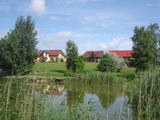 |
The farm breeds several species of chinchillas and offers a look at them. There are also decorative pheasants, peacocks, doves and different kinds of chickens, along with marmots, dwarf goats, chipmunks, rabbits, a pony, etc. You can purchase chinchillas, decorative birds and other animals, along with quail eggs, chinchilla pelts and souvenirs. There are also ponds for fishing. |
|
 1 day
|
Guided wilderness experience day-trip combines bog shoeing and canoeing. First is walking through the forest and reaching the largest peat-bog in Estonia – Kuresoo. Wear bogshoes and walk on the wild landscape, followed by wilderness lunch. The trip ends with a relaxing canoe trip along Soomaa meandering rivers. |
|
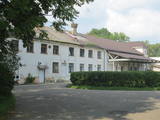 |
The first Mālpils dairy began operations in 1923 and manufactured butter and cheese. During the 1970s, the first soft and unfermented cheese in Latvia, “Mālpils Cheese” was produced here. Apply in advance for a tour of the company and a tasting of its products. You can purchase the products from the company’s warehouse. |
|
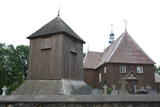 |
Iespaidīga koka celtne un izcils koka arhitektūras piemērs, kuru pamanīs katrs Plateļu apmeklētājs! Plateļu baznīca ir viens no Lietuvas vecākajiem koka dievnamiem. Pašreiz redzamais ir būvēts 1744. g., bet zvanu tornis – 1899. g. Dienvidos no baznīcas plešas Plateļu muižas parks. |
|
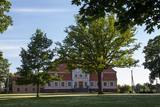 |
The Kelme Estate is one of the last remaining provincial estates in Lithuania. Designed in the Baroque style, it is a large and closed estate farm with many authentic buildings, gardens and bodies of water. The geometric park is a vivid example of Baroque style, and it is divided up into various parts by alleys. There is a viewing mound in the park. Most of the trees are ancient, indeed, but the best part of the estate is behind it -- one large and three smaller ponds, as well as a viewing mount that is in the ancient park. |
|
 |
This farm offers tours for children who can become friends of horses, look at Angus cattle and learn about a dairy farm. The children are transported in a specially adapted cart that is pulled by a tractor. The farm plans to purchase some alpacas in 2018. |
|
 |
This village is at the place where the Irbe (Dižirve, Īra) River flows into the sea, and it is on both shores of the river (sea side and land side). The name of Irbe was recorded for the first time in a 1310 border agreement between the bishop of Kurzeme and the Rīga Dome Capitol. The name of Lielirbe (Irvemūnde) was recorded for the first time in a document from an arbitration court in 1387. At the end of the 19th century, the small port at Lielirbe was an active centre for the sale and transport of timber materials. In the late 19th and early 20th centuries, the largest number of sailing ships among villages on the western shore of Kurzeme was built there. In 1939, the village had some 300 residents, more than 70 houses and a Baptist church which is now at the Ventspils Open Air Museum. A narrow-gauge railroad passed through the village, which had a post and telegraph office, two grocery stores, an elementary school, a choir and a brass band. Lielirbe was one of the largest villages to disappear after World War II. Cultural historian Valda Marija Šuvcāne (1923-2007) was born in Lielirbe, and her daughter, Baiba Šuvcāne, is continuing her mother's work by writing important papers about life along the Livonian coastline. By 2019, a bridge is to be reinstalled across the Irbe River. |
|
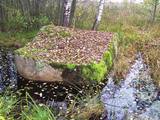 |
Platais Boulder (Wide boulder). You can find it in the rural municipality of Mākoņkalns not far from a
small meadow close to the boulder of Āžmugura. Both the boulders have their legends. Some say that the
boulder of Āžmugura is the part of Platais boulder and the rainwater from its cavity heals the warts.
|
|
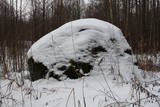 |
The historic stone, on which there is carved over 200 years old boundary-mark, sets the border between the Duchy of Courland and the Russian province. Nowadays, it sets the Babīte and Jelgava district boundary. The stone lies to the East of Kalnciems–Peat road (the south of the swamp Labais purvs) at the edge of a forest firebreak and it can be hard to find. To this end, the description of the road map may help: around 400 m south of the car parking lot at Lily Lake from Kalnciems-Peat road to the right (in the east) turns a forest road which leads down from hills Krāču kalni. It should be around 170 m to go until it abruptly turns to the right (to the southeast). Then you must go in this direction until after ~ 0.5 km to turn to the northeast where after further ~ 0.4 km of the current forest road intersection turn to the north. After ~ 0.4 km turn right (to the east) on a big firebreak, on the left (the north) side of which behind the drainage ditch during the non-leaf period there can be seen a rounded stone. Due to the poor condition of roads, the stone can be reached only on foot. |
|
 |
The Eleja creamery offers tastings of cheeses from the farm that is run by the Mālkalns family (apply in advance for the tastings!). There are seven kinds of cheeses, including smoked and matured cheeses. There is French cheese that has been prepared in partnership with a French cheese-making specialist, M Eribert. Blūdži is in the Sesava Parish, 7 km from Eleja, and welcomes small groups. The farm bakes bread, processes vegetables (tomato juice) and prepares other country goodies. |
|
 |
Karulas nacionālā parka lielākais ezers - 2,8 km garš, līdz 1 km plats. Ezera ziemeļaustrumu krastā atrodas parka apmeklētāju centrs. 5,5 m dziļais ezers ir gan zivīm, gan nostāstiem bagāta vieta. Ezera un tuvākās apkārtnes iepazīšanas nolūkā ir izveidota 3,5 km garā Ehijerva taka (Ähijärve teerada). Tās sākums atrodas pie iepriekš minētā apmeklētāju centra, kur izveidota atpūtas vieta un atraktīvs bērnu spēļu laukums. Taka sākumā ved gar ezera krastu, nelieliem mitrājiem un meža ceļiem, kas izmantoti iepriekšējos gadsimtos. |
|
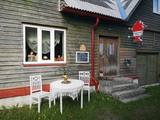 |
The Samovar House is a small samovar museum located in the Old Believers’ village near Lake Peipus, which has a private collection with more than 100 different and very special samovars and objects related to samovars.
|
|
|
|
An afforested island in the Gulf of Finland, approximately 14 km to the North of Tallinn. There is a network of small roads and trails on the island. Forests: Mostly 1.1, 1.2 and 4.2. Information: www.aegna.ee. A ferry boat to the island departs from the port at Pirita. Hike around the shore of the island, where you will find all kinds of environments – dunes, sandy areas, rocky areas and places with lots of reeds (~9 km). |
|


