
| No | Name | Description |
|---|---|---|
 |
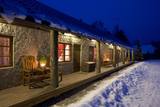
Mulgi Kõrts (tavern) in Abja-Paluoja, the centre of Mulgi area, has a cosy atmosphere, local dishes and swift service. The tavern is in a house over 100 years old. |
|
 |
The farm, established in 1874, today provides comfortable tourist accommodation, saunas, an outdoor pool and organic food made to centuries-old recipes. Its little museum exhibits the exquisite needlework and farm tools of previous generations. All these items have a story to tell about their former owners´ dreams and work. |
|
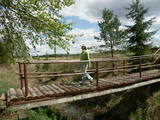 |
A small and forested territory with sulphurous springs, among which the most popular one is the Ellīte sulphur spring. It has sulphurous water with a low level of minerals, and the water supposedly has medicinal properties. The area around the stream is well-appointed, and a pathway leads to it. The stream is considered to be the source of the Iecava River. The restricted area is there to protect biotopes and protected plants which are in the area.
|
|
 |
The brewery of Uzava offers group excursions where you are told about the history of the place and the brewing process. It is possible to buy different sorts of beer and beer-related souvenirs in the nearby shop. |
|
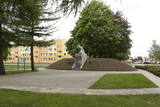 |
The monument is on the side of Rīgas Street in the centre of Piņķi. It is dedicated to May 22, 1919, when, after a pause of nearly two months, a brigade commanded by Col Balodis headed for Rīga to rid the capital city of the Bolsheviks. The brigade was supposed to receive support from the German Landeswehr, the German Iron Division, and the units of Prince Lieven from Russia. The first monument was unveiled by Latvian President Kārlis Ulmanis on May 23, 1939. It was destroyed by the Soviet regime in 1951, but a copy was installed in 2003 (sculptor J. Briedis, copy by O. Skarainis). |
|
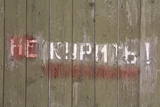 |
This extensive territory to the South of Pāvilosta once was the site of warehouses and an oil base. The territory at this time is used for the extraction of raw materials. There is also a sawmill there. The sign at the entrance of the facility states that the area can be dangerous to visitors.
|
|
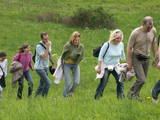 |
Dabas liegumā "Pilskalnes Siguldiņa" ir izveidota dabas taka - kājinieku tūrisma maršruts – t.s. Augšzemes ainavu taka, kas sākas Pilskalnē un beidzas pie Driģeņu mājām. Tā izlīkumo ezeru krastus, šķērso purvu (laipas). Apmeklētājiem, t.sk. arī bērniem, izveidotas arī īsākas - lokālas takas. Pieejami dažādu taku garumi: 1,6 km, 3,8 km, 8 km. |
|
 1 day
|
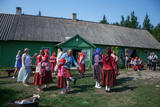
Kihnu is the largest island in the Gulf of Riga, with an area of 16.4 km2. It is only 7 km long and 3.3 km wide. Kihnu's cultural space and traditions are included on the UNESCO List of the Intangible Cultural Heritage of Humanity. There are four villages on the island and the islanders still wear national dress as everyday apparel. The unique atmosphere of the island can be experienced during a guided day programme. Kihnu Mare, the local guide, has developed her own traditional culture network with the people who have the know-how and skills to demonstrate for visitors the different aspects of Kihnu culture: the language, the traditional clothes, farming and fieldwork, handicrafts, the preparation of traditional foods, folklore, church life, singing, and dancing at weddings and village parties, as well as their traditions surrounding the sea, fishing, seal hunting and living with nature. |
|
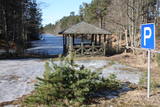 |
The Vecročupe river flows out of the artificial Vaide pond. It was created by blocking the Vaide and the Kukšupe rivers. This happened during the Soviet occupation, when forestry people decided to establish a fishing pond and an area for recreations. A wooden pergola has been installed at the pond, and there is an information stand, as well. On the northern shore of the pond is the Vaide cemetery, which dates back to 1928 and has interesting wooden crosses. |
|
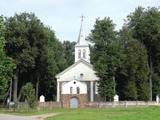 |
Sts. Peter and Paul Roman Catholic Church of Ozolmuiža was built in 1820 by the foundation of
counts Plāteri-Zībergi. It is a stone building with a small bell tower. The church has a huge stone altar with
four columns and a massive cross. It is a monument of state importance.
|
|
 |
The domestic producer cooperative, which unites 29 producers and craftsmen of the Kuldīga region. The cooperative has its own shop in Pilsetas laukums 7A, Kuldiga, where it is possible to purchase all the products and goods produced by members of the cooperative. The store also offers seasonal delicacies and regular promotions, offering customers a wide and varied range of home-grown and home-made products. |
|
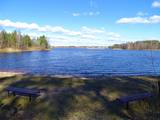 |
This was an island after the Rīga hydroelectric power plant created a reservoir, and before that it was a peninsula on the Left Bank of the Daugava. During World War I, there were massive battles between Latvian Riflemen and a much larger German army on Death Island. On December 25, 1916, the Germans used poisonous gas against the Latvian troops. In honour of this, the architect Eižens Laube designed a monument to fallen Latvian riflemen on the northern shore of Death Island. It was unveiled in 1924. Death Island can be reached by boat, and the trenches and graves there are of interest. There is a pier for boats on the north-western shore of the island, and nearby is a location for leisure. Some of the trenches and dugouts have recently been restored. The battles were described by Aleksandrs Grīns in his masterpiece, “Snowstorm of Souls.” |
|
 |
Located in Vihula Manor Country Club&Spa complex, in the historical Ice Cellar, a rustic Estonian countryside tavern, is seating up to 100 guests on 2 floors. The tavern is featuring limestone walls decorated with old farm tools, wooden beams, waitresses in traditional Estonian customs, Estonian folklore music, traditional Estonian countryside cuisine based on natural and ecologically balanced produce and a large selection of beer and ale. The tavern offers traditional Estonian buffet lunch and dinner specifically designed for groups and also the possibility to book a folkloric dance show or traditional Estonian live music. |
|
 |
Die Ruinen der um 1500 gebauten eindrucksvollen Kirche, die man besichtigen kann. Das Gebäude wurde nach dem Luftangriff 1942 beschädigt. |
|
 |
The Vecsiljāņi farm is in the Bebri Parish in the Koknese Administrative District. It is a dairy farm and also grows wheat, barley, oats, rye, corn and grasses. In 2010 the farm began to produce hard cheese under the brand name "Ievas siers." Visitors can taste the cheese and tour the farm and the cheese-making facility. |
|
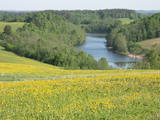 |
This nature park is located in the most distinct part of the Dagda hillocks of the Latgale highlands. Part of it is the deepest lake in the Baltic States -- Lake Drīdzis, which is 63.1 metres deep and has nine islands. Also there is Lake Otis. The loveliest views can be watched from the ancient Lettigalian castle hill that is known as Sauleskalns, and from the eastern shores of Lake Drīdzis. Accommodations are available near the lake. |
|
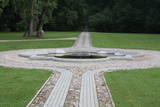 |
A small settlement on the banks of the River Daugava, between Aizkraukle and Jaunjelgava. Skriveru region is associated with the life and work of popular Latvian author A. Upitis. Near Skriveri lies the oldest arboretum in Latvia. Its establishment in 1891 was started by the owner of Skriveru manor Maximilian von Siverss. In the park there are about 400 plant species, varieties and forms. One of the finest views of the Daugava will open from the so-called Krauklu Mountains – steep upper part of the right riverbank, which is an ancient hill fort. |
|
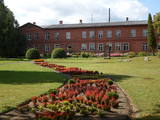 |
The centre was opened in 2018 with the aim of facilitating tourism in Alsunga and the historical Suiti territory and to offer information about the district, thus establishing a positive and attractive image for Alsunga and the historical territory in Latvia and abroad. |
|
 |
The Ķemeri water tower was built in 1929
and used to be a reservoir for drinking and
mineral water. Until World War II, there was a
viewing platform at a height of 42 metres from
which one could see the surroundings of
Ķemeri.
|
|
 |
The cafe is situated in Jekabpils, at the edge of the Jēkabpils ring road (A6), on the right bank of Daugava river. You can have breakfast, dinner and supper in here. Latvian cuisine: Cold soup, homemade steak haché, crepes. |
|


