
| No | Name | Description |
|---|---|---|
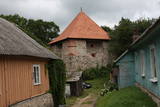 |
Pussalas pils pirmsākumi ir meklējami 14. gs. Tajā laikā minētā pils bija viena no lielākajām šāda tipa aizsardzības pilīm. Pēc Traķu un Viļņas ieņemšanas 1382. g. pils kļuva par Ķēstutu (Kęstutis) - Lietuvas dižkunigaišu dzimtas dzīves un valdīšanas vietu. 1655. g. Polijas – Lietuvas lielvalsts un Krievijas kara laikā pili nopostīja. Līdz mūsdienām no iespaidīgās celtnes (aizņēma 4 ha platību) saglabājušās tikai no laukakmeņiem celtā aizsargmūra un torņu paliekas. Tās iekšpagalmā ir apskatāma efektīvā viduslaiku ieroča – katapultas atdarinājums. |
|
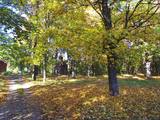 |
Puša Manor - Chapel was built in the end of the 18th century; it is located
in the Pušas Manor park that was built in the middle of the 19th
century. Both are permanent local architectural monuments.
|
|
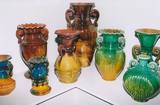 |
This museum is devoted to the career of the ceramist Polikarps Čerņavskis. His work featured light, yellowish and very bright glazing. Guided tours of the museum are available. There are demonstrations of the use of the potter’s wheel. Ceramics can be purchased, and visitors can attend the opening of the kiln. Special works can be commissioned.
|
|
 3 days
|
На маршруте сможете узнать особую культурную среду Латгалии, людей, которые ее создают, порадоваться красивым ландшафтам, пройтись по природным тропам и искупаться в каком-нибудь из прославленнных озер Латгалии. В Ливаны узнаете о работе стеклодува, в Даугавпилсе побываете в крепосте 19-го века, где теперь расположен центр всемирно известного художника Марка Ротко. Дорога будет виться по живописным излучинам Даугавы. Информация о маршруте от Latvijas Lauku forums |
|
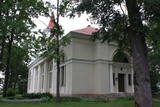 |
The Krustpils Lutheran Church is found at Rīgas Street 211A in Krustpils, on the right bank of the Little Daugava. The stone church which is there was built between 1818 and 1820 and consecrated in 1824. Two older churches stood on the site before then. The church was seriously damaged during World War I, and it was restored in 1924. There are several notable cultural monuments in the church – the altar painting, “Christ Prays in the Garden of Gethsemane”, the organ (with pipes that were manufactured in Germany), etc. The church is seen as one of the best examples of Empire-style architecture in Latvia, and in 1999 it was granted the European blue flag as an element of cultural heritage. There are legends about underground passages to Daugavsala, which is to the West of the church. The church is closed to visitors most days and can only be viewed from the outside. Nearby the church are two monuments – one commemorating the politically repressed, and the other memorialising national partisans.
|
|
 |
The “Lamb Club” is a farm in Mazsalaca, and it is special because the sheep live in a real club! The owners offer the atmosphere of a farm at which the sheep play major roles. Enjoy mutton and sheep milk foods and beverages, feel how comfortable it is to read your favourite while sitting on a fluffy sheepskin, and, in order not to get cold by the campfire in the evening, you can purchase warm woollen socks and woven woollen cloaks. The owners hope that people from Latvia and all around the world will spend more time at the farm, because accommodations involve a new glamping tent that is as close as possible to nature and the healthy rural environment. Don’t lose a lick of the comfort that you are used to in your everyday life! The owners, Ilze and Valters, will be happy to give you a tour during which they talk about herding sheep. If you contact them in advance, they will prepare a tasty mutton meal for you. The tour can also be supplemented with various activities such as games, quizzes and creative workshops at which sheep wool is utilised. |
|
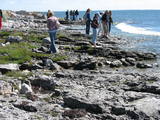 |
The national park was established to protect the 100 or so small islands that make up the archipelago of the local area. The largest island, the Vilsandi Island, is 6 km long and up to 2 km wide. You can rent a boat to get there, or, during appropriate conditions, you can walk across the sea and the small islands from the southern end of the Kuusnõmme peninsula.
|
|
 |
The farmstead grows apples, strawberries, black currants, red currants, etc., berries and fruits; there is a big selection of processed goods: natural juices, nectars and syrups. There are offered apple, strawberry, red currant, gooseberry, sea-buckthorn and chokeberry saplings; consultations are given for making out a commercial garden and taking care of it. Excursions around the commercially grown plants. |
|
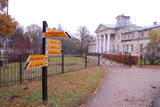 |
The Lutheran Church of Krimulda is considered one of the oldest churches in Latvia. It was originally built in the 13th century, soon after the conquest of Kubesele and later rebuilt many times. Near the church a meditation labyrinth "Lily Flower" is set up. When Liv chief Kaupo fell during the battle at Viljandi in 1217, according to the legend, the ash was buried at the church. A small hill adjacent to Runtinupite (Runtins) is popularly known as a grave site of Kaupo, at its right bank is located ~7 m long, artificially dug Kubesele or Runtin cave. On the left bank of Runtinupite columns the Kubesele hill fort. Kubesele nature trail starts at the church. This trail leads to the Gauja River, where the Great (Runtina) stone lies. Here can be seen anchor pads installed by Gauja raftsmen. Krimulda medieval castle (4 km east of Krimulda Church) was built the second half of the 13th century in the place where the right bank of Gauja valley is split by deep ravine of Vikmeste. Castle (residence of Riga dome capitol - Riga's Archbishop Council) was an imposing building, whose big inner yard was included by 1.5 m thick defensive wall. In 1601, while retreating, Swedish military leader Heinrich Lieven blasted Krimulda castle. Now at the hill fort, grown with the forest a small castle ruins can be seen. Nearby is located air cableway and starts Krimulda mountain road. Located nearby Krimulda manor was first mentioned in writings in the 15th century. Present manor castle was built in the 19th century in neoclassical style (owner - First Lieven). During the twenties of the 20th century, the castle after its alienation became a property of the Latvian Red Cross, which established here children's sanatorium. Nowadays the castle houses rehabilitation hospital "Krimulda", but from the farm buildings, manor stables, barn, servant, manager houses and the so-called Swiss Cottage and Park have been preserved. Thematic tours are offered here. If we go down the Gauja by boat, then we will be able to take a close look at about 15 m high Velnalas cliffs. They can be well seen also from the opposite - left bank of Gauja (resting place is established). In the middle of the cliff about 19 m deep and 4.7 m high Krimulda Velnala cave is located. If we go from the Velnala cave cliffs along the lower part of the right bank of Gauja in Turaida direction, you will see Pikenes cliff, rich with sandstone outcrops. At its foot ~ 1 km long Pikenes beaver trail is established. The Little Devil's Cave (5 m long) is on the side of the trail, with the Gudribas (Wisdom) spring that springs out of the cave, as well as Aunapieres cave which is the same length as Devils cave. Small oxbow lakes also can be seen. |
|
 |
The farm is located in a beautiful place, the food is delicious and the owners – very nice people. Guests are also provided with accommodation and a sauna. The farm grows and processes agricultural products. |
|
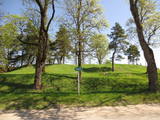 |
Is an ancient Courlandian castle hill and is found in the very centre of Alsunga. It was named in 1659 when General Berg from Kurzeme put cannons on it to attack Swedish forces that had fortified themselves in the Alsunga castle. The hill is 8 to 10 metres high and 24 x 54 metres wide, offering a lovely view of the St Michael Roman Catholic Church, as well as the Alsunga windmill lake that is alongside it. There is a distinct terrace around the hill, and it once was the foundation of wooden defensive structures. On the other side of the street, to the West of the castle hill, is a cemetery with fire graves of Courlandians that date back to the 11th to 13th century. Archaeologists examined the area during the middle part of the last century. The Suiti celebrate Easter and other holidays on the hill. |
|
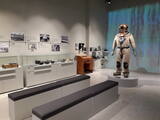 |
This exhibition features the Pļaviņas hydroelectric power plant as a unique architectural building with unique engineering elements. It is the largest producer of electricity in the Baltic States and one of the largest in
|
|
 |
Liepene, in the Ventspils District, was once home to a coast guard division. The facilities are now privately owned and offer accommodations to tourists.
|
|
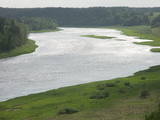 |
The Dinaburga trail first goes downhill, and then it quickly goes uphill to the steep shores of the Daugava river. Among a set of gullies, there is the Naujene (Vecpils) castle hill – some 25m high and the “cradle” of the city of Daugavpils. The ruins of the castle are still visible, and a unique open-air model of the old Dinaburga castle has been prepared. There is a lovely view of the Daugava river valley, and the visitor can expect to spend 20 minutes to an hour here. Objects are located in a protected area of Augšzeme landscapes and in the Curves of Daugava nature park.
|
|
 11 days
|
The tour begins in Riga with its Art Nouveau district and Old Town. Make your way to Sigulda by train. A hilly road passes Gutmana Cave, Turaida Castle and Krimulda Castle which stand on the hillsides of the Gauja river valley. The road continues to Limbaži, which is a typical Latvian provincial town. Further on you reach the Baltic Sea coast and Salacgriva, which is famous for its fishing traditions and lamprey. Outside Salacgrīva town there are rare coastal meadows and lagoons. After crossing the Latvian-Estonian border point, the road winds through old coastal villages - Ikla, Treimani, Kabli and Häädemeeste before rejoining the Via Baltica. At Pärnu explore Ruutli pedestrian street and the old fortifications. It is time to cross to the islands - the route passes through the small island of Muhu. Visit the local fish cafe at Livi and ethnographic fishermens’ village of Koguva. Then the route leads to Saaremaa island over a causeway. The main sites on the route are 'Valjala maalinn' – one of the most attractive hill forts in Estonia, the Valjala church, and meteorite craters of Kaali. By bus you head to the Estonian capital, Tallinn, charming with its medieval Old Town. From there take a tour of a former Soviet submarine base at Paldiski, a memorable reminder of recent history. |
|
 |
A place where you can enjoy nature and food. The tavern Kogre got its name from Seven Fish Soup - crucian (koger), is the seventh fish. The owner is a fisherman, and together with his wife he prepares various dishes from his catch. |
|
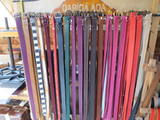 |
This workshop manufactures belts, bags, jewellery (pendants, brooches, bracelets), as well as covers. It offers book binding services and prepares souvenirs. Tours are available for groups of up to 50 people. You can try your own hand at the crafts, taste teas, and cook soups on an open fire. |
|
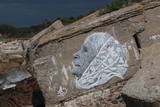 |
The Northern Forts of Liepāja are on the edge of the Baltic Sea, and some parts of them have been washed away. This is a small, but very impressive part of the Liepāja fortifications which once encircled the entire town. The underground bunkers of the forts are on two levels, and it’s worth visiting them in the company of a knowledgeable guide from Karosta (tours are organised from the Karosta prison). There’s a car park alongside the forts. It’s also worth walking down the beach for a distance of around four kilometres to the Northern breakwater. On the shore and in the sea, you’ll see two coastal defence batteries and some pretty impressive views.
|
|
 |
Iespēja atpūsties un relaksēties pirtiņā, baudot latviskos pirts rituālus. Sildīšanās un pēršanās ar pirtsslotām, augu skrubji un maskas, kāju vanniņas un zāļu tējas. Pēc pēriena – veldze dīķī. Pirts tā ir svētnīca miesai, garam un dvēselei. Piedāvājumā arī izglītojošā programma par augu spēku un to izmantošanu savai labsajūtai. Apmeklējums noteikti iepriekš jāpiesaka! Vietu skaits ierobežots! |
|
 |
The Lejasmalas leisure base is on the banks of Lake Leja with a beautiful view of islands in the lake. It offers Lettigalian dishes made of locally soured products. |
|


