
| No | Name | Description |
|---|---|---|
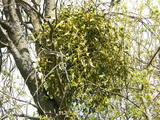 |
This is a mostly forested territory which is home to one of the largest areas of the white mistletoe, which is a semi-parasitic plant. It is best to observe this unique plant when it has no leaves. Latvia is the northern limit to the white mistletoe, which is why it is not all that common. It is interesting that even more of this rare specie can be seen outside of the nature restricted area. |
|
 |
In Kännu Alpaca Farm you can see Peruvian alpacas, mammals with beautiful, soft coat which they are known for. While in this farm you can feed alpacas with food provided by the owners and pet them. You can also see goats, sheeps, rabbits and chickens. In the farm shop you can buy souvenirs and also products that are made of alpaca wool. Kännu Alpaca Farm is also suitable for family visits. |
|
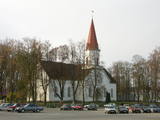 |
Until 13th century, Smiltene region was a part of Talava country, inhabited by Latgalians. After Crusaders invasion it was won by the Archbishop of Riga, and he built a stone castle on the steep river bank of Abuls in 1370. The following wars and epidemics did not spare the development of settlement, nor the people. Present shape of the town began to emerge in 19th century along with the vigorous activities of owner of Smiltene manor first Lieven. Until the World War I, wood working factory, hydroelectric power plant (established in 1901, first in the Baltics), and other companies were operating in Smiltene. In 1944 when the German forces retreated, much of the Smiltene historical buildings were destroyed in the fire. |
|
 |
Jau no seniem laikiem Cesvainē zinājuši alu, vīnu un brandvīnu. Pirmais krogs minēts jau pirms 1520.gada. Cesvaine var lepoties ar savulaik lielāko un svarīgāko krogu Vidzemē - Šļākas krogu. Barona Vulfa pils pagrabi vienmēr bijuši pilni ar labām vīna, liķiera un brandvīna pudelēm. |
|
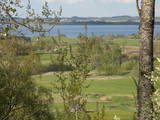 |
The flat surface of this large hillock (247 m above sea level, ~60 m above the surrounding area) offers one of the most beautiful landscapes in Latgale, complete with Lake Rāzna. During the 13th century, the Livonian Order built the Volkenberga Castle on the hillock, and it was thought to be practically impenetrable. Fragments of the castle’s walls remain visible today. |
|
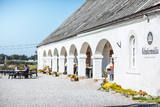 |
Located in the northern part of Valmiera, the Valmiermuiža Estate mansion (Neo-Baroque Style) was built between 1764 and 1771 by Prince August Friedrich of Schleswig, Holstein and Soderburg. Over the course of time it has been owned by other people. According to modern evidence, the mansion was a one-story building with a Baroque tower and a two-story addition in the early 20th century, which made it appropriate as a summer home and hunting lodge. The building burned down in 1918. Two years later, Valmiermuiža became a prison camp for captured soldiers. Later the addition to the mansion was restored and used as an elementary school. In 1936, the building became a prison, and it was once again a prison camp for captured soldiers during World War II. Later the building burned down again, and the ruins were removed. Still surviving is the Valmiermuiža tower, with ceiling paintings that are a cultural monument, as is the surrounding park. The Valmiermuiža brewery is alongside the historical monument, thus providing second wind for the whole region. |
|
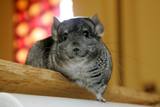 |
The owner of the farm offers attractive tours during which you will learn about chinchillas, animal enclosures, as well as quails which you can view and purchase. |
|
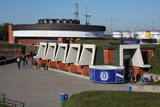 |
Das Museum befindet sich in der Festung von Kopgalis. Im Aquarium des Museums sind Fische und Tiere der Ostsee und anderer Meere und Ozeane zu sehen. Eine Ausstellung. Pinguine und Seehunde. In den Pulverkellern der Festung ist eine Ausstellung der Seefhrt Litauens, aber auf den Bollwerken eine Ausstellung der Gewehr eingerichtet. Das einzige Delfinarium im Baltikum. |
|
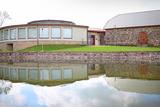 |
This is a modern and contemporary centre, including an old and restored granary. It offers an exhibition hall, an historical exhibition, a shop where you can purchase crafts, and a conference hall. Craftspeople from the region work here, and you watch them at work or try your own hand at what they are doing. |
|
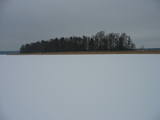 |
There are six islands in the Great Baltezers lake – the Auzu, Priežu, Mazā, Liepu, Ropažu and Meldru islands. These are distinguished by a great diversity of plants, including forests of broadleaf trees, black alders and pines. The territory can be surveyed quite well from the side of the Ādaži Lutheran Church. The Great Baltezers lake is a popular place for fishing, including ice fishing during the winter.
|
|
 |
Hiiu Vill is a family business and one of very few wool manufacturing companies in Estonia, it uses 19th C machinery of Polish origin (carding and roving machines), which the owners are happy to demonstrate. A café is open in summer only; woollen handicrafts are sold all year round. |
|
 |
Mini zooloģiskais dārzs Brocēnu novadā, kur iespējams gan apskatīt, gan samīļot dažādus dzīvniekus lauku vidē. Sētā ir arī ugunskura vieta un nojume, kur patverties lietus laikā.
|
|
 |
Iespēja patīkamā atmosfērā baudīt ļoti gardu ēdienu. . Starp tiem arī Lietuviešu tradicionālo ēdienu. Ir dienas un vakara īpašie piedāvājumi. |
|
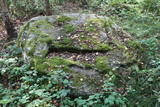 |
Near Mākoņkalns hill there is a trail that is mowed in the summer and leads to several historical rocks – Plakanais (Flat) rock, Āža muguras (Ram's Back) rock (on which you can clamber), and the Jaunstašuļi Velna pēdas (Devil's Footprint) rock, on the surface of which is a shape similar to a human footprint. There are signs along the side of the road leading to the trail. |
|
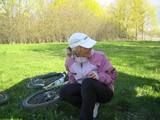 |
The 60 km cross-border cycling trail along the Koiva/Gauja River in Estonia and Latvia was completed in 2010. The trail begins at Tellingumäe car park, start and finish points of the trail and the border crossing site are supplied with resting areas and information boards with maps. Signposts are located at crossroads where there may be confusion for cyclists; attractions near the main route are also signposted. Information boards are provided in Estonian, Latvian and English. Tellingumäe car park is also a starting point for an 18-km cycling route. |
|
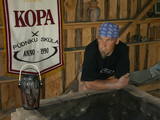 |
Ilmārs Vecelis takes part in the “Potter School” of the Latvian Cultural Fund and, therefore, uses ancient pottery methods that have been tested over the course of many centuries in Latgale. You can tour his workshop, attend the opening of the kiln, try your own hand at the craft, and commission and purchase finished ceramics products. |
|
 |
Located in the Līva Hotel in Old Liepāja, the restaurant offers Latvian and global cuisine. It has an herb garden to produce ingredients for the dishes. Latvian cuisine: Low-salt herring with cottage cheese, stuffed crepes, potato pancakes, sautéed pork ribs, venison with juniper berries, roast leg of duck, roast filet of pike-perch with grits, smoked herring filet. Special foods: Smoked cod with potatoes, onions and dill in a ceramic ramekin. |
|
 5 days
|
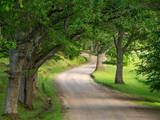
Ancient trade routes distributed not just products, but also knowledge, culture and everything that was new and unknown. Pastor Ernest Glück, for instance, may have already started work on a translation of the Bible into Latvian when he travelled from the Daugavgrīva fortress near Rīga to Alūksne. There he finished his masterpiece and planted two oak trees alongside the manse that are still there. Glück also established the first school in Vidzeme for Latvian children. He was a pastor, translator, author and teacher. Thanks to him, the Hernhutian movement of brethren flourished in Vidzeme after the Great Northern War. It directed spiritual and political development and brought Latvians closer to their national awakening. Of great importance in the Path of Light is Piebalga, which became very important in terms of culture in Latvia. Culture, science and even politics took on new meaning and sounds. This is where Kārlis Skalbe, the Kaudzītes brothers, Jānis Poruks, Antons Austriņš and other major figures from the national awakening lived and worked. The very spiritual aura in this place has not disappeared to this very day. The fantastic Cesvaine castle has been renovated, and the narrow-gauge railroad between Gulbene and Alūksne is still rolling alone. The ruins of the Marienburg castle in Alūksne conjure up visions of the hidden wealth of the Order of Templates and the young woman who was bricked into the castle’s walls. No less intriguing is the story of Marta Skovronsky, who would rise to become Empress Catherine the Great of Russia. The Madona Regional Research and Art Museum offers a look at the past and present, while the Ate windmill at Kancempji offers a look at more than 4,000 unique items from the history of our countryside, complete with buildings that are more than 100 years old. |
|
 6 days
|
This section of the Forest Trail leads through the entire Gauja National Park and gives an opportunity to see all the most beautiful places and sights of this national park of more than 100 km. Gauja National Park is the oldest and largest national park in Latvia. The ancient valley of the River Gauja is the deepest river valley in the Baltic states. The banks of the River Gauja reveal colourful sandstone outcrops, which are reflected in the water. The sights are most wonderful in springtime, when bird cherry trees are in full bloom, and in autumn, as the trees turn red and yellow. The ancient valley of the River Gauja has a distinctive terrain relief that can fluctuate by up to 80 m. The largest part of the road leads through forest paths, along the river, and exits the woods in Līgatne and Sigulda. Almost half of the park is covered by forest. Gauja National Park is known for the great diversity of specially protected forests, featuring herbaceous spruce forests, slope and ravine forests, as well as mixed broadleaf forests. |
|
 |
Teearu farm prepares various dishes from the fish of Lake Peipus; marinated, smoked bream is especially popular. It is also possible to taste meat smoked according to traditional methods. Catering can also be ordered. |
|


