
| No | Name | Description |
|---|---|---|
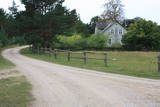 |
This is an ancient populated area. There were 50 homesteads here during the 1930s, with only ten remaining in 1990. The Livonian scholar and entomologist Kārlis Princis (1893-1978) was born in Oviši. In 1944, he emigrated to Sweden. The Oviši lighthouse (1814) is 38 metres high and is the oldest functioning lighthouse in Latvia. There are lovely views from the top of the lighthouse. The building in which employees of the lighthouse used to live was erected in 1905 and has been preserved. A narrow-gauge train station was in the building at one time. The Oviši Lighthouse Museum is nearby, as is the metal Tree of Austra. Opposite Cape Oviši is a great place for bird watching. |
|
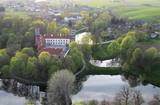 |
Gebaut in 1610, später umgebaut. Eins der hervorragenden Gebäuden Litauens der Renaissance. Eine Ausstellung der Kunstakademie Vilnius. Ein Aussichtsturm. |
|
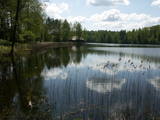 |
Lake Salājs is full of bays and islands. Alongside Lake Little Solojs, which is next to Lake Salājs, is the Milka castle hill and a leisure facility there. This is a beautiful area, and it is protected for environmental purposes. |
|
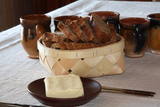 |
This is an authentic Lettigalian farm which dates back to the early 20th century. It features a house, granary, cattle shed, sauna and smithy. Folklore groups perform here. You can celebrate the Summer Solstice, attend a St Michael’s Day market and learn ancient craftsmanship skills. Lettigalian foods are served to groups. |
|
 |
Atrodas Ventspils Rātslaukuma rietumu pusē iepretim Nikolaja luterāņu baznīcai. Ēkas pirmsākumi ir meklējami 18. gs. 1850. g. tajā atradās pilsētas Rātsnams, kopš 2006. g. - rakstnieku un tulkotāju māja, kurā patstāvīgi uzturas un strādā Latvijas un ārvalstu literāti. |
|
 |
Meklējams pie Gulbjiem – Dvietes senlejas informācijas centra. No torņa labi pārskatāma ūdeņiem bagātos pavasaros pārplūstošā Dvietes paliene, dzīvei savvaļā pielāgoto mājlopu aploki un izlīkumotā Dvietes upīte. |
|
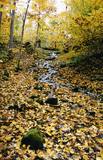 |
The lime gully that emerged as the Baltic ice lake receded is crossed by the powerful streams of Mežmuiža, and the water from these streams contains a high concentration of lime salts. The water from the streams flows into a mill pond that has a very interesting colour. The sculptor Teodors Zaļkalns once lived in the travertine mill that is alongside the pond. Wood pathways have been installed for those who wish to visit the streams.
|
|
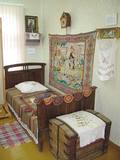 |
The History Museum of Malta. Exposition „History of Malta parish: from
Rozentova and Borovaja to Malta”. We offer household items, tools of trade,
works of art, collection of paper money and coins. Excursion outside the museum
„At the cross-roads of Malta”.
Working hours: Mon– Fri : 9.00 – 17.00, Sat., Sunday : closed |
|
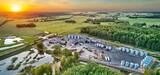 |
Z/s Kotiņi pamatnodarbošanās ir graudkopība ar specializāciju sēklkopībā. Vieni no lielākajiem sēklas ražotājiem valstī. Apsaimniekojamās zemes platība ir 4500 ha, no kuriem 3500 ha ir augstu kategoriju sertificētas sēklas lauki. Audzē kviešus, miežus, rapsi, pupas, zirņus, auzas, rudzus, eļļas rutkus, sinepes, griķus, āboliņu, sarkano auzeni, timotiņu, Speltas kviešus. Saimniecība piedāvā produktus ar pievienoto vērtību:
Daļa no Kotiņu produktiem ir atzīti ar zaļās karotītes kvalitātes zīmi! Kotiņi ir saimniecība, kur lieto Latvijā ražotu 100% zaļu enerģiju. |
|
 |
This garden has several times been declared to be Latvia's most outstanding exemplary decorative garden. The owners offer tours and advice on gardening. |
|
 |
The guesthouse is on the shore of the Ancient Amata River Valley, and it was built with natural materials – local dolomite blocks. It serves ecological foods, including potatoes grown in bio-humus, wild berries and mushrooms, and country treats and greens from the guesthouse’s own garden. Latvian cuisine: Baked and grilled trout, beefsteak, wild mushroom and chanterelle sauce. Special foods: A puffy Eglaine cake made of rural eggs, pecan cake with ice cream. |
|
 |
Getliņu ekoloģiskais poligons ir Latvijā unikāls piemērs ekoloģiski saderīgu darbības virzienu ieviešanai. Tā energobloka saražotais siltums tiek izmantots siltumnīcu apsildei, kas nodrošina ideālu vidi lauksaimnieciskai ražošanai (puķes un tomāti - lielaugļu tomāti, tumšsarkanie tomāti, aveņkrāsas ķekartomāti) gada aukstajos mēnešos. Poligona teritoriju (zālāju) nogana ar aitu ganāmpulka palīdzību. |
|
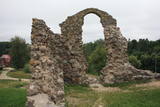 |
The Rēzekne castle hill is an impressive hillock (15 m) on the right bank of the Rēzekne River. From the 9th to the 12th century, there was a Lettigalian castle here. In 1285, the Livonian Order began to build a two-story stone castle on the site, and its ruins have survived to this very day. Alongside the castle hill is the Eastern Latvian Creative Service Centre - „Zeimuļs”, along with a tourism information centre. |
|
 |
A small food producer in Vidzeme, which is engaged in the processing of vegetables, fruits and berries, producing healthy snacks without sugar and flour. Offers tasting tours, master classes on vegetable truffles and healthy cakes, actively involving guests. Soon there will be a lunch offer - a special kale cabbage soup. |
|
 |
Home producer Elma Zadiņa prepares sklandraušs, which have rye flour bottoms, as well as an old Latvian lunch dish - a porridge, using ground wheat and rye flour. The products are produced in small quantities at home. Tasting of porridge and smoothies is possible. |
|
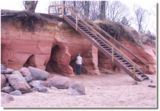 |
Ainavisks jūras viļņu izskalots smilšakmens atsegums
dienvidos no Zaķupes ietekas.
|
|
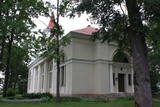 |
The Krustpils Lutheran Church is found at Rīgas Street 211A in Krustpils, on the right bank of the Little Daugava. The stone church which is there was built between 1818 and 1820 and consecrated in 1824. Two older churches stood on the site before then. The church was seriously damaged during World War I, and it was restored in 1924. There are several notable cultural monuments in the church – the altar painting, “Christ Prays in the Garden of Gethsemane”, the organ (with pipes that were manufactured in Germany), etc. The church is seen as one of the best examples of Empire-style architecture in Latvia, and in 1999 it was granted the European blue flag as an element of cultural heritage. There are legends about underground passages to Daugavsala, which is to the West of the church. The church is closed to visitors most days and can only be viewed from the outside. Nearby the church are two monuments – one commemorating the politically repressed, and the other memorialising national partisans.
|
|
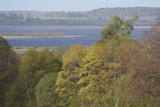 |
Nature restricted area includes eastern side of the lake with Lanupe River and North-east and South-east coastal areas. Restricted area has been established for protection of birds and floodplain meadows of the lake. To see the nature restricted area visitors do not have to enter it. There are great view points with wind generators of Grobina on the background from the road Vecpils – Rava – Aistere. Coastal areas which are not included in the restricted area are perfectly suitable for bird watching. There is located the smallest city by its population in Latvia to the South from the lake.
|
|
 |
This farm keeps Thuringian breed goats and makes goat's milk cheese, as well as a various snacks. In addition, herbs and medicinal plants used for teas and natural cosmetics are also grown here. |
|
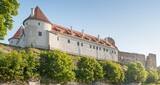 |
One of the most important military and political elements of the Livonian Order, the Bauska Castle was built between 1443 and 1456 at the place where the Mūsa and Mēmele rivers flow together. The castle had five towers and walls that were up to three metres thick. Between 1580 and 1596, the forecastle was replaced with a residence for the duke of Courland, and its walls were finished with the sgrafito technique. The castle suffered damage during wars in the 16th and 17th century, but it was always restored until 1706, when the Russian military blew it up during the Great Northern War. Today the castle houses a museum, with a viewing platform in its south-eastern tower. |
|


