
| No | Name | Description |
|---|---|---|
 10 days
|
From Vilnius the route goes to picturesque Trakai Castle surrounded by lake from which it continues to Dzūkija National Park. The park introduces with traditional Lithuanian way of living, closeness with forest as well as valuable natural resources. Information centre and centre of etnoculture is located at Marcinkonys but Čepkelių raistas provides atmospheric vast bog landscape. Pleasant forest trails and quite roads are pleasant for cycling. Druskininkai is a historic spa resort with charming old town, many spa hotels, walking trails and entertainment facilities. There is the Grutos Park where monuments from Soviet area is collected in order to demonstrate the former oppressive ideology. From there the road heads to lively Kaunas which sits between two rivers -Nemunas and Neris. |
|
 |
This lovely farm features lilies, peonies and other flowers, as well as a beautiful rock garden and a dendrological park that is under development. Bees from more than 100 hives produce honey. The lady of the house will take you on a tour and offer plants and honey products for sale. |
|
 |
Latvia's first grape selector, Pauls Sukatnieks (1914-1989) lived at Apsītes. The house has been restored and contains household and farm equipment, as well as Sukatnieks' library and office. The garden that surrounds the house has local and introduced colourful plants and trees, including rare ones. Visitors can look at the types of grapes that Sukatnieks developed, as well as his vineyard. Alongside the homestead is an information stand about birdwatching in the Dviete wetlands. You can tour the garden and house in the company of a guide. There is space for relaxation and picnics, and the homestead organises work sessions and educational events. |
|
 |
The cafe is situated in the shopping centre Sala in Jekabpils, on the right back of the river Daugava. The cafe’s premises are comfortable and decorated with fresh flowers. It is a place where you can have either breakfast, dinner or supper. Working hours: 9.00 - 20.00 |
|
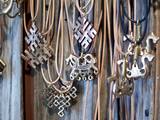 |
The craftsman uses experimental archaeological methods to produce the jewellery of ancient Baltic tribes. He will tell you about their symbolism, meaning and wearing traditions. You can tour the workshop and purchase jewellery that has been made there. |
|
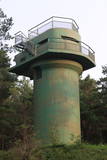 |
The battery is to the South of Ventspils, not far from the Piejūras Park. Work on the battery began in 1939. Today the site is a complete mess, standing out in a negative way from the tidy city itself. People seeking building materials and ferrous metals helped to tear the place down. It’s too bad that this historical location – one that might be of interest to tourists – is in such sad shape, and right at the gates of the city, to boot.
|
|
 6 days
|
This tour combines local wine making traditions with an ancient charm of countryside with several medieval castles and baronial estates. The tour goes to Sigulda where on the steep banks of Gauja valley sits three castles. Visit Turaida and Sigulda medieval castles and then go to Krimulda Manor to try their wines. There is also a visit to a family wine maker in Sigulda. Next day there is an excursion of historic village of Ligatne and tasting of local wines located at the sand cave typical for the area. Further on the route there is an impressive Cesis medieval castle ruins and Ungurmuiza Manor which is an only preserved sample of wooden baroque manor architecture in the Baltics. Overnight is at former Dikli Manor which is now an upmarket hotel. Next day the route goes along the coast where is museum of the biggest liar in the world - Munchausen. You can also stroll along sandy beach there. Then visit farm of local winemaker and taste his various wines and then visit Birini Manor for a dinner and have relaxing stroll into their huge park before returning to Riga. |
|
 |
Z / S "Kaņepītes" is a family company founded in 1992. The farm takes its name from the name of the house given to it in 1924. Organic farm where cereals are grown and processed into food. The production of the products is small, but the technique has an ancient atmosphere, a stone, wooden mill that gives a special taste and aroma to flour and oatmeal. Now the assortment already has 30 different product types. |
|
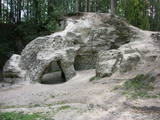 |
This is a sandstone cliff with several arches, pillars and niches. The set of caves (Little Hell, Devil’s Kiln, Devil’s Cave, Liepmuiža Cave and Liepa Cave) are a bit more than 20 m, with a ceiling height of 3.5 m and a width of 5 m. A powerful stream flows from the cave, which is thought to have been formed around 7,000 years ago. The cave is much damaged, because white sand was dug from it in the early 20th century. Great Ellīte is an ancient cult site. Today the site has been much improved. |
|
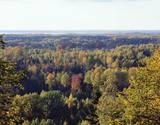 |
This is the highest point in the Latgale highlands (289 metres above sea level), opening up a narrow but lovely view of Lake Rāzna and the massive forests of the highlands. You really should visit this hill when the sun is setting beautifully!
|
|
 |
The cafe in Engure which specializes in different seafood dishes – no fewer than seven types of fish dishes – filets, salads, canapés, fish cakes, marinades, pierogi, etc. Latvian cuisine: Cold soup, marinated lamprey, baked plaice, baked cod, sautéed pork, crepes, potato pancakes. Special foods: Būda solyanka. |
|
 5 days
|
After the establishment of the Livonian state, the pope consecrated this land in honour of the holy Virgin Mary. This created Terra Mariana or Māra’s Land. The road between Ludza, Rēzekne and Daugavpils runs along an ancient trading route that once connected Vilnius and Kaunas to Pskov and, later, to St Petersburg and Warsaw. Very beautiful and poetically picturesque with rivers and lakes that are in Latvia’s forested land and among hillocks that offer a wonderful look at the distant horizon – that is Māra’s Land, which is also known as the Land of Blue Lakes. Lake Rāzna is the second largest in Latvia, and when the weather is clear, Mākoņkalns Hill or Padebešu Hill is reflected in its water. Atop the hill are the oldest ruins of fortifications in Latgale, dating back to the Livonian era. Rēzekne is known as the heart of Latgale, because it has always been the centre for Lettigalian culture and education. People contributed donations for the 1939 construction of a monument to Māra of Latgale. It is dedicated to those who fell during Latvia’s independence battles and the liberation of Latgale. The monument also speaks to the Catholic identity of Latgale. The monument was rededicated on August 13, 1992, the date of the assumption of the Virgin Mary. A Catholic festival at Aglona and the monument to Māra of Latgale – these are integral components of this part of Latvia. The present day is marked out clearly by the new Gors concert hall in Rēzekne, and well as the Zeimuļš student interest education centre. Daugavpils is Latvia’s second city and an important centre for industry, culture, education and sports. The Daugavpils pellet factory is unique, and the oldest pellet casting tower in Europe is now open to visitors, as are the restored Daugavpils fortress and the new Rothko Museum. Not far from Daugavpils are the small Birķeneļi semi-estate and the Rainis Museum. Latgale was the “land of new days” for the poet, and the museum now hosts gatherings of young artists and craftspeople. The ancient tradition of ceramic art that is typical specifically of this part of Latvia is still thriving. |
|
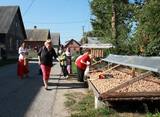 |
Kolkja, Kasepää and Varnja are another example of one-street villages of Old Believers who fled to Estonia from Russia in the 17th and 18th centuries. |
|
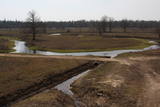 |
Divarpus kilometrus gara taka (vienā virzienā) aizved līdz Hallistes palieņu pļavām, kur Hallistes upes labajā krastā ir uzcelts divstāvīgs koka skatu tornis. No tā paveras visaptverošs skats uz atjaunotajām (izcirsti krūmi) Hallistes palieņu pļavām. Pavasara palu laikā no torņa redzamā apkārtne un tornis atrodas ūdenī. |
|
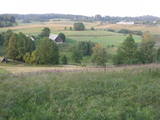 |
This restricted area protects the highest hillock in the Alūksne highlands – Dēliņkalns Hill – as well as the biotopes on its hillsides. The local landscape is also protected. Downhill ski trails are on the mountain, and its southern side offers lovely views.
|
|
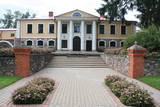 |
The estate is in the centre of Ineši, 5 km to the south of Vecpiebalga. The estate dates back to the latter half of the 17th century, when an ornate castle for the noble Sheremetyev family was built here in the style of Classicism and on the banks of the little Orisāre River. The castle was built down during the 1905 Revolution, but restored four years later. Around the castle is a lovely landscape park. The castle served as the prototype for the Slātava Estate in the famous novel “Age of the Surveyors” by the Kaudzīte brothers. In 1992, the Piebalga Administrative District Museum was opened in the wine cellar of the castle, which is home to the Ineši Parish Council and a porcelain painting studio. Organised tours of the estate and its surrounding area are available. |
|
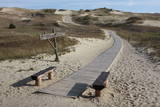 |
Die Dünen nördlich Pervalka über dem ehemaligen Dorf Negeln. Eine 9 km lange Strecke mit den wüstenartigen Landschaften. Stegpfade. |
|
 |
Jauns Zoo un izklaides vieta netālu no Siguldas, pie ceļa Turaida - Ragana. Tiks atvērts 2022. gada maijā. |
|
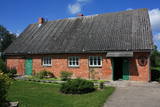 |
The Aknīste Regional Research Museum is at the corner of Skolas and Miera streets in Aknīste. It is another location which will very much help you to learn about the culture and history of the Selonian region. The museum was established in 1998 and featured antiquities from the Iron Age and Bronze Age, as well as objects which speak to distinguished people from the region and Selonian culture. It is worth looking at the collection of ancient Selonian dishware. |
|
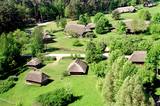 |
Countryside life open-air museum. Various historical county buildings, everyday life tools, traditions etc. |
|


