
| No | Name | Description |
|---|---|---|
 |
The craftsman typically produces objects that are of use on an everyday basis. They have laconic forms and reticent decorations. You can take a tour of the workshop and kiln, watch demonstrations, and work with the clay yourself. You can purchase finished products, look at the beekeeping operation, and taste and purchase honey. |
|
 |
Rankas Dairy was established in 1996 and manufactured some 80 dairy processing products, including cheese, cottage cheese, cream, fermented dairy products, desserts, etc. This is one of five companies in Latvia that is allowed to manufacture one of the EU’s guaranteed traditional characteristics product, “Summer Solstice” cheese. The products are available at the “Rīmaļnieks” store that is alongside the dairy. |
|
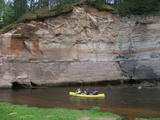 |
This ancient river valley stretches from Koorvere to the Otteni Windmill, and there are nearly 40 revealed sandstone cliffs from the Devonian age. Two of them, Väike and Suur Taevaskoja (the latter is 22 m high) are popular tourist destinations.
|
|
 |
Your visit to the Sēlija tree farm will include an exciting story from the owner, Mendriķis, about apple trees. You can tour the orchard, warehouses and processing facilities, enjoying a glass of apple juice or listening to the story about winemakers while sipping a glass of apple wine. |
|
 |
The Great and Small Baltezers lakes, which are in a forested and sandy area, feature a unique system in Latvia – a water delivery zone with artesian wells and water filtration layers. The system was in place in 1904, when the Baltezers pump station was opened. In 1998, the Rīga Water Delivery Museum was opened in the station, providing information about the 400 years of water delivery in Latvia, including various mechanisms, ancient wooden pipelines, etc. Around the museum is a boiler house, along with a machinery house, accommodations for workers, and mechanical workshops. |
|
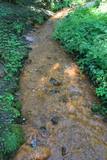 |
The Saltupju sacred stream is 1.3 km to the Northwest of the centre of Aknīste, near the small valley of the Dienvidsusēja River. The stream has been known as a source for medical treatments since antiquity. It is said that streams which flow to the East always have medicinal water, particularly on Easter morning for those who rinse their eyes in it. The water contains iron compounds, which is seen in the brown sediment (the result of iron bacteria). Alongside the stream is a stone with a small indentation, and it is thought to have been a cult stone long ago. A sacred linden tree grows at the edge of the valley. The stream can be seen with good reason as one of the most outstanding streams in all of Latvia. |
|
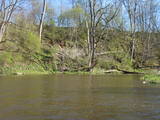 |
Small sandstone outcrops on the shores of the Ciecere River. Fish fossils have been found here.
|
|
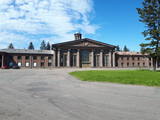 |
Spilves pļavas tika izmantotas kara aviācijas vajadzībām jau 1. Pasaules kara laikā. 1922. gadā bumbu sabojātā lidlauka atjaunošanu veica Latvijas Republikas Aviācijas divizions Jāzepa Baško vadībā. Drīz pēc tam Spilvē 51 hektāru lielā teritorijā pie Rīgas - Bolderājas dzelzceļa atzara un šosejas iekārtoja arī civilo lidostu, kuru no Rīgas pilsētas nomāja Latvijas Pasta un telegrāfa departaments. |
|
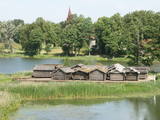 |
The Lake Castle of Āraiši is of pan-European importance. It is a reconstructed Lettigalian lake castle from the 9th or 10th century, and it is the only place in the Baltic States at which visitors can learn about how people lived more than 1,000 years ago. The castle offers various thematic events. |
|
 |
Avinurme Wooden Handicrafts Centre in East-ViruCounty is a tourist centre that offers a chance to get acquainted with the local woodcraft, spend quality time in woodworking workshops and taste or even prepare your self a selection of Estonian traditional foods. Handicrafts Centre is waiting to surprise you and offer you many new and fun experiences. Avinurme is the most south-eastern parish of EastViruCounty. Due to location and nature conditions, Avinurme area has strong woodcraft and business traditions, which are based on knowledge passed on generatoin to generation. The main products have always been wooden vessels – different household items such as barrels, tubs, casks, wooden buckets, sauna wash tubes, wooden roof chips and furniture, particularly chairs. Wooden Handicrafts Centre you can test your dexterity in the many different workshops offered. Offers and packets to groups. This is also a tourist centre where you can get acquainted with local wood products. There is also a café serving dishes of Peipus region on special wood products, and home-made rye bread is also available here. |
|
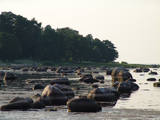 |
Back when the Baltic Sea was part of the ancient Littorina Sea, the coastline emerged as a small and shallow shore that was formed 4,500 to 5,000 years ago. The coastline has little rocks and gravel that have preserved typical examples of fauna from the Littorina Sea. The ancient cliff is best seen at the Dobeļi homestead in Kaltene. This is one of a few parts of the shore of the Bay of Rīga where there was an abrasion coastline during the era of the Littorina Sea. The shallow bay is popular among birds which feed and rest here during migrations. (Source: Roja TIC) |
|
 16 days
|
This tour is a road trip from Rīga to Vilnius, stopping along the road to hike on nature trails of the Baltic Coastal Hiking Route. In Latvia the route mainly follows the Baltic Coastal Hiking Route/ the Baltic coast, continuing along the coast and the Curonian Spit in Lithuania. Further, the route includes some smaller sections of the Forest Trail in Lithuania leading to Druskininkai and near the Lithuanian/Polish border. This tour will suit travellers who are ready to indulge in some nature trails and have a peek in urban landscapes, but who are not prepared for longer distances with backpacks, tenting and similar. A car will take you from one short hike to the next. Another transfer is planned from the island of Rusnė to the Dubysa valley, thus linking the Lithuanian sections of the Baltic Coastal Hiking Route and the Forest Trail. The tour includes Latvian and Lithuanian nature’s jewels – the national parks of Ķemeri and Slītere, Cape Kolka, Pape Nature Park, the Curonian Spit, the island of Rusnė, the river Nemunas, the Dubysa river valley regional park with its rolling terrain, the most forested and secluded area of Lithuania – the Dzūkija National Park. Besides the capital cities of both countries, the route will take you to other major cities – Ventspils, Liepāja, the popular resort town of the Curonian Spit – Nida, as well as historical bathing resorts: Ķemeri, Birštonas and Druskininkai. You will also see the city of Kaunas and the beautiful riverscapes of the river Nemunas. |
|
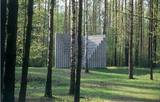 |
Das Museum vom Zentrum Europas. Gegründet vom litauischen Bildhauer Gintaras Karosas. Mehr als 100 von Künstlern aus den 33 Ländern errichtete Installationen sind unter freiem Himmel ausgestellt. |
|
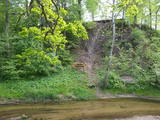 |
No Vilces muižas pa pastaigu taku var aiziet līdz pilskalnam (12 m virs apkārtnes, labiekārtots), kas atrodas Vilces un Rukūzes upīšu satekā. Atradumi liecina, ka cilvēku apmetne šeit ir pastāvējusi jau vidējā dzelzs laikmetā. Pilskalna piekājē atrodas atpūtai labiekārtotā Zaķu pļava. Nostāsti vēsta, ka Vilces grava bijusi laupītāja Kaupēna slēpšanās vieta. |
|
|
|
This former training route runs through the shoreline forests from the northern part of Ventspils (there was once a tank division in Ziemeļu Street there) all the way to Ovīši. Today it is a wide, sandy and overgrown track.
|
|
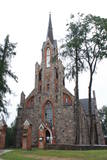 |
Found in the northern part of Cesvaine, the church was built of fieldstones in the Neo-Gothic style in 1879 by the architect Paul Max Bertschy. The church was restored in 1929 and again in the early 1990s. The altar painting, “Christ on the Cross” (1923) is by Jēkabs Bīne.
|
|
 |
The National Selection Station at Stende was established in 1922 and is in the Lībaga Parish of the Talsi District – the Dižstende farm. The station conducts scientific work related to grain selection, cattle farming and other conventional and biological types of farming. Visitors can taste grain products that are produced at the facility.
|
|
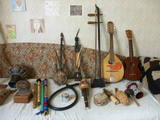 |
The craftspeople use natural materials to produce rattles, wind chimes and musical instruments. They teach children how to make pipes out of reeds. Aleksandrs has a collection of some 100 different instruments which he knows how to play. You can commission or purchase products from the craftspeople. |
|
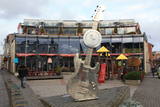 |
The word zivis means fish, and the name of the street is derived from a fish market that once existed at the end of the street near Kurši Square. There are old log warehouses in the yard of Zivju Street 4/6 and the yard of Peldu Street 2. One of the most popular destinations for tourists is the Latvian alley of fame for musicians (since 2006), with bronze replications of the palms of hands of 35 Latvian musicians. There are ten plaques dedicated to popular bands in Latvia, with five others focusing on musicians who have passed away. The largest guitar in Latvia is right nearby. |
|
 |
Die im 19. Jh. gebauten Mühlen sind vollständig renoviert. Eine Erzählung über ihre Geschichte und einem originalen Arbeitsmechanismus. |
|


