
| No | Name | Description |
|---|---|---|
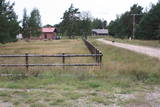 |
A long village stretching along both banks of the Lūžņa River. In 1937, there were 36 houses and two boat piers here. During the 1860s, ships were built here, but during the Soviet occupation, there were military bases there. During the 1930s, the village was visited several times by the Finnish linguist Lauri Ketunen and Estonian student Oskar Lorits. They were working on a Livonian dictionary. Another resident of Lūžņa was the first Livonian artist, Jānis Belte (1893-1946). The "Dēliņi" fisherman's homestead has been transferred to the Latvian Ethnographic Open-Air Museum and can be seen there. |
|
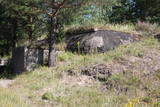 |
Another coastal defence battery was sited about 1,500 metres to the East of Lūžņa, where the Lūža River flows into the Baltic Sea. Remnants of Soviet-era buildings can still be seen there.
|
|
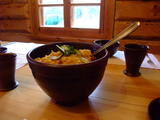 |
In Seto Tsäimaja, belonging to Setos Museum, you can enjoy dishes from earthenware made according to Setos traditions, listen to Setos songs and music instruments. |
|
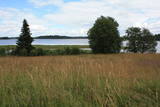 |
Ļoti ainavisks ezers, uz kuru paveras lieliskas ainas no Vidzemes augstienes pauguriem. Te jāatceras latviešu teika par Ineša un Alauksta strīdu, kā rezultātā Inesis dabūja pliķus – salas, kurām (sešām) tāpat kā Sproģu pussalai ir dabas lieguma statuss. |
|
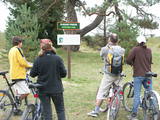 |
This is a route for hikers and bicyclists, starting at the village of Vaidava and then moving along the eastern shore of the narrow Lake Vaidava, which has steep cliffs around it. The trip covers the Veļķi baronial estate, the “Swedish pine”, the famous Vaidava (Metimne) hillfort, a series of streams, the great Rubene rock, the Vaidava baronial estate on the western shore of the lake. After that, the trail leads the visitor back to the starting point.
|
|
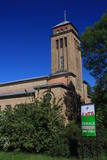 |
The Aknīste Catholic Church was built between 1937 and 1940, and its design is based on the Kaunas Church of the Resurrection in Lithuanian. The building features the rectangular and geometric forms that were typical of the age of Functionalism. Inside is a large wooden altar, along with a pulpit and two side altars (from the early 19th century) which were once found at the Rokišķi church. They were brought to the Aknīste church when the one in Rokišķi was redesigned. In 1997 the church was granted the Blue Flag of European cultural heritage. Alongside the church are the red brick gates of an old Catholic church, which date back to the latter half of the 19th century. Also there is the Selonian Park. |
|
 |
The hosts produce mixtures of dried herbs and vitamin tea in a full cycle - from seeds to a packet of spices. The farm beds and greenhouses grow a wide range of vegetables and herbs - dill, onions, garlic, chives, mint, sage, thyme, coriander, hyssop, tarragon, peppermint, chili, basil. Also used wild plants - nettle, gooseberry, viburnum, dandelion, yarrow, oregano. |
|
 |
The private museum of antiquities of Zigurds Safranovičš was founded in May 2010. The collection of the museum contains around 50 thousand objects, of which 99% of exhibits have been donated. The oldest and rarest, according to legend, 300-year-old item – Ernst Glick's refrigerator. The museum's surroundings are a large park of the former Baron Wulf's estate, where it is currently possible to spend the night in tents, as well as available rest areas - canopies, fire places, grills, utensils for cooking, etc., drinking water (from a well), available electricity for telephones, cameras, etc. for charging. For larger groups (starting from 10 people), porridge cooked on the fire. |
|
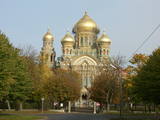 |
The city of wind, amber and musicians. In the literature sources Liepaja was mentioned for the first time in 1253. The city strived as a trade harbour already at the end of the 16th century. Especially important was the ruling period of Kurzeme Dukes Jacob and Friedrich, when the export and import of Lithuania and Kurzeme goods was provided through Liepaja harbour. Instead of the Līva River that was filled with dune sand a channel was excavated and wharf was formed. The growth of the city continued in the 18th century also after the Northern War and the plague epidemic. When in 1795 Kurzeme was added to the Russian Empire, as one of the most important western harbours of the Empire the harbour of Liepaja developed even more rapidly. From the end of the 18th century until the 19th century Liepaja also became a popular recreation place for the aristocrats of Petersburg. At the end of the 19th century the construction works of War Port and fortress begun. The city became a military strategic place. It suffered hard during World War II. In 1967 the sea trade harbour terminated its operation in Liepaja and Liepaja became a closed city where the War Port was "a city within a city". Today the War Port and its offer is one of the top tourism spots in Latvia. |
|
 |
Kalakuningad offers smoked fish directly from the oven, fresh fish during the season, as well as marinated fish in various sauces. Products can be purchased in Pärnu market in the store Kalakuningad, as well as directly in the place of preparation, the Lindi village Pärnumaa. |
|
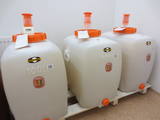 |
The farm produces homemade wine made of rhubarb, birch juice and apples. Tour the winemaking facilities and examine the process. You can taste and purchase products. |
|
 |
Pusceļā starp Madonu un Cesvaini, Sarkaņu pagasta Biksēres “Jaundilmaņos” dzimis Latvijas Bērnu ķirurģijas pamatlicējs, traumatalogs un ortopēds, izcils bērnu ārsts Aleksandrs Bieziņš (1897.-1975.). Tagad viņa dzimtajās mājās ierīkots muzejs, Paula Stradiņa Medicīnas vēstures muzeja filiāle. |
|
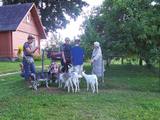 |
Latgale Farmstead „Mežmalas”. The owners of the farmstead created an interesting collection of the old
household items, tools and equipment of the 19th and 20th century. The visitors are offered to try plainting of
the scale basket. Sale of baskets and herbal tea. Enjoy walking along the energetic path through the pine forest.
Working hours: on request |
|
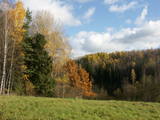 |
The Krustkalni Nature Reserve was established in 1977, and the diversity of plants in the region is based both on the terrain – the Madona-Trepe embankment, a series of hillocks with low areas among them, swamps and small lakes – and on the biotope – natural meadows, forest glades, places where underground streams bubble up to the surface, and vast areas of forest with very old stands of trees. Some 800 types of plants have been defined in the reserve. It can be toured only in the company of a guide from reserve headquarters, and one must apply in advance. Visitors can visit the Krāku streams, Lake Svēte-Dreimaņi, and other sites. |
|
 |
Mulgi Kõrts (tavern) in Abja-Paluoja, the centre of Mulgi area, has a cosy atmosphere, local dishes and swift service. The tavern is in a house over 100 years old. |
|
 |
Located in Obinitsa Village, open daily in the summer, please book in advance in winter. White bread and rye bread baking masterclass with natural yeast preparation. The café bakes brown country bread, bread with seeds, various white breads. |
|
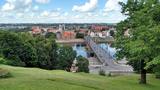 |
The second biggest city in Lithuania and from 1920 – 1939 - a temporary capital. The Old Town, The Town Hall (16th century), St. Peter and Pavil cathedral - basilica (15th century), Thunder building (15th century), Laisves alley, Ciurlionis Art and Devil Museum. |
|
 |
Prepares dishes from local Latvian products. The menus are changed every season, meaning that the guests can enjoy seasonal dishes. The 360-degree glazed terrace offers a picturesque view of Rose Square, in the heart of Cēsis City. |
|
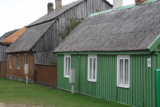 |
Pavilosta is a comparatively new city that has formed at the mouth of the Saka River in the Baltic Sea. True is the fact that in the medieval times the harbour of sea ships was located 6 km from the sea – at the junction of the Tebra and the Durbe Rivers. Important period in the life of the harbour was during the ruling of Duke Jacob, when sea ships arrived here. As a result of the Polish-Swedish war the Saka harbour had to be closed. The harbour that's visible nowadays in the mouth of the Saka River was formed in the middle of the 19th century at the so called Akagals fishermen village. In 1878 the river mouth was excavated and piers were built. Here two-masted ships were built. The World Wars destroyed the fleet, but the fishery traditions remained alive. In 1991 the populated area acquired the status of a city. Nowadays Pavilsota is a popular target for yachtsmen and windsurfers, as well as summer recreation place. Yachtsmen are awaited at the yacht harbour. |
|
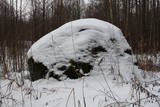 |
The historic stone, on which there is carved over 200 years old boundary-mark, sets the border between the Duchy of Courland and the Russian province. Nowadays, it sets the Babīte and Jelgava district boundary. The stone lies to the East of Kalnciems–Peat road (the south of the swamp Labais purvs) at the edge of a forest firebreak and it can be hard to find. To this end, the description of the road map may help: around 400 m south of the car parking lot at Lily Lake from Kalnciems-Peat road to the right (in the east) turns a forest road which leads down from hills Krāču kalni. It should be around 170 m to go until it abruptly turns to the right (to the southeast). Then you must go in this direction until after ~ 0.5 km to turn to the northeast where after further ~ 0.4 km of the current forest road intersection turn to the north. After ~ 0.4 km turn right (to the east) on a big firebreak, on the left (the north) side of which behind the drainage ditch during the non-leaf period there can be seen a rounded stone. Due to the poor condition of roads, the stone can be reached only on foot. |
|


