
| No | Name | Description |
|---|---|---|
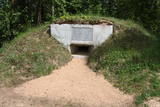 |
This testimony to World War II can be found in the Blīdene Parish. It is one of the very few objects of its type to still be in good condition.
|
|
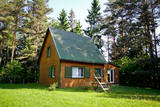 |
Holiday cottage and spa located by Vertukšnes lake, offering training and services focused on the practise of a healthy lifestyle. Black (smoke) sauna with traditional sauna rituals, massages, detoxification, weight reduction, and colour therapy Bioptron pro 1.
|
|
 |
This is one of the most beautiful gardens in Latvia, and the owners of the garden will offer you a tour, along with valuable advice. Visitors can purchase trees, bushes, winter plants, perennials, medicinal plants, as well as edible flowers. Florist services are also available. |
|
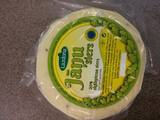 |
The company produces butter, cream, cottage cheese, cottage cheese products, yoghurt and desserts, using high-quality milk that comes from more than 100 local farms and three co-operatives. Technological processes are observed and improved during the manufacturing process so that the product retains its value in terms of taste and nutrition. Tourists are welcome, and tastings are available. This is one of five companies in Latvia that can produce “Summer Solstice” cheese as an EU guaranteed traditional product. The company’s products also have the “Green Teaspoon” quality mark. |
|
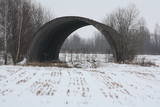 |
Few Soviet military objects are associated with more legends than this one. During Soviet times, this was a reserve airfield, as well as a storage site (just 50 kilometres from the republic’s capital city) for nuclear weapons. These were hidden in two cement hangars that were covered with soil and vegetation. Public information suggests that an RX-24 nuclear bomb weighing 430 kg and a RX-26 nuclear bomb weighing 1,030 kg were stored here, as were air-to-land missiles equipped with nuclear explosives. If there had been an accident here, what would have happened to Rīga, to Latvia, to the Baltic States and to Northern Europe? The airfield is a closed territory today.
|
|
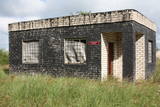 |
The Lūžņa radio equipment company was part of the Naval Border Guard in Soviet Times. The car park in the centre of Lūžņa offers a fine view of the former military complex. Some buildings are used as apartment buildings at this time.
|
|
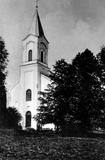 |
The first building of the church was built in 1641. The fourth building of the church was only built in 1856 – during the times of Pastor Johann Wilhelm Knierim. Its altar painting – The Crucified Christ (Golgotha) was painted in 1856 by Jozeps Millers, who was influenced by the altar piece in Munich Louis Church created by his teacher Peter Cornelius. An epitaph of Baroness Auguste Amalija von Pistohlkros, the sister of the owner of Bīriņi Manor and the patroness of the church, was immured in the memorial wall. Construction of the tower was completed on 11 June 1856, as evidenced by a memorial plaque on the wall of the church with an inscription “Erbaut von August Pistolkors 1856”. The church was consecrated in 1864. And a year later an organ by Martin Company with 8 registers, which was extended to 14 registers in 1903, was installed in the church. Unfortunately, the organ was destroyed in WW2. Saulkrasti (Pēterupe) Evangelical Lutheran Church survived both World War 2 and the Soviet period. The Soviet era was one of the most difficult times for the church, because many churches in the area were destroyed, pastors were discharged and the congregation fell apart. The Pēterupe congregation remained. As an architectural monument the church was lucky enough to undergo roof repairs of the tower even during Soviet times. Funds were granted by the Chairlady of the Executive Committee Ņina Manzūrova. |
|
 |
The restaurant is at the seaside and in an ancient Latvian fishing farm with the view of the beach. Live music is performed during the season. Latvian cuisine: Potato salad with sausage, cold soup, grey peas with bacon, blood sausage, boiled pig’s ear, leg of pork with sauerkraut, pork roasted on coals, bull testicles, potted beef. Special foods: Low-salt herring cooked on coals. |
|
 1 day
|
Tūrisma gide Ineta Jansone piedāvā ekskursijas grupām pa Raganu purvu. Izveidota taka uz sēra dīķiem (koka celiņi 800 m garumā). Ekskursijas laikā Jūs uzzināsiet par augstā tipa purvu un unikālu biotopu – sēra avotu izplūdes vietu Ķemeru Nacionālā parka teritorijā. Šeit sastopami savdabīgi purva ezeriņi, piesātināti ar sēra baktēriju radītām nogulsnēm. Ezeriņu krastos sastopami īpašu sugu augi. Sēra dīķu apkaimē var sajust gaisā sērūdeņraža smaržu. |
|
 |
This exhibition has been assembled over the course of many years by its owner, Valdis Tumovs. He features war weapons, fragments of munitions, uniforms, everyday objects, military equipment such as a motorcycle, etc.
|
|
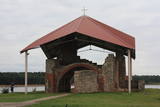 |
Since the 1970s, these ruins have been on a small (100 m long) island that is part of the reservoir of the Rīga hydroelectric power plant. The island is named after St Meinhard and the ruins are part of the oldest stone building in Latvia. Work on the church began in 1184, but it was rebuilt and sacked several times, most recently in 1916. The ruins have been conserved and are protected by a metal cover. The shores of the island have been strengthened. The 10 metre metal cross on the island was designed by E. Samovičs, while the stone altar was sculpted by J. Karlobs. |
|
 2 days
|
The Baltic Coastal Hiking Route goes through Nõva Nature reserve where you will have exceptional views of the white and grey dunes. The beaches are popular for fishing and kite-surfing. In Dirhami you can spend some time in a cafe and from its terrace you will have a beautiful view of the sea and the port. Along the way you can also see ancient Swedish hamlets with a different cultural environment and landscape, as well as shallow lakes that have been separated from the sea. |
|
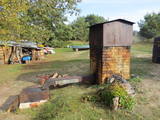 |
On the second Saturday of each month (or at other times that are arranged in advance), the owner will allow you to test your skills at smoking fish, after which you will be able to taste what you have produced. |
|
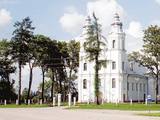 |
St. Anna Roman Catholic Church of Bērzgale. The Church was
built in 1770 and sanctified in 1776. The building is an example of Baroque style with a woodcarved altar
and two pictures of Virgin Mary. The church resembles Aglona Basilica.
|
|
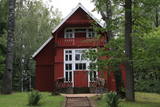 |
This is a homestead that is three km from the centre of Vecpiebalga and is in a lovely place – the Incēni hill. There is a museum here featuring the author of the legendary fairy tale “Pussy’s Mill” by Kārlis Skalbe (1879-1945). The poet and prose writer built the building in 1926 and spent summers there from that year until 1944. The museum was opened in 1987. The western slope of Vaktskalns hill right alongside the museum offers a lovely view of Lake Alauksts. The cremated remains of Skalbe and his wife, Lizete, were reinterred at the location in 1992 from Sweden, where the poet died. There is a unique monument to them in the form of a stone boat. |
|
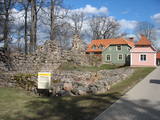 |
For the first time Valmiera is mentioned in the historical sources in 1323. Until the 13th century this place was in the composition of Talava, inhabited by Latgalians. Construction of Valmiera medieval castle began in the beginning of the 13th century, but in 1283, between the Gauja River and Rate River towered church. Location near to the Tartu-Pskov and Novgorod trade routes greatly facilitated the economic development of the populated area. During the 14th-16th century Valmiera was a part of the Hanseatic League. It suffered greatly from wars, epidemics and fires in 16th to 18th century. In the second half of the 19th century the economic boom started again. It was also facilitated by the building of wooden bridge across the Gauja in 1866 and Riga-Pskov railway opened in 1899. Historic centre is destroyed in 1944. During post-war years, large industrial companies such as - Valmiera glass fiber factory (to this day) are opeating in the town. Today, Valmiera is economic, educational and sports centre of Vidzeme. |
|
 2 days
|
Here you will learn about home-based manufacturers, farms, companies and others in Kurzeme that produce various dairy products such as milk, yogurt, cottage cheese, cheese, ice cream, etc. Begin in Tukums, which offers lots of interesting foods and beverages. Then cross the ancient Abava River valley, which is one of the most beautiful river valleys in Latvia. The route leads to Wine Hill in Sabile and then Talsi, the “city of nine hillocks.” Further on you will find Dundaga and its legendary castle, pass through large and lonely forests on your way to Ventspils, and then continue along the shore of the Baltic sea to Medze. From there, travel back into the centre of Kurzeme, through Aizpute and Kazdanga, which is known for its own castle. Visit Latvia’s first shiitake mushroom farm at Garīkas, the Milk Estate and the Milk Museum. Further on will be Saldus with its tasty treats, then Džūkste, and then back to Tukums, where we started. |
|
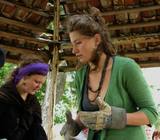 |
You can try your hand at pottery and take part in the opening of the kiln. You can also order and purchase ceramics. |
|
 |
Prepares dishes from local Latvian products. The menus are changed every season, meaning that the guests can enjoy seasonal dishes. The 360-degree glazed terrace offers a picturesque view of Rose Square, in the heart of Cēsis City. |
|
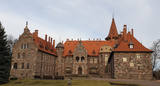 |
The Cesvaine Castle is one of Latvia’s most beautiful castles. Built in the style of Eclecticism, it is said to have been presented by its owner, Adolf von Wulff, to his wife. The castle was built between 1893 and 1896. On the banks of the Sūla River alongside the castle is the Cesvaine Park, including the afforested Cesvaine castle hill. The Cesvaine castle roof reconstruction is complete! Visitors may tour the castle accompanied by a Cesvaine Tourism Centre guide. Restoration of the castle interior will ccontinue throughout 2020. Periodic closure of the castle can be expected. Please phone in advance to arrange a visit T. +371 26172637. For more information visit www.cesvaine.lv |
|


