
| No | Name | Description |
|---|---|---|
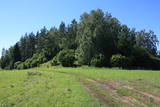 |
Stupeļu Hill is 3 km to the South of the Vecumnieki-Ilūkste road. There are no signs, so the castle hill might be difficult to find. The Great Stupeļu Rock, which is discussed further on in this guidebook, is also hard to find when there is vegetation. Stupeļu Hill is approximately 30 m high, and it was one of the highest castle hills in the historical district of Selonia. Archaeologists say that it was first abandoned at the beginning of our era and then populated again during the late Iron Age. It is interesting that iron was extracted and processed near the castle hill. Archaeologists believe that this is the site of one of the earliest “cities” in the region. To the West of the hill is the Great Stupeļu Rock, which is 6.7 m long, 5.6 m wide and up to 2.7 m high. Above ground, it is 35 m3 large, and it may have been a cult location. During archaeological digs in the late 1970s, antiquities from the 10th to the 13th century were found here. |
|
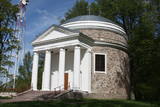 |
In the 15th century, Preili manor became the property of Count Borhs family. Borhs were living here until the 60ties of 19th century. The city itself formed in the first half of the 19th century by fusion of Preili Manor, the village and free village - settlement of traders and craftsman. In the 19th century a luxurious palace was built in Preili and Landscape Park was created. Today Preili is an important economic centre of Latgale (cheese and sewing plants), where t folklore, crafts and Catholicism traditions are fostered. Preili tour in the guidance of TIC employee Irena Kjarkuza is highly recommended. |
|
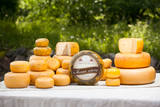 |
The Vecsiljāņi farm is in the Bebri Parish in the Koknese Administrative District. It is a dairy farm and also grows wheat, barley, oats, rye, corn and grasses. In 2010 the farm began to produce hard cheese under the brand name "Ievas siers." Visitors can taste the cheese and tour the farm and the cheese-making facility. |
|
 10 days
|
During this trip you will visit the workshops of craftspeople, farms that breed horses, as well as various destinations where you can enjoy country goodies. Ancient skills are now a modern application. First you will stop in Ikšķile, and at the very beginning of the trip, you will visit a cellar that stores birch juice wine and taste sparkling wine. In Skrīveri, you will be surprised by the transformation of milk. A cosy café on the main street of the small town offers outstanding homemade ice cream featuring strawberry, anchovy and horseradish flavours. In Koknese, you can supplement your wardrobe with a new leather belt, bag or stylish leather jewellery. A farm that grows hemp will offer a small tour, as well as hemp delicacies. The work of black ceramics masters in Latgale fits into modern interiors. The Aglona Bread Museum offers a chance for visitors to bake their own loaf of bread. The visit to the next farm will allow you to add tasty cheese that has been made from milk from Latvian brown cows. The last stop in Latvia will be Daugavpils, which features an art centre featuring the work of the globally known abstractionist Mark Rothko, as well as the Daugavpils fortress, that was built in the 19th century and is an impressive military building. This is one of the most popular tourist destinations. From there you will travel to Lithuania, where you will visit several traditional farms. The Ilzenbergo Dvaras estate has a bio-dynamic farm. You will taste Lithuania's national sweets which are called šakotis. You will visit the town of Anykščiai, which offers a hike along a trail that is above the trees. A horse museum offers a look at old farm equipment. Next you will visit farms that will inform you about traditional Lithuanian cuisine and the work of potters. The Dubingiu horse farm offers horseback rides. At the conclusion of the tour you will visit the unique Trakai lake castle (14th and 15th century), as well as Vilnius. |
|
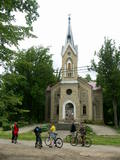 |
18 A. Upīša Street. The church was built in 1897 in the Neo-Gothic style (Architect H. Shel) and it is one of the few19th century city brick buildings. In the church there is the altarpiece "Christ healing the sick" - I. Zeberliņš (1943). You can see the church from the inside during the worship or by a prior arrangement. Near the church, you can see a monument designed by E. Laube (1926) to 80 Latvian riflemen who died in World War I and who were buried in the Warrior's Cemetery near the river Vēršupīte. Near the cemetery, there are also buried J. Kārkliņš and F. Siliņš, fighters of the Kauguri Battle of May 18, 1919. By a prior arrangement, tourist groups can see the church from the inside. |
|
 |
Die kleinste und eine der reichtesten Kirchen Nordeuropas im Sinne der Zierelemente. Seit dem Bau im 14. Jh ist äußerlich kaum verändert worden. |
|
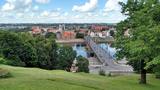 |
The second biggest city in Lithuania and from 1920 – 1939 - a temporary capital. The Old Town, The Town Hall (16th century), St. Peter and Pavil cathedral - basilica (15th century), Thunder building (15th century), Laisves alley, Ciurlionis Art and Devil Museum. |
|
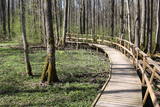 |
The excessively damp forests at this place include the Vēršupīte River bog, and this is one of the most diverse biotopes in Latvia in terms of the number of species that can be found here. The fact that the area is regularly flooded is shown by the fat roots of black alders – indeed, the place looks like a stand of mangroves. The wooden pathway that is the Dumbrāju trail starts at the Forest House for those who wish to examine the bog. The most impressive views are seen during spring floods or rainy seasons at other times of the year. The little river breaks out of its bed and floods a large territory. The Lake Sloka hiking trail is another place where you can study the Vēršupīte bog. The circular trail is 3 km long, and its beginning is at the Lake Sloka bird watching tower. |
|
 |
The magic kitchen offers tasty dishes from ingredients grown in the surroundings. Definitely try the nettle soup, which is recognised as the best soup of Southern Estonia. Nõiariik is suitable for active recreation for both families and larger groups of people. |
|
 |
Z / S "Kaņepītes" is a family company founded in 1992. The farm takes its name from the name of the house given to it in 1924. Organic farm where cereals are grown and processed into food. The production of the products is small, but the technique has an ancient atmosphere, a stone, wooden mill that gives a special taste and aroma to flour and oatmeal. Now the assortment already has 30 different product types. |
|
|
|
This exhibition has been assembled over the course of many years by its owner, Valdis Tumovs. He features war weapons, fragments of munitions, uniforms, everyday objects, military equipment such as a motorcycle, etc.
|
|
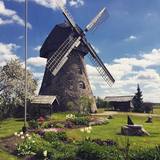 |
The windmill is on a hill and offers a lovely view. This is one of the few Dutch-type windmills (built in 1852) to still be in operational order, and guests can help to grind grain. On the last Sunday of every July, the windmill organises a celebration in honour of St Jacob and of bread baked from freshly harvested rye. Latvian cuisine: Miller’s lunch – wheat flour porridge with meat sauce, crepes, kefir, herbal teas. |
|
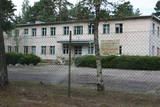 |
The border guard facility at Pāvilosta is closed to civilians at this time, because it is used by the Latvian Navy.
|
|
 3 days
|
Это один из 6 маршрутов путешествий в серии «Насладитесь деревней!», который приглашает Примерное время прохождения маршрута: четыре – пять дней, в зависимости от количества выбранных достопримечательностей и времени, отведенного для их осмотра. |
|
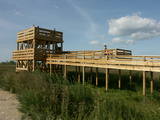 |
This is the only viewing platform in Latvia which is wheelchair-accessible. From the second level, you can see much of the restricted territory – areas of reeds, some wetlands, dunes and the estuary of the Daugava River. This is a good location for bird-watching.
|
|
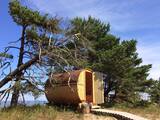 |
Happiness House (Laimes maja) is a recreation place situated in a very beautiful place on the seashore – on Cape Kolka. Here you will have a chance to relax, watch sunrises and sunsets, enjoy the sea, quiteness and peace. |
|
|
|
Opekalns (arī Apukalns, Opekols) ir paugurs Alūksnes augstienē, 235 metrus virs jūras līmeņa, Veclaicenes pauguraines viena no augstākajām virsotnēm. Tā virsotnē uzcelta Opekalna luterāņu baznīca (1774—1779), kas ir visaugstāk virs jūras līmeņa novietotais dievnams Latvijā. Opekalna ciemā dzimis leģendārais Dziesmu svētku virsdiriģents Haralds Mednis. |
|
 |
Beautiful, harmonic and unique -- those are words to describe the garden at the Gundegas homestead in the Daudzese Parish. Owner Agrita Laizāne tends to her garden every day, particularly in the spring, when she is inspire to plant the flowers. In the autumn she thinks about work to be done next year, collecting seeds and preparing her garden for the winter. |
|
 |
Eine von Nadelbaumwäldern bedeckte Halbinsel. Malerisches Käsmu Steinfeld, Matsikivi Stein, Vana Jüri Stein u.a. Bei passenden Bedingungen kann man sich auf einer steinernen Landzunge bis zur 0,5 km entfernt liegenden Insel Saartneem schleppen. |
|
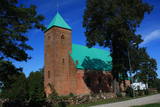 |
Atrodas Ēdoles centrā. Dievnams tapis 17. gs. vidū, pateicoties Ēdoles pils īpašnieka - Johana Dītriha Bēra iniciatīvai, kas to veltījis sava noslepkavotā tēva piemiņai, domādams, ka tādējādi varēs izpirkt brāļa Filipa - tēva slepkavas grēkus. Lai izpirktu savējos, J. D. Bērs licis sevi paglabāt zem baznīcas durvju sliekšņa. Dievnama iekštelpas rotā sākotnējais baroka interjers, kā arī krāšņs ērģeļu prospekts un luktu apdares elementi. |
|


