
| No | Name | Description |
|---|---|---|
 |
This farm produces organic grains, and it has a bakery at which tasty rye bread, wheat-rye bread and croutons for bread yoghurt are produced. Bread can be purchased on site.
|
|
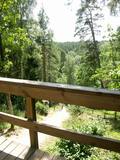 |
This is one of the most lovely and expressive castle hills in Latvia, with a very fine view of territory all the way to Lithuania. According to Ernests Brastiņš, a researcher of castle hills in Latvia, this was the site of the Semigalian Sidrabene castle. There are no improvements in the area.
|
|
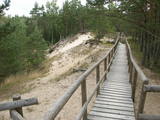 |
The trail climbs up and down along the bluffs of lower River Pilsupe and reveals a fascinating sight of three white dune exposures (the largest is called the White Dune). The trail is 900m long, and the White Dune is ca 20m high. It has formed ca 6000 years ago, in the period of the Littorina Sea which is a foregoer of the Baltic Sea. Here the first Stone Age settlement on the North Western coast of Latvia has been found in 1934 by geologist S. Burhards. In the sand, some 500m from the sea, he found some pottery fragments, a sandstone hone, a piece of flint, parts of bones and an amber bead. He handed the findings over to the National Museum of History. In October 1934, the site was checked by archaeologist E. Šturms, who found the archaeological layer, typical for such settlements, in the landslides of the Pilsupe riverbanks. In 1936 he started larger excavations to continue by 1938. Totally seven, chronologically different settlements were detected and many artefacts found, including fragments of the so called Sārnate and pit-comb pottery, as well as some pieces of corded pottery. Based on these findings, the settlement is dated back to the beginning or middle of the 3rd millenary B.C., and it has been inhabited till the beginning of the 2nd millenary B.C. Especially remarkable are three clay figures in human shape which have probably been used for some religious cult purposes. Since 1993, archaeologist Ilzes Loze has discovered several pit-comb ware culture settlements in large area around Pūrciems village. They are known in research literature as „the Ģipka settlements”. |
|
 |
Ķesteri – the home where the Liv cultural activist and organist Kārlis Stalte
(1870-1947) was born.
|
|
 |
Saaremaa Island farm Epi produces fruit and berry chutneys, various jams, grows herbs and teas. Products are made using only local ingredients from the Saaremaa and Muhu islands. You can buy products directly at the farm. |
|
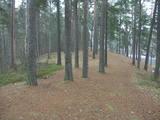 |
This territory is meant to protect the “green zone” of Rīga. Most of the park is covered with pine forest and dunes with shrubs on them, but Lake Beberbeķi is found at the southern end of the park. The area around the lake has been improved. |
|
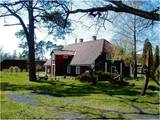 |
The museum at Valdemāra Street 47 was opened in 1969 in the building of the maritime school that was opened in 1864 at the suggestion of Krišjānis Valdemārs. The school trained more than 1,000 sea captains and helmsmen. The exhibition at the museum relates to the operations of the school, as well as the building of sailing ships on the Vidzeme shoreline during the latter half of the 19th century and the early part of the 20th century. There is a collection of anchors, as well as the top of the Ainaži lighthouse, which was once washed away by the sea, but has been restored. |
|
|
|
Tavern Vedu is located 10 minutes’ drive from Tartu, going in the direction of Narva. In the historic tavern you can taste delicious dishes from local ingredients. |
|
 |
The Cheese hut dates back to 1768 and was once part of the Kalnamuiža (Smiltene) Estate. It is the only object of industrial heritage that is still found in Latvia. On the first floor there was the storage of milk and a set of cheese pots. Stairs to the second floor have been lost. The second floor was used to dry cheese, and the process was facilitated by holes in the walls of the hut so that the wind could help in the process. Although the holes have been filled up, their placement can still be easily seen. The Cheese hut is alongside the ruins of the Medieval castle in Smiltene. Sadly, it is in terrible shape and can only be viewed from the outside. |
|
 |
The "Jumis" café is on the side of the Rīga-Liepāja highway (A9). The interior is finished in wood. Latvian cuisine: Cottage cheese with herring and soured cream, farmer’s breakfast, mushroom soup, pork cooked in onions, sautéed liver, homemade steak haché, grilled pork ribs, potato pancakes, stuffed pancakes. Special foods: The “Jumis” pot of ham. |
|
 |
The café is located right by the old brick bridge of Kuldīga and boasts a wonderful view over Ventas Rapid, the widest waterfall in Europe. Offers grilled dishes in summer, as well as burgers, steaks, shashlik and pastries. |
|
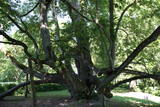 |
This is Latvia’s largest small-leaved lime tree (Tilia cordata). Some of its mighty branches are held up by supports. There are large holes in the trunk that have been covered up to prevent water entering the holes and causing even more rot. Just like many other trees of this size, this was a sacred tree in the past
|
|
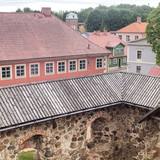 |
It is believed that at the Kezberkalnins of Limbazi has been Lemisele castle of Metsepole Liv district. It is also found in the reports that merchants travelled to this place from the sea by Svētupe and Dunezers until the 16th century. In 1223 Bishop Albert built a stone castle in Limbazi. Like Valmiera, Limbazi became the member of Hanseatic League. At the beginning of 16th century it economic role declined significantly since Svētupe and Dunezers became unusable for shipping. Between the 16th and 18th centuries, the town and its people suffered from wars, diseases and fires. As a result, the population reached its utmost fall - eight people. In the turn of 19th and 20th century and in the beginning of 20th century the economic life of the town was renewed. |
|
 |
The Freedom Monument is opposite the Krustpils Castle in Rīgas Street. Built in 1925 and restored in 1992 (by A. Birznieks), the monument honours people from Krustpils who fell during Latvia’s liberation battles. There are good views of the Little Daugava, Daugavsala, and the Ādamsona (Krustpils) island. |
|
 |
Delicious, home-made canned food and other culinary specialities for everyone who appreciates local products. Local cuisine is served and canned food can also be purchased. |
|
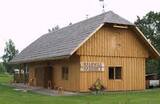 |
The carpenter’s workshop offers special excursions and events for grown-ups and children; there are some thematical programmes available. Under the guidance of a craftsman it is possible to work with traditional wood-working tools and get to know ancient games. In the end you will have a chance to try special „strengthening” tea and have a picnic in a romantic Bonfire house. It is possible to buy wooden souvenirs as well as order them. |
|
 |
A farm engaged in the cultivation and processing of large cranberries. Offers berries, cranberry juice, syrup. On Fridays at Dundaga market from From 7:00 to 11:00 it is also possible to buy products. |
|
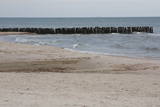 |
This is an enormously important territory for migrating birds. The most commonly spotted protected species of birds are the velvet scoter, the black scoter, the long-tailed duck, the little gull, the red-throated and black-throated loon, and the black guillemot. The territory is opposite the Dundaga and Ventspils administrative districts, and it covers 172,412 hectares.
|
|
 |
Ap 1,6 km garā un labiekārtotā Adamovas dabas taka iepazīstina ar Adamovas krauju un tās apkaimē esošajām dabas vērtībām. Takas sākums meklējams pie autostāvlaukuma, no kura paveras plašs skats uz Krāslavu un Daugavas senieleju. Adamovas krauja (aizsargājams ģeoloģisks piemineklis) ir viena no garākajām (ap 1,7 km) un augstākajām (25 - 35 m) Daugavas kraujām. Tā veidojusies sānu erozijas rezultātā, Daugavas ūdeņiem noskalojot Daugavas pamatkrastu Adamovas loka ziemeļdaļā. |
|
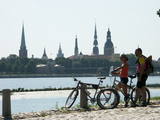 |
The Capital of Latvia. The Old Town of Riga (included in UNESCO Cultural Heritage list) - an excellent medieval building monument. The pearl of Art Noveau in Europe. The former city of Hanza. |
|


