
| No | Name | Description |
|---|---|---|
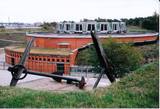 |
Schon seit der früheren Zeiten – ein Platz von der militärischen und strategischen Bedeutung. Für den Schutz des Hafens von Klaipeda wurde 1866 von preussischer Militär den Bau einer Festung angefangen. Im Laufe des 2.Weltkriegs wurde die Festung in die Luft gesprängt. Die Renovierung begann 1979. |
|
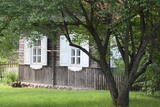 |
Vieta, bez kuras apmeklējuma nav iedomājama Dzūkijas vēstures un kultūras izziņa! Muzejs meklējams Marcinkones centrā, netālu no dzelzceļa stacijas. To noteikti ir jāiepazīst vietējā gida pavadībā, kas pastāstīs daudz interesantus faktus par dzūku tradīcijām un attiecībām ar mežu. Muzejā ir apskatāma dzīvojamā ēka ar ikdienas sadzīves priekšmetiem un rija, kas pārsteidz ne tikai ar savu plašumu, bet arī vairākiem interesantiem eksponātiem, no kuriem ir jāpiemin milzīgs sēņu grozs (tajā iegāja 110 kg gaileņu!), 750 gadus veca vienkoča paliekas, bitenieku un vietējo amatnieku instrumenti u.c. Rijā notiek ikgadēji ar dzūku kultūru un vēsturi saistīti pasākumi. Visbeidzot, te var iegādāties vietējos suvenīrus un medu. Ja ir vēlme iepazīt Marcinkones tuvāko apkaimi, ar kājām var doties pa 13 km garo Zackagira dabas taku (Zackagirio gamtinis takas). |
|
 |
Atrodas Rīgas – Daugavpils autoceļa (A 6) 118. kilometrā. |
|
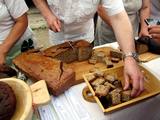 |
"Cēsu maize" is located in the very heart of Cēsis, Riga street 18. Bakery makes bread from organic cultivated grains in Latvia and with natural grass. The offer includes products such as: Spelled whole wheat bread, whole wheat bread with sun-dried tomatoes and olives and spelled sweet bread. |
|
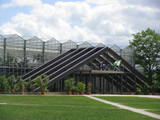 |
The National Botanical Garden in Salaspils ranks as the largest botanical garden in Latvia and in the Baltics with a territory of 136 hectares. The National botanical garden collection consists of about 14 thousand different varieties. More than 5,000 plants are found in the arboretum, as well as various other exhibitions, such as orchards, rosaries, ornamental plants. Botanical Gardens can inspire you to uprade your own garden assortment with new plant varieties and offers the experience of learning about botanical knowledge in nature. In addition, it presents opportunity to expand your personal photo archive with an exclusive background photographs and close-ups. There is a playground for children, comfortable cycling paths, nordic walking paths, picnic possibilities. |
|
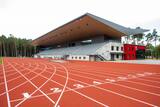 |
The stadium was opened in 1938 and has been rebuilt several times since then. Outside the stadium is a memorial stone to honour of Jānis Dāliņš (1904-1978), who set several world records in race walking. He won a silver medal at the Los Angeles Olympics in 1932. The first Three Star Olympiad was held in the stadium in 1993. The stadium is of national importance as an athletics stadium that hosts international competitions and various athletic activities. It is known as the most youth-friendly facility of its type. |
|
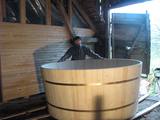 |
The craftsman represents the fifth generation of the oldest dynasty of Latvian barrel makers. The family began such work in the early 19th century, and he is continuing on with traditions related to barrels that are made of oak and ash. He will talk about the various aspects of making a barrel, and you will be able to watch him at work. The craftsman produces barrels, wooden tubs, scoops for saunas, etc. You can order and purchase these items. |
|
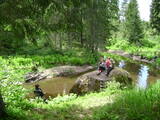 |
The trail tells about grey dunes which have survived thanks to the border restrictions and the presence of military. The trail starts from the parking place at the mouth of the Užava river. It is one of the few natural rivermouths in Europe. One can also see the „tacis”, an industrial installation for lamprey (Lampetra fluviatilis) fishing during their spawning migration period. The 3km long trail is circular. It winds for 1.5km from the Užava rivermouth to the North, along the coastline (the beach is covered with sand and pebbles), and returns to the starting point by a gravel road through grey dunes. Along the trail, one can observe a distinct white dune with rare plant species Linaria loeselii, Lathyrus maritimus, Anthyllis arenaria, Tragopogon heterospermus. About 1km from the rivermouth, in the sea, one can see a wrack of a sailing ship (parts of frame). The visibility depends on the flow of sand in the sea. The way back opens a beautiful view of the range of grey dunes. Unfortunately, Scots Pine starts taking over the area. There are three important biotopes of EU significance: „Fixed dunes with herbaceous vegetation 2130”, „Decalcified fixed dunes with Empetrum nigrum 2140” and „Dunes with Salix arenaria 2170”, forming a unique mosaic. Typical species here: mountain Alison ‘(Alyssum gmelinii), Pasqueflower (Pulsatilla pratensis), Sand Pink (Dianthus arenarius), Rosemary Leaved Willow (Salix rosmarinifolia), Dark Red Helleborine (Epipactis atrorubens), Kinnikinnick (Arctostaphylus uva-ursi). As a former military site, some military constructions can be seen here like horseshoe-shaped sand ramparts by the road in gray dunes. They were built to disguise military vehicles in case of sea attack. By the Kangroti graveyard, towards the Užava river, there is an underground pillbox. It is a one-man fortification to fire along the coastal perimeter. The Mouth of River Užava walking route is in the nature reserve „Užava” |
|
 |
The café and guest house, located in the centre of Ventspils, is housed by a classical 19th century wooden building that used to belong to the Kupfer family and is listed as European Heritage. Latvian cuisine: farmer's breakfast, oat or semolina porridge, potato pancakes. |
|
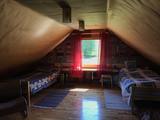 |
Bed & breakfast "Upes", in the centre of Livonian village Pitrags. Natural toilet. Local products. Lunch boxes, transfer service on request. |
|
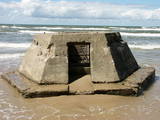 |
All that’s left of the battery today are the ruins of a cement blockhouse which have slid all the way down to the beach because of years of abuse by the wind and the waves. It is an interesting monument to history with a long-term fate that we can guess at – it will disappear under the sea.
|
|
 |
Mājas restorāns mājīgā, autentiskā lauku vidē, kur tiek pasniegti lauku ēdieni, uz galda celtas svaigas jūras veltes, kuras atceļojušas no Francijas, Spānijas vai Norvēģijas, kā arī vietējās, pašu saimnieku kūpinātas zivis. Ēdienkarte tiek radīta katru dienu no jauna, kas ikdienā ļauj piedāvāt svaigus produktus.
|
|
 |
The bakery offers baked goods made of natural ingredients. It also offers salads, pizzas, cakes, ice cream and other treats. |
|
 |
The Cheese hut dates back to 1768 and was once part of the Kalnamuiža (Smiltene) Estate. It is the only object of industrial heritage that is still found in Latvia. On the first floor there was the storage of milk and a set of cheese pots. Stairs to the second floor have been lost. The second floor was used to dry cheese, and the process was facilitated by holes in the walls of the hut so that the wind could help in the process. Although the holes have been filled up, their placement can still be easily seen. The Cheese hut is alongside the ruins of the Medieval castle in Smiltene. Sadly, it is in terrible shape and can only be viewed from the outside. |
|
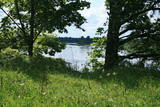 |
This location is important in terms of Latvia’s history, because during the 12th and 13th century, this was the administrative and spiritual centre of the Lettigalian tribe, with the ruler of Jersika being Visvaldis. The castle stood on the shore of the Daugava at a height of 18 m, and this was a mighty castle hill. The flat part of the hill measured 100 x 75 m, and it was surrounded by a barrier and a defensive wall made of logs. People entered the castle via guarded gates beyond which there were residential and household buildings, as well as a small church. Archaeologists have found the remnants of log buildings, as well as many antiquities from the 10th to the 13th century that speak to extensive trade relations with other parts of Europe, including ancient Russia. In 1209, the forces of Bishop Albert fooled the people in the castle and sacked it and the ancient town that was around it. Visvaldis’ family was taken hostage, and so the Lettigalian ruler was forced to become a vassal of the bishop. The castle hill is privately owned, so please contact the owner before planning a visit. |
|
 |
The cafe is situated in Sabile, where you can eat fast and tasty food. Banquets up to30 people. |
|
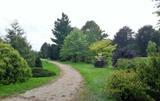 |
Work on this arboretum began in 1958 at a local forest research station that is near the village of Vaišvidava. The arboretum collects and exhibits various local and imported plants for scholarly, educational and decorative purposes. The arboretum covers some 50 ha of land, with more than 800 types of plants. Some parts of the arboretum have rare and protected trees and bushes, and these can only be visited if you contact the arboretum in advance. |
|
 |
A café, located in the Town Square of Kuldīga, the very centre of Kuldīga Old Town, that offers dishes for every taste, ranging from refined salads to hearty meals. The café houses the Curonia coffee roastery and offers its guests fresh and delicious coffee. |
|
 |
Die Ruinen der um 1500 gebauten eindrucksvollen Kirche, die man besichtigen kann. Das Gebäude wurde nach dem Luftangriff 1942 beschädigt. |
|
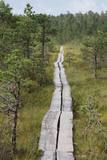 |
Ein 3,5 km langer Pfad quert den Viru Moos in Richtung Süd–Nord. Von einem Holzaussichtsturm eröffnet sich einen Blick auf eine typische Hochmoorlandschaft mit einigen Seen, Aushöhlungen und morastigen Stellen. |
|


