
| No | Name | Description |
|---|---|---|
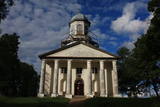 |
Tagadējais dievnams (iepriekšējie celti 1652. un 1776. g.) būvēts laikā no 1839. - 1842. g. Vidzemē pazīstamā lībiešu būvmeistara Mārča Sāruma (1799. –1859.) vadībā. Par prototipu tam izmantoja Pievolgas vācu koloniju baznīcu veidolu. Dievnama altārī atrodas Pītera Paula Rubensa gleznas “Kristus pie krusta” kopija (oriģināls – Minhenē), ko 1887. g. baznīcai uzdāvināja Nēķena muižas īpašniece. Baznīcas remonta laikā (1928. g.) atklāja piemiņas plāksnes 1. pasaules karā un Latvijas Brīvības cīņās kritušajiem. Blakus baznīcas atrodas viduslaiku kapsēta. Celtnes autors un būvdarbu virsuzraugs - H. fon Hagemeistars esot teicis, ka šis dievnams esot „vienīgā baznīca visā Vidzemē un varbūt arī pasaulē, kas uzcelta bez apreibināšanās”. |
|
 |
Located at Daugavas Street 58 in Skrīveri, this was the first home of the Andrejs Upītis (1877-1970). It was built in 1908, but the one that is there now was built on the foundations of the first one in 1921. The building houses a museum which features the life and work of the writer, including the writing his great novel “The Green Earth.” There is a garden around the building. In 1952, Upītis gifted the house and garden to the state. The museum offers tours and educational programmes. |
|
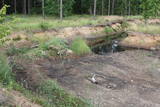 |
Nature restricted area has been established in old and overgrowing gravel pit and where rare species in Latvia - Natterjack toad (Bufo calamita) can be found. Natterjack toad needs open sand – gravel area therefore the population of it is decreasing once gravel pit is overgrowing by bushes. The population of this amphibian is depending on the activity of people in the area. There is very little chance to find Natterjack toad just by entering the restricted area, therefore please respect this area as especially sensitive.
|
|
 |
At Estonia's oldest and largest beverage producer, brewery A. Le Coq, visitors of the brewery museum are invited to get acquainted with the history of beer brewing and beer culture, modern beer production as well as taste the beer. More than 2000 exhibits, opportunity to taste beer and other delicacies in the tavern of museum. You can buy beer and snacks to go with it, as well as souvenirs in the small store of the museum. |
|
 2 days
|
Here you will learn about home-based manufacturers, farms, companies and others in Latgale that produce various dairy products such as milk, yogurt, cottage cheese, cheese, ice cream, etc. Start in Preiļi, which is known as Latvia’s cheese capital. The route passes along the Teiči nature reserve, with a viewing tower at the side of the road, also crossing Lubāna wetlands, which are of European importance for environmental protection. Drive on to Rēzekne (churches, a monument to Māra of Latgale, “Gors,” “Zeimuļš”, etc.). Nature lovers will love the Rāzna National Park with Lake Rāzna, Mākoņkalns hill and the master ceramicist Evalds Vasiļevskis. From Dagda, head to Aglona, which is a centre for Roman Catholic worshippers, and Lake Rušons before returning to your starting point. |
|
 |
The farm produces homemade wines made from natural raw materials that are grown locally or bought from nearby farmers – apples, rhubarb and black currants. Black currant spirits are also available. During a tour, you will learn about how the beverages are prepared, taste them, and purchase some for yourself at the farm’s little shop. |
|
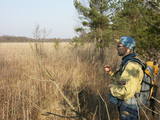 |
This lime swamp of grasses is in an area among dunes which floods from time to time, and it is an important location for many protected plants. The swamp is easily surveyed from the forested dunes which are on the south-eastern side of the swamp. |
|
 2 days
|
The legendary blue hills of Šlītere have been known since ancient days, when pirates lit false campfires that led ships to run aground near Cape Kolka. The shoreline in the Slītere National Park is known as the open-air geological museum of the Baltic Sea, because the ancient shores of the Baltic ice sea, Lake Ancylus, and dunes from Littorina Sea can be seen here. These offer a fine view of the history of the Baltic Sea. The territory was historically populated by the Liv people, and their fishing villages are a cultural environment of one of the smallest ethnic minorities in the world. The route between Kolka and Mazirbe goes down the old shore road that passes through Liv villages. The Slītere National Park has one of the greatest amounts of plants in Latvia, while Cape Kolka is one of the country’s most popular bird watching sites. Route information from Latvijas Lauku forums |
|
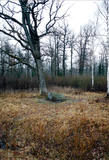 |
This territory was established to protect the lovely central section of the Neries River, local species, and Lithuania’s largest oak forest.
|
|
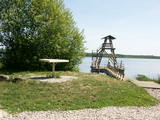 |
Viewing tower on pontoons, and there is a footpath to get to it. The tower offers a view of nearly all of Lake Sloka, all the way to Kauguri. Particularly visible is the northern part of the lake. There is also a sulphur spring. The site is good for bird-watching throughout the year, including the winter, because parts of the lake do not freeze over. |
|
 |
The statue of Virgin Mary, also called „the statue of Madonna” was
repeatedly erected in Lūznava Manor park in 1991.
|
|
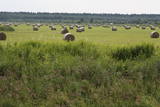 |
Open landscape area within farming lands on both banks of Uzava River about 10 km before it flows into the Baltic Sea. There is a good open view over the area from the Vendzava-Ziri road going through the nature park. Protection of migratory birds and corncrakes has been one of the main reasons for establishment of the nature park. Bird watching is possible from the road Vendzava-Ziri during migration period in spring and fall. There is no tourist infrastructure in the nature park.
|
|
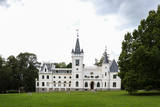 |
The castle was built during the first half of the 19th century in Tudor Neo-Gothic forms. The first owner of the castle was Baron Johann Gottlieb von Wolff. During the 1870s and 1880s it was rebuilt in the style of French Neo-Renaissance. The castle was burned down during the 1905 Revolution, but it was restored with certain elements of Art Nouveau forms. Tours are available of the interior of the building. |
|
 |
ZS "Jundas" Bauskas novada Vecsaules pagastā saimniecisko darbību uzsāka 2016. gadā. Audzē gaļas šķirņu krustojumu liellopus, tos nobarojot gaļas ražošanai. Strādā atbilstoši bioloģiskas saimniekošanas prasībām. |
|
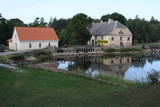 |
For the first time Vihula Manor is mentioned in 1501. The complex you can see now has been made after 1810. It was finished in 1880. Now here is an excellent hotel, SPA complex, a restaurant and more. Around the manor is a park. |
|
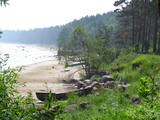 |
There are both sandy beaches with a good infrastructure and a rock beach in Roja. The rocky beach leads to a huge rock that is 2 m high and 12.5 m in diameter. The coastline is lovely with its scattered stones and its unhurried rhythm of time. At the place where the Silupīte River flows into the sea there are remnants of ancient wooden boats and iron nails. In 1939, Roja became the starting point for a closed zone, because the Soviet army and navy were sited there until 1993. The dunes at Krasta Street feature Soviet heritage, including a large cement wall from which border guards used to monitor the sea and catch those who violated the border. Behind the dunes was a base for border guards with everything they needed. Roja housed a Border Guard post and an air defence radio locator. (Source: Roja TIC) |
|
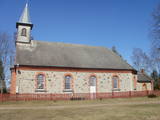 |
The Kaltene Lutheran Church dates back to 1567, when Duke Gotthard Kettler of Courland ordered the construction of new churches in Kurzeme. One of them was in Kaltene, and was known as the Church of St Catherine. In 1848, a clay church was built in place of the old wooden church. A sacristy was added in 1880, and the church was rebuilt and expanded in 1896. It suffered much damage during World War I because a Russian mine ship attacked it. The church was restored during the first half of the 1920s. The altar painting, “Christ and St Peter on the Sea” was painted in 1898 by M Pohl after a panting by R. Richter. The pulpit and organ date back to the 18th century and are cultural monuments of national importance. The organ was built by August Martin in 1843, and it was initially in a church in Gulbene. The instrument was brought to Kaltene in 1943 and is the oldest surviving instrument by Martin. The bell was manufactured in 2006 by the Liepājas Metalurgs company, and a new building for the congregation was built in 2012 and 2013. The first scenes of the feature film “Long Road to the Dunes” and the film “Forest of Bulrush” were filmed outside the gates of the church. Nearby is the Putniņi homestead. In 1921, Culture Minister Rainis visited the homestead. At that time there was a store there. The Germans burned down the homestead during World War II. (Source: Roja TIC) |
|
 |
The fisherman’s homestead that is alongside the Kolka Lutheran Church offers a look at how fish are smoked and prepared. You can taste the fish and purchase fish that were caught in the sea (mostly plaice). |
|
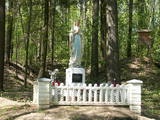 |
The castle hill of Milka is situated near Lake Sālaja and River Malta; 27m above the lake level. Local
businessman cleaned the hill and placed the statue of Mother of God there. It is a a symbol of Latgalian
strong faith into God and Virgin Mary.
|
|
 |
A family shop in Ikšķile that offers the produce of small Latvian producers and craftsmen. The store is a favourite, not only of the residents of Ikšķile and the surrounding area, but also for shoppers from Riga, Ķekava, Ogre and other cities. An online store is also available. |
|


