
| No | Name | Description |
|---|---|---|
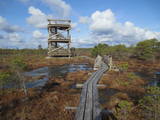 |
Atrodas 3,7 km garās laipu takas vidusdaļā. No torņa paveras viena no Latvijas izcilākajām augstā purva ezeriņu un lāmu kompleksa ainava. Tornis ir populāra saullēktu un ziemeļblāzmas fotografēšanas vieta. |
|
 |
A place in the centre of Tartu where one can enjoy small and light fish & chips style meals made from the products of Lake Peipus. The small shop combines Peipus' area dining experiences with modern cuisine, using only the best local products. Very popular choices are fish & chips made from pike perch fillet, juicy burgers, as well as wraps. |
|
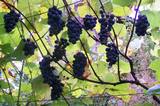 |
The visitors are offered the excursion around the wine garden and the story about different sorts of grapes and the secrets of wine-making. During the excursion the vistiors can learn about the traditions of growing grapes in Latvia, to see and taste the newest tendencies of grape selectioning,as well as receive advice on growing and tending grapes. It is also possible to try home-made wines and buy grapes saplings. |
|
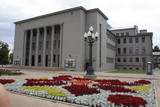 |
Found at Rīgas Street 22A, this impressive building was suggested by Latvian President Kārlis Ulmanis and built in 1936 and 1937 after a design by the architect Verners Vitands. It is seen as one of the most outstanding architectural monuments from the first period of Latvian independence, and it is said that it was once the most modern multifunctional building in all of Europe. The building now houses the Daugavpils Theatre, the Latgale Central Library, the Latvian Cultural Centre, the Latvian House, the US Information Centre, the Daugavpils Tourism Information Centre and other institutions. Unity Square is alongside the building, and beautiful compositions of flowers are nearby during the growing season. |
|
 |
In einem in der zweiten Hälfte des 19. Jh. errichteten Gebäude befindet sich eine Sammlung vom Limbažu-Museum und das Touristeninformationszentrum. Blick auf die Altstadt vom Turm (der glässerne Boden). |
|
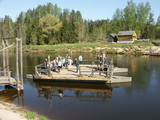 |
Ligatne history is inextricably linked to Ligatne paper mill. At the end 19th century and beginning of 20th century here was built houses, schools, maternity homes, hospitals, clubs, guest houses and other buildings for workers that have survived to the present. During the Soviet period Ligatne mill produced mainly school exercise books, which was sent to all the Soviet republics. Nowadays, the main raw material is recovered paper used for production of wrapping paper. Ligatne paper mill is the only one functioning Latvian company of this kind, and it can be explored with a local guide. Historic centre of Ligatne paper mill has been awarded the status of cultural monument. In the northern part of Ligatne - Gauja river bank the only functioning Gauja river ferry can be found and the only river ferry in the Baltic States, which is powered by river current. The ferry is vehicle of local scale. In the west of Ligatne, Ligatne nature trails are located; where close to natural environment conditions (the best object of this type in the Baltic States) lives red deer, roe deer, wild boar, fox and lynx. Within the territory of Ligatne nature trail a dense network of hiking trails and paved road - cycling route has been created, during the winter it becomes a cross-country ski track. A modern visitor centre is available here. East of Ligatne at Ligatne rehabilitation centre a unique place on the Europen scale can be found - a former Soviet secret bunker that was built as the main living and working place of Latvian senior military and civilian persons in case the nuclear or chemical weapons were used. Bunker was opened in 2003; therefore it remained intact to this day. On the way from Augsligatne to Ligatne go to see Vienkoci Park, where you can explore boats made of single wood peace by the creator of Park Richard Vidzicka, look at the different building models, sand home, and participate in themed activities. |
|
 |
The Old Town of Kandava is located around the old Market Square and dates back to 1881, after a fire in the town. The urban environment in Kandava is made up of farms with various buildings, closed yards, passageways and walls made of fieldstones. These can be seen in Talsu Street and Sabiles Street. Uncommon for Latvia is Lielā Street. At the foot of the Bruņinieku Castle Hill is a model of the Castle of the Livonian Order that was created in 2010. |
|
 |
„Zaļmuiža” (Green Manor) is notable because of its legendary past. The protector of peasants and poet Peter
Miglinīks (1850 – 1883) worked there as a clerk in the beginning of the 19th century. In 1784, the building belonged
to Frederick von Korf. The manor was bought by officer of Russian army Nikolaj Paulin von Rosenschild. Once
the manor had a large farm (800 ha): several cattle-sheds, fruit and wine cellars, alcohol brewery. Now there in
only a manor house and a barn. Till 1960s, the manor house was the centre of kolkhoz „Liesma”, later the club.
Now there is a smithy of a craftsman Jānis Ļubka. Guests are welcome to watch and try the metal processing.
|
|
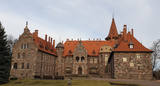 |
The Cesvaine Castle is one of Latvia’s most beautiful castles. Built in the style of Eclecticism, it is said to have been presented by its owner, Adolf von Wulff, to his wife. The castle was built between 1893 and 1896. On the banks of the Sūla River alongside the castle is the Cesvaine Park, including the afforested Cesvaine castle hill. The Cesvaine castle roof reconstruction is complete! Visitors may tour the castle accompanied by a Cesvaine Tourism Centre guide. Restoration of the castle interior will ccontinue throughout 2020. Periodic closure of the castle can be expected. Please phone in advance to arrange a visit T. +371 26172637. For more information visit www.cesvaine.lv |
|
 |
This museum was established in 1974, and it is one of the largest (194 ha) outdoor ethnographic museums in Europe, with 91,420 exhibits in all. The exhibition is made up of farms, villages and a small town to demonstrate the ancient architecture, culture and lives of Lithuanians, along with vegetables, fruits and flowers. |
|
 |
The farm produces tomatoes, cucumbers, red peppers, strawberries, apples, plums and cherries. The fruits and vegetables are available for purchase. |
|
 |
Just 20 minutes’ drive from Pärnu, in the old Tõstamaa forestry building, Amps & Lonks café offers travellers a little rest and pizza made from fresh local produce. Especially popular, is the pizza with home-reared beef and fresh salad. You can also order in advance. |
|
 |
The museum at Valdemāra Street 47 was opened in 1969 in the building of the maritime school that was opened in 1864 at the suggestion of Krišjānis Valdemārs. The school trained more than 1,000 sea captains and helmsmen. The exhibition at the museum relates to the operations of the school, as well as the building of sailing ships on the Vidzeme shoreline during the latter half of the 19th century and the early part of the 20th century. There is a collection of anchors, as well as the top of the Ainaži lighthouse, which was once washed away by the sea, but has been restored. |
|
|
|
Pie Melekiem sākas dabas lieguma teritorija. Meleku
krastmala būtiski mainījās 2005. g. orkāna laikā.
|
|
 |
The guesthouse is on the shore of the Ancient Amata River Valley, and it was built with natural materials – local dolomite blocks. It serves ecological foods, including potatoes grown in bio-humus, wild berries and mushrooms, and country treats and greens from the guesthouse’s own garden. Latvian cuisine: Baked and grilled trout, beefsteak, wild mushroom and chanterelle sauce. Special foods: A puffy Eglaine cake made of rural eggs, pecan cake with ice cream. |
|
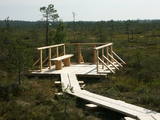 |
At the end of a wooden footpath in the Planči swamp is a viewing area and place for leisure. This is the place where you can enjoy landscapes of the high-type swamp and breathe the unusual air of the swamp. This is the only outdoor infrastructure object in Latvia with information posted in Braille. It is in the ZBR.
|
|
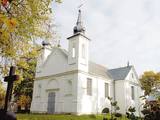 |
Blessed Our Lady’s Birth Roman Catholic Church of Kaunata
was rebuilt in 1850 by Zuzanna Druva after the wooden building was
burned down. The church has a fabric icon „St. Elizabeth is visited by Mary”.
|
|
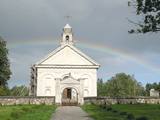 |
Divine Providence Catholic Church of Rikava (Baltini) was built in Doric style in 1929 by the donations
of landlord Alexander Riks. The church has icons „St. Antony” and „Jesus Christ appears to Mary
Magdalene”. Beside the church there is a cemetery and family vault of Riks.
|
|
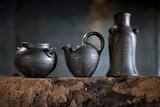 |
The potter uses the black (smoke) technique to create his artworks, and he uses clay from Latgale. He uses no industrial equipment in his work, and the kiln is fired with firewood. You can watch as he creates dishware on a foot-powered potter’s wheel and talks about the firing process. You can work with clay and purchase finished products. |
|
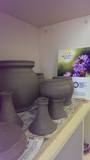 |
Found in the Alsunga Museum, the workshop has been open since 2009, showing people how various ceramics can be made from clay. Visitors can try their hand at the task or just watch as the clay is shaped, spun and, finally, glazed. |
|


