
| No | Name | Description |
|---|---|---|
 |
The Gauja National Park, established in 1973, was Latvia’s first national park, and it has a wealth of tradition in environmental protection and tourism. Indeed, the GNP is one of the most popular tourist destinations in Latvia. The main “artery” of the park is the ancient Gauja River valley, which was left behind when Ice Age glaciers receded. The valley is 95 kilometres long, with many tributaries that are also in deep ravines with massive sandstone cliffs from the Devonian period. The deepest part of the river valley is at Sigulda, where it is 85 metres deep. The territory has a great diversity of species – some 900 plant species in all. The Gauja is Latvia’s most popular river for water tourism, and many tourist accommodations are found along its shores. The Gauja National Park is one of the best-appointed protected territories in Latvia in terms of nature trails and tourism routes. Nature trails at Līgatne pass along paddocks of wild animals – the largest and most complete object of its kind in the Baltic States. The park also features cultural monuments of pan-Baltic importance – the Turaida Museum Reserve, the medieval old town of the city of Cēsis with its famous castle ruins and St John’s Church, the lake castle at Āraiši, etc. Visitors centres are found in Sigulda, along the Līgatne nature trails, and at the Zvārte rock. The administration of the GNP is building a new and modern visitors centre in Sigulda.
|
|
 |
Atrodas mežā, netālu no Kaltenes. Labiekārtota (laipas, kāpnes, informācijas stendi) taka, kas iepazīstina ar Latvijai samērā neparastu dabas pieminekli (aizsargājams) – Kaltenes kalvām, kas ir lieli, līdztekus Rīgas jūras līča krasta līnijai orientēti laukakmeņu krāvumi. Uzskata, ka tos veidojuši Baltijas ledus ezera ūdeņi un ledi. Garums – ap 1,5 km. |
|
|
|
Very expressive form of relief with wide look over the neighborhood. On its peak there's ruins of the castle of bishop Hermanis which was built in 1224. The world's oldest firearm was found here. |
|
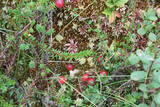 |
The territory has been established for protection of the bog and its habitat species. It is not appropriate for visits. North-east part of the bog can be slightly seen from the road Neveja – Lapmezciems on winter season. Further on Cirste direction is located on of most impressive oak trees in Latvia – Rigzemju ozols.
|
|
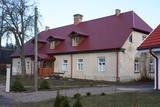 |
The estate owned by the dynasty of Baron Osten-Zaken was rebuilt in 1856 and 1857, because the old estate was sacked during the Crimean War (1853-1856). At the beginning of the war, British warships bombarded Latvia's shoreline and ships with the purpose of scaring the Russian tsar. Some of the gunfire hit Kolka, which was part of the Russian Empire at that time. After the estate was destroyed, the so-called White House was built there with a series of ancillary buildings. A mantel chimney was installed on the second floor, and it was used to smoke wild game (the chimney is still there). The estate belonged to the aristocrats until 1919, when its last owner, Christian von Osten-Zaken, was shot in Tukums. An elementary school, known as the Kolka School, was installed in the White House in 1929. It remained open until 1961, when a new school was built. Crafts lessons were offered at the building until 1989, at which time it was known as the Old School or the Small School. In 1991, the Old School was taken over by the Faculty of Biology of the University of Latvia, and it has been used for summer internships for students ever since 1994. |
|
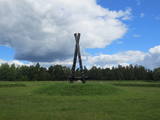 |
Not far from the Rīga ring road on the Right Bank of the Daugava is a monument designed by the sculptor Ģirts Burvis in 1994, which is dedicated to the Livs of the Daugava region and their Mārtiņsala leader, Ako, who led a battle against the Holy Crusades in 2016. Around the monument is a large area for leisure and perambulations. This is one of the loveliest locations in the lower reaches of the river. A bit further along are information stands about the history of the banks of the river before the construction of the Rīga hydroelectric power plant. |
|
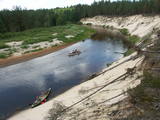 |
This comparatively large territory is found to the South of the Irbe River and Stende River, and it is unique with more or less virginal forests and dunes. The Irbe River has a system of ancient tributaries, and the Dižpurvs swamp is parallel to the shoreline. The Irbe has become a popular river for water tourism in recent years, but the tourist infrastructure on its banks remains insufficient. Territory has good road connections and has potential for nature education activities. |
|
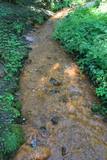 |
The Saltupju sacred stream is 1.3 km to the Northwest of the centre of Aknīste, near the small valley of the Dienvidsusēja River. The stream has been known as a source for medical treatments since antiquity. It is said that streams which flow to the East always have medicinal water, particularly on Easter morning for those who rinse their eyes in it. The water contains iron compounds, which is seen in the brown sediment (the result of iron bacteria). Alongside the stream is a stone with a small indentation, and it is thought to have been a cult stone long ago. A sacred linden tree grows at the edge of the valley. The stream can be seen with good reason as one of the most outstanding streams in all of Latvia. |
|
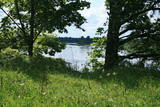 |
This location is important in terms of Latvia’s history, because during the 12th and 13th century, this was the administrative and spiritual centre of the Lettigalian tribe, with the ruler of Jersika being Visvaldis. The castle stood on the shore of the Daugava at a height of 18 m, and this was a mighty castle hill. The flat part of the hill measured 100 x 75 m, and it was surrounded by a barrier and a defensive wall made of logs. People entered the castle via guarded gates beyond which there were residential and household buildings, as well as a small church. Archaeologists have found the remnants of log buildings, as well as many antiquities from the 10th to the 13th century that speak to extensive trade relations with other parts of Europe, including ancient Russia. In 1209, the forces of Bishop Albert fooled the people in the castle and sacked it and the ancient town that was around it. Visvaldis’ family was taken hostage, and so the Lettigalian ruler was forced to become a vassal of the bishop. The castle hill is privately owned, so please contact the owner before planning a visit. |
|
 |
Višķi is a populated area that started as the Višķi Estate and received the status of a village in the 19th century. An agricultural school was opened there in 1921, followed by a one-year homemaking school in 1926. During World War II, in 1943, the Višķi Gardening and Beekeeping School was established. After the war, the Višķi Gardening (later Agricultural) Technical School was opened. Because of these educational activities, Višķi ir not similar to a typical countryside village. There is a wide area of lovely plants, including a dendrological park (est. 1936) and apple orchards. A local guide will tell you all about the park, but you can also stroll through the village individually. |
|
 |
Located in the Mežotne Castle, the saloon offers fine and tasty dishes and beverages. Tours of the ornate castle are available, and the location has one of the loveliest English-style landscape parks in Latvia. Latvian cuisine: Potato pancakes, rolled marinated herring, trout with potatoes in their jackets, blood sausage with lingonberry sauce, grey peas with bacon, stacked rye bread with cranberry jam and whipped cream. Special foods: “Bauska Thaler” – pork in the form of a thaler with a sauce made with Bauska beer. |
|
 3 days
|
Take a train from Riga to Cēsis and stay in the very heart of this chaming town. It is one of the most attractive Latvian provincial towns with a medieval Livonian Order Castle, a New Castle containing an excellent regional history museum and creative workshops, a charming Old Town with St. John's Church and several cosy cafes and restaurants with live music at weekends. |
|
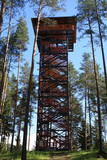 |
Atrodas 6,5 km ziemeļos no Cirgaļiem, P 23 ceļa malā, Ziemeļgaujas aizsargājamo ainavu apvidū. Torni vērts apmeklēt pavasara laikā, kad no tā redzamas applūdušas Gaujas palienes. |
|
 |
The Vijciems Hunting Castle building houses an elegant design guest house Bergervilla. Each room has an individually designed design, historic furniture and a special atmosphere. There are 4 rooms available - a standard room, a two-room suite and two deluxe rooms with a private balcony and a bathtub. Each room is given the name of a forest beast or bird - Owl, Mednis, Deer and Elk. There is also a living room and library for guests to relax in, as well as a fully equipped kitchen for cooking. Free Wi-Fi and parking are available. |
|
 |
Located on the bank of the Gauja River in the northern part of Līgatne is the only functioning crossing point on the Gauja River and the only one in the Baltic States which is powered by the river itself. This is a public transportation resource of local importance. |
|
 |
Die Südspitze der Insel Saaremaa – eine aus Geröll in der Irbenstraße langgestreckte Landzunge. Militärbefestigungen, Leuchtturm (1960), Vogelbeobachtungsort. |
|
 |
Similar as Alsungas mezi (Alsunga forests) – is not intended and appropriate for visits. A narrow path of the restricted area can be seen from the gravel road – Saka-Apriki. Nature restricted area established mainly for protection of Erica tetralix (often called "cross-leaved heath") and it is one of the most important growing places.
|
|
 |
This is Lithuania’s largest mossy swamp, and the Čepkeliu Nature Reserve was established to protect it. Before visiting the swamp, you must register at the Dzūkijos National Park’s visitor centre (Marcinkonys, Šilagėlių gatve 11). |
|
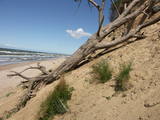 |
Ancient legends say that ship sank in the sea near the old cemetery during a storm and during a worship service. The pastor and members of the congregation volunteered to use a rowboat to save the crew of the ship. Some of the men were rescued, while others were washed ashore. In honour of this tragic, but also happy solution, the captain called the place Feliksberga, or the Lucky Shore. Later it became known as Pilsberga, and it was renamed Jūrkalne only in 1925. |
|
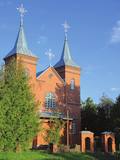 |
Holy Trinity Roman Catholic Church of Stoļerova. The construction
works of the church were finished in 1999 by the support of dean Butāns. The building is slightly larger than
the previous one; the newest (restored) church in Rēzekne district. The church has a specific icon of Our
Lady that was transferred from the chapel of Rozenmuiža.
|
|


