
| No | Name | Description |
|---|---|---|
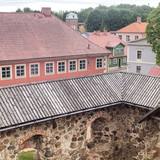 |
It is believed that at the Kezberkalnins of Limbazi has been Lemisele castle of Metsepole Liv district. It is also found in the reports that merchants travelled to this place from the sea by Svētupe and Dunezers until the 16th century. In 1223 Bishop Albert built a stone castle in Limbazi. Like Valmiera, Limbazi became the member of Hanseatic League. At the beginning of 16th century it economic role declined significantly since Svētupe and Dunezers became unusable for shipping. Between the 16th and 18th centuries, the town and its people suffered from wars, diseases and fires. As a result, the population reached its utmost fall - eight people. In the turn of 19th and 20th century and in the beginning of 20th century the economic life of the town was renewed. |
|
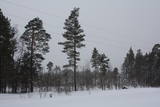 |
Between Saunags and Vaide on the road to Kolka, you will see an area on the left (South) side of the road where there was a massive forest fire in 1992 which burned approximately 3,300 hectares of forest. Biologists use the area to study the regeneration of the forest. There were extensive and destructive fires here during the early 20th century, as well. Swedish scientists say that there have been at least 15 fires in the forests of Šlītere over the last several centuries. The burned area is in a nature reserve and can only be viewed from the road. |
|
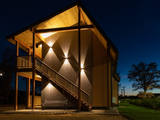 |
Bestes Apartments is a new guest house that can accommodate 45 guests at a time (+ 10 extra beds). The guest house was built and designed in the Latvian style (a wooden building made here in Mūrmuiža), beds made in Latvia, bed linen made in Latvia were used. |
|
 |
The restaurant-cafe Moka is situated in Estonia, in the city of Tartu, not far from Tartu university and offers a wide variety of foods. |
|
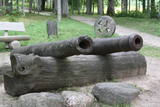 |
Established in 1900 at the place where the Pērse River flows into the Daugava (now the reservoir of the Pļaviņas hydroelectric power plant), the park offers a look at 17th century Swedish cannons and monuments from Medieval graves. Next to the high school in the park is a restored fountain, “Head of a Faun,” which was near the legendary Pērse waterfall during the 1930s. The waterfall is now underwater, but its location is indicated by a stone sculpture, “Girl of Pērse,” which was created by the sculptor Juris Zihmanis. A path leads to an 11 metre high wooden sculpture, “For Eternity,” by the sculptor Ģirts Burvis, and another sculpture, “Little Owl,” which is the work of the Rurāns brothers, both of whom are sculptors of wooden sculptures.
|
|
 |
Das im 18. – 19. Jh entstandene Ensemble von Gutshofsgebäuden mit Museum Audru und Spiritusfabrik. |
|
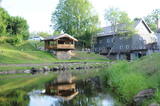 |
An old farm near the river, where water mills have been operating since 1851. |
|
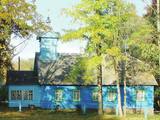 |
Štikāni Old-Believers Prayer House. The construction works of the church were held in 40s of the 20
th century on the site of the previous church built by brothers Rogozini. You should see Gospel (the protected
art object).
|
|
|
|
Bērzes upes labajā krastā, vietā, kur tagad paceļas Dobeles pilsdrupas, jau 1. gadu tūkstotī p. m. ē. atradās zemgaļu apmetne un vēlāk – koka pils. Gandrīz simts gadus pils izturēja vairākus krustnešu uzbrukumus un aplenkumus, un tikai 1289. g., kad vācieši bija pilnībā izpostījuši apvidu un tālāka pretošanās kļuva bezcerīga, zemgaļi paši nodedzināja savu koka pili un neuzvarēti aizgāja uz Lietuvu. 700 gadus vēlāk, 1989. gadā, godinot zemgaļu cilšu piemiņu, bijušās senpilsētas vietā tika atklāta piemiņas zīme, ko veidojis mākslinieks Mārtiņš Zaurs. Akmenī iecirsts teksts: “Zini, no šīs vietas pirms 700 gadiem zemgaļi aizgāja lepni un brīvi”, kā arī dzejnieka Viļa Plūdoņa vārdi : “Mēs svešā malā ejam, bet sirds mums paliek te”. |
|
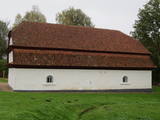 |
In the barn of Padure manor (the only one three-storey barn in Latvia built in the empire style) the groups of tourists are offered kocha (a substantial pearl barley porridge with onions and meat), differents soups (fish, sorrel), dumplings, cheese and differents sweet dishes. The tasting of home-made wine. For those interested, the owner will tell about yearly traditions, as well as the barn’s history. Latvian cuisine: Fish and sorrel soup, sweet and savoury dumplings, pork ribs, cheeses, desserts, homemade wine. Special foods: A hearty pearl barley porridge with onions and meat. |
|
 |
This farm has 36 ha of land and is near Latvia’s border with Belarus. It raises goats and obtains some 10 tonnes of milk from them each year. The milk is processed at the farm, which offers cottage cheese, cream, various kinds of cheese, homemade ice cream and meat products. Tastings are offered, and visitors can help to do the work at the farm. The farm is part of the Latgale network of culinary heritage and is a biological farm. |
|
 3 days
|
Here you will learn about home-based manufacturers, farms, companies and others in northern Vidzeme that produce various dairy products such as milk, yogurt, cottage cheese, cheese, ice cream, etc. You’ll start out in Cēsis with its Medieval old town, castle ruins, St John’s Lutheran Church and other destinations. Wind your way through the Gauja National Park (Ungurmuiža, Lake Ungurs, the Medieval castle and church at Straupe). You’ll hit the seashore at Saulkrasti and then drive along it to Tūja, where you will turn inland again. In Limbaži you will find Medieval castle ruins, a monument to the great folklorist Krišjānis Barons and other objects. Drive on to Valmiera (St Simon’s Church, castle ruins, a museum, Emotion Park, etc.), Rūjiena and Naukšēni (the Naukšēni Estate). Along the “Northern Pathway” you will reach Kārķi and then Smiltene and legendary Rauna (the Raunas Staburags cliff) before returning to your starting point. |
|
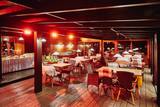 |
The restaurant is at the edge of the Vidzeme Highway (A2). It is a lovely log building with a straw roof and an antique interior. Dishes are based on ancient traditions merged with the requirements of modern clients. Latvian cuisine: Cold soup, dumpling soup, grey peas with bacon, wheat grain porridge, lampreys in mustard sauce, pike-perch grilled on coals, roast pig’s ear, roast pork leg, chicken livers in a creamy sauce, stacked rye bread, cottage cheese dessert with cranberry sauce. |
|
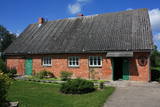 |
The Aknīste Regional Research Museum is at the corner of Skolas and Miera streets in Aknīste. It is another location which will very much help you to learn about the culture and history of the Selonian region. The museum was established in 1998 and featured antiquities from the Iron Age and Bronze Age, as well as objects which speak to distinguished people from the region and Selonian culture. It is worth looking at the collection of ancient Selonian dishware. |
|
|
|
Only indirect evidence of the former tank base that was here is still available (see the story).
|
|
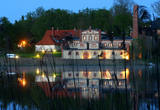 |
The renovated historic distillery at Mooste Manor (1909) is home to the Estonian Photo Tourism Centre. The guesthouse on the second floor of Mooste Distillery offers cosy rooms with all modern conveniences. |
|
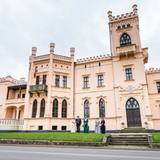 |
The castle was commissioned by Baron Alexander von Fittinghof and built between 1859 and 1863 in the late Tudor Neo-Gothic style. It is one of the most important monuments to this style in Latvia and has an ornate limestone façade. The 7th Sigulda Infantry Brigade was housed in the castle from 1921 until 1940. Today it is home to the Alūksne Museum with a permanent exhibition and an “environmental labyrinth.” One of the most unusual exhibits is a set of fluorescent minerals that can be viewed under lights with various spectrums. |
|
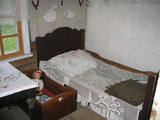 |
The main building of the museum features an early 19th C. threshing barn with a dirt floor, the living quarters were added in the late 19th C. The museum also exhibits a smoke sauna, summer kitchen, granary, cellar, coach house and a dining house (formerly a cattle shed). All buildings have a display of tools and everyday commodities, traditional farm food can be booked in advance and handicraft workshops are available. |
|
|
|
Līdz 40m augsta ar mežu apaugusi Gaujas labā pamatkrasta nogāze ar vairākiem smilšakmens atsegumiem. Viens no tiem atrodas nogāzes lejasdaļā un veido 7m platu 5m dziļu nišu. Otrā krastā – vairākus metrus augstais Leimaņu iezis. Abi atsegumi atrodas aiz Amatas ietekas.
|
|
 |
"Ziedlejas" offers sauna treatments and events in the contemporary design Glass Sauna, Smīma Spruce Smoke Sauna and Black Sauna, which is located in an unspoilt corner of the forest. The ritual sauna treatment includes heating, herbal compresses, herbal scrub, big beating, swimming in the pond, massage with healing oil and honey, vibrating with sound, tea, home-baked bread. The sauna treatment lasts four to five hours and is led by a sauna master. Various master classes are possible in connection with sauna rituals and the use of plants in healing and beauty care and the preparation of appropriate preparations. Bicycle rental is available, which includes access to the Ziedleju xc / enduro trails, bicycle training and bicycle guide services. It is also possible to organize and lead team building events, as well as team communication trainings. |
|


