
| No | Name | Description |
|---|---|---|
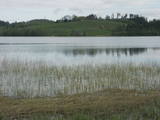 |
This nature park was established to protect the Burzava hillocks, Lake Adamova (a eutrophic lake), and the habitats and species that are found along the lake’s shores – bats included. The loveliest views of the area can be viewed from the hillocks that are on the northern shore of the lake. There are tourist accommodations on the shores of Lake Adamova where tourists can spend the night. |
|
 |
In the workshop you can see how wool becomes yarn using old techniques and how knitted and woven items are made today. You can try your hand at carding wool, spinning yarn and weaving a rag rug on looms. |
|
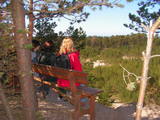 |
One of the highest dunes in Latvia, located between Bernāti and Jūrmalciems villages. It is 37m high and offers a magnificent view of the sea and natural pine forests. The highest dunes in Latvia stand to the South of Jūrmalciems village: the Pūsēnu hill, the Ķupu hill, the Mietragkalns or Tiesas hill, the Pāļu hill, the Garais hill, the Ātrais hill, the Lāvas hill. The Pūsēnu dune is the highest of these dunes which are all called hills by the local people. The Pūsēnu hill developed between 1785 to 1835 when shifting sand became extremely dangerous. Several homesteads were buried in sand, among them „Pūsēni”, where a forester’s family lived. The family is said to have moved to Bārta. The dune was named after the buried homestead. Jēkabs Janševskis, a Latvian writer, wrote in his book „Nīca”: “In olden times, large pine trees were growing in the dunes on the coast of Nīca and they stood steady and firm. But i Swedish times (around 1650), the Swedes built a large kiln for charcoal and tar. Pine wood and stumps provided an excellent material for this. Once a big fire rose, and the charcoal kiln burned down as well as the whole pine forest. The remaining stumps and bare trunks in the vast burnout could not hold the storm-driven sand; it flew further and further burying not only the burned-out forest, but also the nearest fields. In wintertime, when the vast, low marshy grasslands were covered with ice, jets of sand drifted further over its surface, and soon most of the grasslands and large meadows turned into sandy heath-land and dunes.” To reconstruct Liepāja, severely damaged during WWII, a silicate brick factory was built in the town. The main raw material was white sand and it was taken from the Bernātu forest. In the 1960-ies they started to dig off the Green Dune and the White Dune, later also the Pūsēnu hill. The excavators used to work day and night, in three shifts. The work stopped at around 1980, as there was no more sand suitable for production of brick. A trail is set up to facilitate walking in the Pūsēnu Dune in the Bernātu Nature Park. |
|
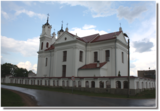 |
The Dviete Catholic Church is in the centre of the small village of Dviete. The white church can be seen from a distance. The first wooden church was built here in 1775 by the owner of the local estate, Count J.K. Wischling. Later the church was dismantled and brought the Zarinki cemetery. The Neo-Baroque Catholic church that is seen today has two towers, and its construction was financed by Count Kazimir Plater-Sieberg. The church was destroyed during World War I, and until it was rebuilt and consecrated, the granary of the Dviete Estate magazine, with its ridged roof, was used as a prayer house. It is on the side of the Dviete-Bebrene road and has recently been restored. In 1940, a stone fence was installed around the church with a tiled roof, and a building for the congregation was built in the 1970s. The church features a particularly ornate sacral Baroque interior, which is seen as the most ornate interior of its type in the former Daugavpils District. |
|
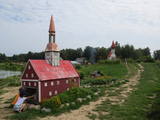 |
There are attractive and miniature structures and pastures here for 65 different types of rabbits. Children can look at the bunnies and form contacts with other animals such as goats and sheep. |
|
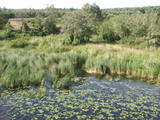 |
This is a territory which regularly floods when the Lielupe River crosses its banks. These are flood-land meadows of importance to birds. The area can be surveyed from the Rīga-Liepāja highway and the Kalnciems road which runs along it. |
|
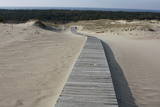 |
This is the only place in the Baltic States where there is such a vast territory of open-air sand dunes which still change the local terrain very actively because of the wind. The only Sea Museum and Dolphinarium in the Baltic States can be found here.
|
|
 |
The farm produces dried pork blood sausage, and other meat products. You can take a tour and purchase the products. |
|
 |
The saloon is in the restored complex of the Smuku Estate (16th century). During the summer, meals are served on the terrace of the “Zirgu stallis” guesthouse, while during the winter, they are served alongside the fireplace in the bar. Latvian cuisine: Milk dumpling soup with dried bacon (Kurzeme lunch), herring baked on coals, stacked rye bread with whipped cream, “countryside milk bun” (fresh milk, sugar, cinnamon, berry sauce), a cheesy potato with honey-roasted pork. |
|
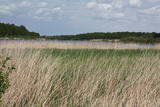 |
The main “treasure” in this restricted area is the shallow and eutrophic lake, which is home to many important birds. The lake and its flood-land meadows also feature many different plants. The Svētupe River flows from the northern part of the lake.
|
|
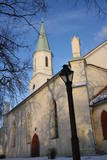 |
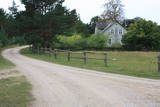
The first wooden church was built here in 1252, and the brick church was built in 1665. It burned down and was restored in 1672, but it was rebuilt in later years. There are important artistic monuments in the interior of the church – the altar, the pulpit and the painted organ. Legendary Duke Jacob Kettler of Courland (1610-1682) was baptised in the church and married Princess Charlotte Louise from Brandenburg in it. During the Soviet era, the church housed a museum and a concert hall. According to legend, the name of the church is based on a woman called Catherine, who donated funds to build the church, was subjected to lies, tortured and then proclaimed as a saint. Above the side entrance is a medallion of a woman with a crown of thorns, torture equipment and a sword in her hand. Elements of this story can also be seen in the herald of Kuldīga. The steeple of the church offers a good look at the roofs of the ancient part of the city. |
|
 |
This is an ancient populated area. There were 50 homesteads here during the 1930s, with only ten remaining in 1990. The Livonian scholar and entomologist Kārlis Princis (1893-1978) was born in Oviši. In 1944, he emigrated to Sweden. The Oviši lighthouse (1814) is 38 metres high and is the oldest functioning lighthouse in Latvia. There are lovely views from the top of the lighthouse. The building in which employees of the lighthouse used to live was erected in 1905 and has been preserved. A narrow-gauge train station was in the building at one time. The Oviši Lighthouse Museum is nearby, as is the metal Tree of Austra. Opposite Cape Oviši is a great place for bird watching. |
|
 |
Innovative and delicious hemp and buckwheat products - tasty and good for the digestive system. |
|
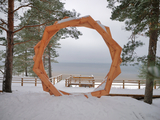 |
A new section of the walking trail along the sea has been built and an environmental object "Sunset watcher" has been created in Saulkrasti near the White Dune and Sunset Trail. It is a photo object where the newlyweds and every guest of Saulkrasti can capture memories in the symbol of the sun, which is so characteristic of Saulkrasti. |
|
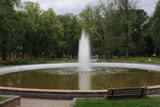 |
Mūsdienās redzamais parks starp Rīgas un Parādes ielu tapa vairāk nekā pirms 100 gadiem un tā patrons bija pilsētas pirmais mērs - Pāvels Dubrovins (1839. – 1890.). Pilsētas „zaļā saliņa”, kuras centrā atrodas strūklaka, ir iecienīta atpūtas un pastaigu vieta. Atraktīvs ir no bronzas veidotais piemineklis (2007. g., tēlnieks A. Tartinovs),kas veltīts pilsētas pirmajam mēram. |
|
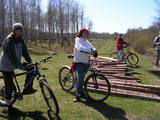 |
The nature trail was built in 2003 supported by the WWF, the Latvian Environment Protection Fund, the International volunteering organization supporting conservation initiatives in the United Kingdom (BTCV) involving volunteers from Nīca and Rucava municipal parishes. The trail exposes the surrounding landscapes and related biotopes – dunes, forest, grasslands and bog, as well as bird and animal species found there. On the trail, there is a bird watching tower and two birdwatcher hides. You can see the rivers Paurupe and Līgupe, beaver activity areas, grasslands, black alder forest, spruce forest, floodland, wild horses, aurochs, the Šķilu lime tree, the Holy Grove, the Ezerskolas sacrificial stone, the Pape ornithological field station, the Papes polder grasslands and the Pape lighthouse. There are resting places en route. The trail leads through the historical Ķoņu village with the traditional coastal fishing village architecture of buildings and yards. The trail is 9 km (5 km one way by a gravel road, returning 4km along the coastline). The trail is in the Pape nature park
|
|
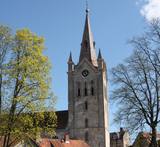 |
Gebaut am Ende des 13. Jh. als eine dreischiffige Basilika im romanischen Stil mit gotischen Elementen. 1853 wurde der 65 m hohe Turm aufgebaut (Aussichtsplatz). In der Kirche befinden sich die Grabsteine der livonischen Bischöfe, Kanzel (1748), Altar aus Eichenholz (1858), Altarbild (1862), Buntglasfenster und eine der besten Orgeln Lettlands (1907). |
|
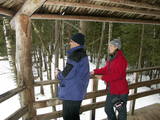 |
Lots of wild animals can be found in vast paddocks along the ancient Gauja river valley and its small tributaries – areas in which living conditions are as close to natural circumstances as possible. Here the visitor can find, if lucky, reindeer, deer, wild boars, bears, foxes, lynx, various kinds of birds, as well as aurochs. There is a dense network of pathways in the park, including lots of information. There is also a route for drivers and bicyclists. During the winter, it is used for distance skiing. There is also a visitors’ centre.
|
|
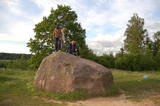 |
The rock is not too big (2.1 m high, 15 m in circumference), but since the early 20th century it has been a popular tourist destination. There is a lovely view of the
|
|
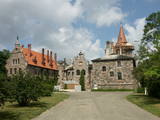 |
Cesvaine was first mentioned in written sources in 1209. For each traveller in Latvia, the town is associated with the family of Baron Woolf, who bought the Cesvaine estate in 1815. Cesvaine experienced the economic boom after establishment of Plavinas Gulbene railway. Town suffered significantly during the World War II. At the end of 2002, the Cesvaine Castle was struck by the tragedy - a fire, which damaged most of the castle. Cesvaine Castle is "recovering" by means of large public, state and local government support and still keeps the status as a significant tourism attraction in a scale of Vidzeme and Latvia. |
|


