
| No | Name | Description |
|---|---|---|
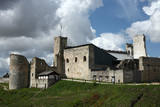 |
The Castle is a theme park depicting life of the 16th C stronghold where families can spend an exciting day as soldiers and noble knights. There is horse riding, bow and crossbow shooting, you can practise carpentry and blacksmith skills, mint coins, make gold and gunpowder. Facilities include a wine cellar, torture chamber, death room, medieval brothel, astronomy room, barber and alchemist workshops. The Schenkenberg Tavern menu has dishes cooked to medieval recipes. |
|
 |
Atrodas Vecpiebalgas dienviddaļā pie Inešu ceļa. No sarkanajiem ķieģeļiem būvētā ēka uzcelta 1887. g. par vietējo iedzīvotāju saziedotajiem līdzekļiem. Vairāk nekā simts gadus šī ir vieta, kur vecpiebaldzēni pulcējas uz nozīmīgiem notikumiem, svētkiem, uzturot novada kultūras mantojumu. Celtni uzskata par vienu no spilgtākajiem Latvijas lauku arhitektūras pieminekļiem. Tai blakus uzstādīts piemineklis brāļiem Kaudzītēm. |
|
 |
This is a small area with lots of different terrains – high hillocks, distinct river valleys, thermal streams, continental dunes, etc.
|
|
 1 day
|
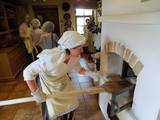
Since ancient times bread has been our staple food, and formed part of breakfast, lunch and our evening meal. We bake bread from rye, wheat, buckwheat and barley. Both fine-ground and wholemeal flour is used. Bread baking is one of the most honoured traditional skills in Latvia. Caunītes country house keeps Latvian traditions alive and demonstrates them to visitors. The house is designed and decorated in the traditional Latvian style and exudes an authentic ambience while having modern facilities. Under the guidance of the hostess, visitors will bake their own loaf of sweet-and-sour bread in a wood-fired bread oven. In Latvian families it was traditionally one of the main duties of the lady of the house to bake a week’s supply of bread for the whole family every Saturday morning. Every woman was proud of her own unique recipe and passed it down to her daughters and granddaughters through the generations. There are many traditional beliefs, sayings and riddles linked with bread in Latvian folklore. Today, there is great interest in the old recipes, bread-baking methods and the use of organic ingredients as many families are opting for a healthy lifestyle. |
|
 |
Kuģīša piestātne atrodas Ostas ielas malā, kur tai piekļaujas Tirgus iela. „Hercogs Jēkabs” ekskursantus izvizina 45 minūšu garā braucienā (no maija – oktobrim) pa Ventas grīvu, piedāvājot aplūkot Ventspils ostas un vecpilsētas ainavas no citiem skatu punktiem. |
|
 |
The "Stender's" bar is situated in the centre of the city of Kuldiga at the start of Liepājas Street, which is the main pedestrian and biking thoroughfare in Kuldīga. The two-story wood building was once a granary and is of architectural importance. The bar is situated on the second floor of the building, with the lowest door jambs in Kuldiga and wooden shears in the bar. Latvian cuisine: Farmer’s breakfast, oatmeal, cold kefir soup, sorrel, cucumber and bean soup, beef in onion sauce, hunter’s sausages, potato pancakes, sweet pancakes with lingonberry sauce. |
|
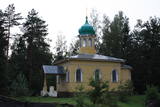 |
Со стороны шоссе Рига – Даугавпилс (А6) (напротив кафе «Бордертаун») стоит необычный (построенный из складывающихся конструкций) храм, который изготовлен в Одессе в 1866 году. Церковь служила передвижной церковью царской армии и стоит на этом месте с 1904 года. Раньше (с 1886 г.) она находилась в Даугавпилсе. При храме построен деревянный дом-молельня, который открыт целые сутки. |
|
 4 days
|
The route leads through beautiful flower gardens of Kurzeme and Žemaitija. The largest in Latvia collection of Dwarf Bearded Iris is found in Kandava. Mierkalni is the largest daylily garden in Eastern Europe, with more than 1000 varieties. The owner also produces fruit and berry wines. In the Talsi Hillocks Nature Park there is the Kurzemnieki apple growing and processing apples (dried apples, apple chips, juices). It also grows Roman snails. The Upmaļi environmental and health farm produces teas, herbs, plant oils, special balms, cosmetics, plant-based soaps, etc., under the brand name AnnA Bermans. Latvia’s oldest magnolia, 50 years old, is found at Sauleskalni arboretum. Over 100 varieties of peonia are grown in Ziedoņi peony garden. The owners of Maras Manor offer stories of historical German manors in the area. Milk Estate Berghof houses a milk museum. Exotics flower and tree cultivars are found in Māra Lindes dendrological gardens. Turaidas farm produces herbal teas and sacks thereof as souvenirs or gifts, using lemon balm, raspberry, tansy, alchemilla, Plantago major and linden. In Nīca village, 7 decorative gardens maintaining the local gardening tradition are open for visitors. Rucava arboretum displays a collection of magnolias. The largest Japanese garden in Europe (16 ha) is a home to collection of traditional aromatic plants and vegetables. Palanga Manor housing the Amber Museum and Birutė Park is one of the best-preserved manor complexes in Lithuania. Kretinga Manor Park is one of the oldest surviving 16th–18th century manor parks in Lithuania. Klaipėda University Botanical Garden has a coastal ethnographic garden with flower arrangements characteristic of this area. Klaipeda, the most popular seaside resort town in Lithuania. The Sea Museum and Dolphinarium are among the most famous attractions there. Šilutė Manor has two parks – an English landscape park with walking paths and the forest park known as Varnamiškis, or “Crows’ Forest”. Pakalnė is a unique traditional fisherman’s homestead with garden plants typical of the Lithuania Minor region. |
|
 |
The saloon is on the edge of the Rīga-Daugavpils road (A6), works with local fishermen, and grows herbs and greens in its own garden. Latvian cuisine: Cold soup, sorrel soup, chanterelle, soup, potato pancakes, filet of Daugava catfish, bream or pike-perch. |
|
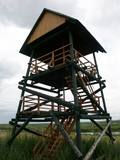 |
The tower is on the western shore of the lake, next to the dam and the Zvidze canal. From here you will see the overgrowth north-western part of the lake, Akmeņsala Island, and a wide area of open water. The third is on the southern shore of the lake, by the dam and the Īdeņa canal. Here you will find typical views of wetlands – areas of reeds, shrubbery, wet meadows and the overgrown lake. |
|
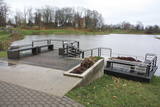 |
Gar Grobiņas ūdenskrātuvi (Ālandes labais krasts) izveidota mūsdienīga un labiekārtota pastaigu un atpūtas vieta - promenāde, uz kuras izvietotas plāksnes ar Zentas Mauriņas un Jāņa Raiņa citātiem. No promenādes paveras labi skatu punkti uz Skābaržkalnu un Grobiņas pilsdrupām. Grobiņas ūdenskrātuves sašaurinājumā pāri Ālandei ved neliels tiltiņš, kas ir bijušā Liepājas – Aizputes šaursliežu dzelzceļa tilta ferma. |
|
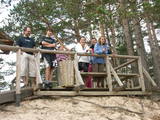 |
The trail climbs up and down along the bluffs of lower River Pilsupe and reveals a fascinating sight of three white dune exposures (the largest is called the White Dune). The dune range has formed in the period of the Littorina Sea several thousands of years ago. The time required to walk the trail is ~0.3 h. Evidence of Stone Age settlements have been found in the vicinity. |
|
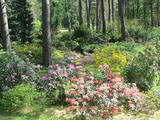 |
This arboretum was established in 1996, when dendrologists Raimonds Cinovskis and Ināra Bondare joined with the local government in Rucava in experimenting with plants on the Rucava castle hill. The first plants were planted in 1998, and ever since then the collection has been expanded in the town centre and outside the Rucava Elementary School. Each year new and exotic plants are brought in from all around the world. A traditional garden festival is held each year in May, when rhododendrons and magnolias are in full bloom. |
|
 2 days
|
Here you will learn about home-based manufacturers, farms, companies and others in southern Vidzeme that produce various dairy products such as milk, yogurt, cottage cheese, cheese, ice cream, etc. From Rīga, take the Vidzeme Highway and turn toward Mālpils. On the way to Ērgļi and Jumurda, you’ll be delighted by the hillocks of the Vidzeme highlands and the lovely landscape that they represent. Near Ērgļi you will find Braki, the home of the classical Latvian author Rūdolfs Blaumanis, Meņģeļi, home of the Jurjāns brothers, and the Jumurda Estate. Drive on through Cesvaine, stopping to look at its impressive castle, and on to Madona, where you can have a delicious meal. From Madona, follow the lovely banks of the Daugava River to Koknese (Destiny Island, the Koknese castle, park and church), and on to Skrīveri, where the author Andrejs Upītis was born. There’s a homemade ice cream place and the factory that produces the universally known penuche candy that is sold under the “Gotiņa” brand name in Latvia. Then drive to Ogre for some Sierštelle cheeses and then back to Rīga. |
|
 |
The wetland meadows that are around the Pededze River are the site of this 200 ha farm with some 350 red deer, other deer and wild boar. There are towers from which you can watch the graceful animals, and there are ponds for commercial fishing. Please contact the owner well in advance for a tour. |
|
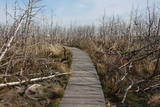 |
Nahe der Beerkopfdüne ist im Frühling 2006 „ein Brand der Jahrhunderte” gewessen. Es wurde der hundert Jahre alte Wald in der Fläsche von 235h ausgebrannt. Ein Pfad mit Holzbelag. |
|
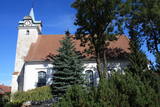 |
The church was built between 1640 and 1642 as a mark of respect for the king of Poland. It was commissioned by Duke Jacob Kettler and has a confessional bench with allegoric paintings (1691), as well as three altars decorated with Rococo carvings. There is a 16th century sculpture of the Madonna and her child. Contact the church for a tour. |
|
 |
Auf einer hohen vom Wald bedeckten Düne, wo sich in 14 – 15 Jh. ein heidnisches Heiligtum und eine Sternwarte befand, wurde 1869 eine Kapelle und Skulptur erbaut. Eine Geschichte über Priesterin Birute, die das Großfürsten Kestutis geheiratet und den Sohn Vitautas geboren hat. |
|
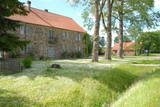 |
On the way to Turaida you must definitely stop at Gutmana cave. It is the widest (12 m) high (10 m) and in terms of volume - one of the biggest Latvian caves (cave like niche), which is also an important cultural and historical site, place rich with stories (most popular of Turaida Rose), surrounded by ancient walls and ceiling inscriptions (oldest from the end of 17th century). A spring originates from the cave; it is believed that it has healing properties. Turaida Museum reserve with Batlic scale outstanding monuments whose history stretches over 1000 years in the distant past is located at the point where the right mainland of Gauja valley is split by deep ravines of several small streams. Their exploration can be started with Turaida manor (first mentioned in 16th century), which is an outstanding example of Vidzeme manors. 21 buildings, built between the 18th century until the beginning 20th century are preserved until now. Visitors can see the manor stables, coach house, sauna, forge, fish cellar, barn, foreman house, the old residential buildings of landlord, and residential building of manor servants, oust house, etc. While walking in Turaida direction, we will reach the grave of Turaida Rose, which relates with the legend of Turaida Maija, who sacrificed her life for love. Near the grave grows a great linden tree (poor condition), wich is believed to be planted on the grave of Maija. Turaida Lutheran Church that lies further is the third church in a row and one of the oldest (1750) Latvian wooden churches – single volume wood log building with a baroque tower. Here you can see the altar and pulpit (Middle of the 18th century), altarpiece "Golgotha" (end of the 17th century – beginning of the 18th century) and historical exposition. Tautasdziesmu (folksongs) Park stretches at the Dainu Hill, the development of which started in 1985, noting the 150th anniversary of father of Latvian folk songs – Krisjanis Barons. More than 26 stone sculptures created by the sculptor I. Ranka are exhibited here. This is also a place of annual folklore events. Before the construction of Turaida stone castle (started in 1214), wooden Liv castle stood here. Turaida castle belonged to the Bishop. It existed for a long time - until to the 1776 when it was burned down. In 1953 an extensive restoration works was started here; upper storey of main tower, barn building (exposition on Sigulda district), semi-circular tower and castle complex in the southern enclosure was restored. Now the museum exhibition is established at the castle premises, which tells about the historical events in the surroundings. |
|
 |
This garden on the banks of the Bērze River is known as a rock fairy tale and a miraculous garden. The garden has rocks of various forms and sizes, including milling stones, distance markers and border posts related to parishes. The exhibition is supplemented by decorative plants and compositions of plants that are the responsibility of the lady of the house. |
|


