
| No | Name | Description |
|---|---|---|
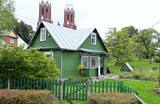 |
Established in 1990, this museum features an orchard that was planed in 1935 and relates to the poetess Brone Buivydaite. |
|
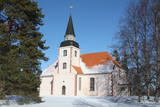 |
The church has a non-traditional design and layout: the altar is in the middle but the pulpit- above the altar. The church has also an original bell tower with a bell casted in 1634. The present wooden interior was created by the students of Riga Crafts High School. Next to the church there are ruins of the old church and the rectory where at the end of the 18th century as a tutor worked Garlieb Merkel who in Liepupe observed events used in his famous book "Latvians". |
|
 8 days
|
This tour offers a look at modern farms that based their work on ancient jobs and skills. Everything that is grown and processed in Latvia's countryside is found at the Central Market in Rīga, where this tour begins. It is one of the largest and oldest markets in Europe. From there you will travel to several farms to taste candy made of natural juices, cheese, grain foods, yogurt and ice cream. You will visit a traditional farm with a technology museum. Each farm will offer a brief introductory tour. Along the way, you will visit the Rundāle Castle and its park and rose garden, which were designed by the 18th century architect Rastrelli and are a true jewel of Baroque and Rococo architecture. In Bauska you will visit City Hall to see a collection of old measuring items, the Bauska Castle and the Bauska brewery. In Lithuania you will visit farms that grow lavender, medicinal plants and hemp. They will be happy to sell their products to you. The town of Anykščiai offers a trail above the trees, and the Krenave archaeological complex is on the UNESCO heritage list. At the conclusion of the tour, you will visit the Trakai lake castle that was built in the 14th and 15th centuries, as well as Vilnius. |
|
 |
Naktsmītne, pirts, telpas pasākumiem, aktīvā atpūta dabā. Mājas alus brūvēšana un siera siešana. |
|
 6 days
|
Onions, fish, villages that stretch out for several kilometres where the buildings are lined along the main street, ornate Old Believers' churches, small harbours with fishing boats and wooden houses, each painted in a different colour! Cafés, shops and a view of Lake Peipus, which looks more like a sea than a lake. This could be the description of this tour. This tour is a very interesting part of the Forest Trail, which will give you an opportunity to see and enjoy the Lake Peipsi region, the culture and lifestyle of local people as well as the nature. The tour will start in Tartu – Estonia’s second biggest city. You will go by bus from Tartu to Varnja where you will start to hike. During the tour you can visit Kostja’s onion farm, where the host welcomes guests and presents onion cultivation. It is also worth visiting the Chicory Museum in Kolkja to get acquainted with the history of chicory cultivation in row villages near Lake Peipus. You will also see Alatskivi Castle. In Avinurme we suggest visiting the Avinurme wooden handicraft centre and get acquainted with the local woodcraft, spend quality time in woodworking workshops and taste or even prepare yourself a selection of Estonian traditional foods. At the end of the tour you will return to Tartu by bus. |
|
 |
The café is alongside the Rēzekne castle hill and the “Zeimuļs” creative services centre of Eastern Latvia (built in September 2012). A lovely interior design and a look at historical objects form Rēzekne are part of the café. It is named after the Rositten fortress that was built here by the master of the Livonian Order in the 13th century. Meals are offered throughout the day, and various foods and baked goods are for sale. |
|
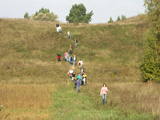 |
The Markova information trail is the most diverse and impressive trails along the upper reaches of the Daugava river in terms of objects and landscapes. The visitor will go to the top of the Markova castle hill, which offers a great view of the river valley. The deep Putāni stream valley will be crossed to get to the cliffs on the right bank of the Daugava. Here, the visitor will see one of the most unusual landscapes of Latvia’s river valleys. There is the Slutišķi village of Old Believers, along with the mighty Slutišķi cliff in the background. The trail is 1.6km long, and it will take an hour or two, particularly if the visitor chooses to tour the village and the homes of the Old Believers.
|
|
 4 days
|
Participants in this tour will learn about Latvia’s most modern crop farms that are typical in Zemgale. During the first day, participants will meet with specialists from the Latvian Agriculture Ministry and agricultural NGOs. They will also tour Rīga, which is part of the UNESCO List of World Heritage, and the Rīga Central Market, which is one of the largest closed markets of its type in Europe. Participants will visit a health food store and have dinner to enjoy traditional Latvian foods and beers. The next day we will go to Jelgava, where the 18th-century castle of the Duchy of Courland and Zemgale will host a meeting with faculty members from the Latvian Agricultural University, which is housed in the palace. We will visit a biologic bakery, as well as a farm that engages in crop farming, livestock breeding and manufacturing of biogas. An artificial wetland is used to purify runoff water. Dinner will be served at a modern leisure complex. On the third day, we will visit one of the largest multi-sectoral farms in Zemgale. It specialises in plant farming, livestock breeding, horse breeding, biogas manufacturing and beer brewing. During the afternoon, we will visit the largest and technologically most modern grain farm in the region, after which we will tour the most outstanding castle in the Baltic States – the Rundāle Castle. Built as a summer residence for Duke Ernst Johann Bieron, the castle was designed by the distinguished Italian architect Francesco Bartolomeo Rastrelli. Dinner will be served at a venue that has an historical windmill and an exhibition related to grain farming. On the morning of the fourth day, we will visit a farm that grows grains for seed, and then a biological farm that produces wheat, barley, peas, beans, rapeseed, herbs and herbal teas. Lunch will be served at a farm that will offer dishes made of home-grown grains and rough-milled flour. Then we will return to Rīga. |
|
 2 days
|
Это поездка предназначена для компании друзей или рабочего коллектива, желающих как активно провести выходные, так и узнать о кулинарном наследии Курземе и попробовать экологически чистые продуты. Во время поездки Вы в сопровождении гида и при свете факелов изведаете Северные форты Военного городка Лиепаи, ознакомитесь с разнообразием побережья Балтийского моря и увидите леса Шлитере с высоты птичьего полета с маяка Овишу. На второй день Вы можете пройтись пешком по двум природным тропам, что будет как полезно для здоровья, так и познавательно. |
|
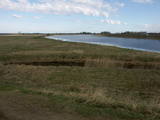 |
One of the most important locations for migrating water birds in terms of rest and feeding in Latvia is the Svēte flood-land, which overflows in the spring time, along with the Svēte polder. It has been calculated that when circumstances are good, tens of thousands of birds can be seen in the area – swans, geese, corn-crakes, pintails, predatory birds, plover-type birds, etc. |
|
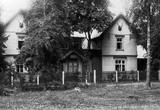 |
The former name of the house was “Forstei” (Forester’s House). It was built using logs of the old Bīriņi Castle. The first owner of the building was Alexander Alexei von Pistohlkors, the baron of Bīriņi Manor. It used to be a house of the manor’s chief forester Pauls Moltrehts. The building served as the chief forester’s work place and residence, as well as the Manor’s hunting base. The building was rebuilt several times. It obtained its current appearance and also the symbolic deer antlers in 1891. During the times of the Independent State of Latvia the house obtained a Latvian name – “Meža māja” or “Forest House”. Ownership of the house has repeatedly changed. In the 1930s, the house became a recreation place for cultural professionals and artists. In 1937, the composer Alfrēds Kalniņš spent the summer in the house working on an interpretation of the score for the second staging of the first Latvian opera “Baņuta”. During the post-war period – from 1945 to 1956 – the building housed Saulkrasti Village Council, and during the times of Saulkrasti District it was the location of the People’s Education Department. Later the children’s sanatorium “Ugunskurs” was transferred from Jūrmala to this building and was renamed “Saulkrasti Children’s sanatorium”. Now the building is privately owned. |
|
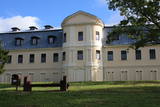 |
There are several buildings from the estate that survive to the present day and were built by the Plater dynasty of noblemen. The old mansion that is on the side of the Count Plater Street was built in 1759 on the banks of the Jāņupīte River. The Baroque building was designed by an architect from Venice, Antonio Parazzo. Later the mansion was rebuilt, and after a new castle was erected, the Plater family spent its summers on the first floor of the old building. The second and third floors had a library with some 20,000 books. The noblemen managed to move most of the contents of the library to safer locations during World War I, when the library as such was destroyed. Work on the new castle of the Krāslava Estate (on the upper part of the Daugava River Valley) began in 1756 (architect Domenico Parazzo). Initially it was in the Baroque style, but reconstruction at the turn of the 18th century involved Classicism. Unique Rococo wall paintings with views of Rome have been discovered in the building. These were based on samples from castles in Poland and were painted during the 1760s and 1770. A high school used the new castle until the 1970s. Then the building was abandoned and gradually turned into a ruin. More recently there has been major renovation of the castle’s façade, and it now has a good appearance. Surrounding the structure is a romantic landscape park that dates back to the mid-18th century. It is on the hillocks of the Daugava River Valley and the valleys that cross it. An artificial grotto has been restored, and a statue of a lion stands guard over the site. The stairway has been placed in its historical location, and the park features pathways and a yard. |
|
 |
The farm borders the city of Zilupe. Melons, watermelons, and pumpkins are grown here in an open field. The host is one of the few Latvian birch bark craft masters, the hostess comes from an old family of gardeners and is a certified floral designer, and their son is a potter. All of them offer demonstrations, creative workshops, and accept orders. |
|
 |
Organic family farm Võrumaa, Haanja Nature Park (Haanja rahvuspark). The farm rears goats and makes goat’s cheese. Tastings and excursions are organised here; you will see how the milk from the cowshed turns into a cheese wheel. |
|
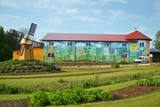 |
The Rūķīšu tēja farm is one of the leading producers of medicinal plants in Latvia. The company ensures the quality by growing and harvesting plants that are dried, stored and packaged very carefully. The farm uses no aromatises, no preservatives, dyes or thickeners. Group tours will enjoy tasty teas and recommendations on those that should be purchased. Products are sold at very attractive prices. The farm offers a wide range of medicinal plants from which teas can be produced. Pay a visit when the plants are blooming and each little area has a unique and typical colour. |
|
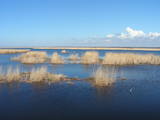 |
This is a shallow lagoon-type lake which, along with the area around it, is a wetland of international importance. The presence of 271 species of birds has been found in the area, including 43 birds which are listed in the Latvian Red Book and 15 that are listed in the European Red Book. The nature park includes the Nida swamp and the part of the sea which is alongside the park - newly estabilshed sea protected area "Nida - Pērkone". Between Lake Pape and the Baltic Sea we find Latvia’s oldest bird ringing station, where rings are attached not only to birds, but also to bats. Lake Pape is the first territory in Latvia where livestock adapted to life in the wild have been released for the proper management of the lake’s flood-land meadows. First there were wild horses (“Konik” horses), then aurochs and the European bison. Visitors can use bird and nature observation towers, nature trails, etc. The Ķoņi village is a unique example of a seaside fishing village. Pape is popular among bird-watchers, and the park’s visitors centre is found in the “Nature House” of the Worldwide Fund for Nature. |
|
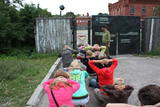 |
The Karosta prison cannot be described, it must be experienced and survived. That’s an opportunity for everyone. This is the best example in Latvia as to how the military heritage can be used for tourism purposes. Others can learn from this site. |
|
 |
Größe Steinkreisen. In der Mitte befindet sich eine oder mehrere „Steinkapseln” für einen Verstorbenen. Wurden im Eisen- und Bronzealter errichtet. |
|
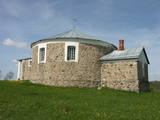 |
This chapel is interesting in form and made of field stones. It was built in the 19th century and is not open to the public. |
|
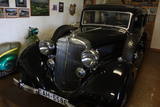 |
Pilsrundālē pa ceļam uz Rundāles pili var apmeklēt Retro auto kolekciju, kur apskatāmi 1939. g. automobiļi un dažādu laiku motocikli. Starp automobiļiem ir arī pasaulē šodien reti sastopami modeļi. Šī ir īstā vieta vēsturisko spēkratu cienītājiem! |
|


