
| No | Name | Description |
|---|---|---|
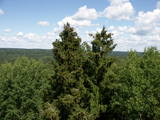 |
The recently renovated viewing tower offers a wonderful view of the impressive and forested ancient Gauja River valley. The Gūdu cliffs are visible. This is part of the Līgatne nature trails territory, where there are wide paddocks of wild animals.
|
|
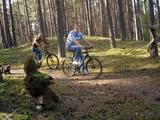 |
Brīvdienu mājas "Korķi” apkārtnes priežu mežā ir izveidota Jāņtarpiņu taka. Ideāla vieta aktīviem sēnotājiem un ogotājiem. Savukārt saules un jūras cienītāji pa šo taku 5-10 minūšu gājienā nonāks Vitrupes pludmalē, kur varēs baudīt sauļošanās un peldēšanās priekus.
|
|
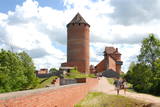 |
Before the stone Turaida Castle was built beginning in 1214, there was a wooden castle there that had been built by the Livs. The Turaida Castle was owned by the bishop of Rīga. It remained in place until 1776, when it burned down. The initial entrance to the castle's main tower was 9 m above ground, and in 1936, a viewing platform was installed at a height of 27 metres. There is no other view in Latvia that is like the one from the Turaida Castle! Restoration work at the castle began in 1953, when the upper level of the tower was restored and a roof was installed. Also restored was the former granary, which was home to an exhibition about the Sigulda region, along with the semi-circular tower and the southern segment of the castle complex, complete with the full reconstruction of its historical interior. Archaeological work was done around the castle between 1976 and 2001, and this led to the restoration of a large part of the complex. The castle now contains a museum exhibition related to the historical events of the surrounding area. The Turaida Castle is in the Turaida Museum Reserve (see above). |
|
 |
Andrupenes dabas takā var iepazīt sūnas, pārliecināties par sfagnu lielo ūdens uzsūkšanas spēju, gar laipas malām ieraudzīt apaļlapu raseni un purva dzērveni, apskatīt spilves, vaivariņus un purva vārnkāju, kā arī purva pasauli. Takas garums ~ 750m.
|
|
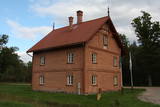 |
Vijciema čiekurkalte ir viena no retajām vēsturiskajām čiekurkaltēm Eiropā, kas celta 19. gadsimtā, un ir ne vien teicami saglabājusies līdz mūsdienām, bet arī, izmantojot vairāk nekā 100 gadus senas iekārtas, čiekurkaltē arvien tiek žāvēti čiekuri, lai iegūtu augstas kvalitātes meža sēklas. Pateicoties ēkas bagātajai vēsturei un senajām čiekuru žāvēšanas tradīcijām, Vijciema čiekurkalte ir iecienīts tūristu objekts, kas piesaista vēstures, dabas un tehnoloģiju interesentus. Vijciema čiekurkaltes apmeklētājiem ir iespēja doties izzinošā ekskursijā gan individuāli, gan grupās. Ekskursijas laikā ir iespēja atklāt čiekurkaltes vēsturi, skatīt čiekuru apstrādes cikla demonstrāciju, kā arī uzzināt, kur, kā un kāpēc čiekuri tiek lasīti. Ekskursijas un individuālos apmeklējumus iepriekš jāpiesaka, zvanot 26478620. Cena
|
|
 |
Suhka farm observes old traditions and serves local food. It also offers accommodation in a picturesque location. In addition, here you can learn of hiking routes in places you will not hear about elsewhere. |
|
 |
The café is in the Oga shopping centre, offering cheeses that are the “business card” of the city. |
|
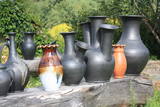 |
The potter is happy to welcome guests, offer them tours and demonstrations, and allow visitors to help in producing ceramics. Particularly interesting is the opening of the kiln, and pottery can be purchased at the site. |
|
 |
The New Sigulda Castle was built between 1878 and 1881 for Prince Kropotkin. Its tower was extended in 1937. From 1923 until 1940, the building was known as the Writers Castle, and it was managed by the Latvian Press Association. During the Soviet era, a cardiology sanatorium was housed there. In 1993, the Sigulda City Council took over the castle, and since 2003 it has been home to the Sigulda Administrative District Council. The wooden residential building (mid-19th century) in which the Kropotkin family lived still survives, as do the granary (late 18th or early 19th century), the gardener's house (19th century), and the stone wall (19th century). The New Sigulda Castle is part of the historical centre of the Sigulda, Turaida and Krimulda complex, as are the ruins of the Sigulda Castle and the Krimulda Castle, the Krimulda Estate and the Turaida Castle. |
|
 |
True Latgalian Apple Cider from Malnava Manor Our Story Apples Cider For Visitors Where to Buy |
|
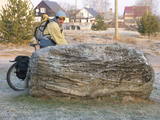 |
It lies between Pīlādžu street and the left bank of the river Siliņupe. In the 3rd to 2nd millenium B.C., there was a fishermen and hunters' settlement in the place of which there is installed an informational commemorational stone (Sculptor O.Skarainis). The settlement near the river Siliņupe is the oldest known human settlement in the area of the Ķemeri National Park. There are found many artifacts: pottery fragments and arrow tips, flint and amber pieces, etc..It is possible that the adjacent residential area has been the place of a cemetery. A small portion of the finds is displayed at the Lapmežciems Museum, the other ones are located in the National History Museum of Latvia. |
|
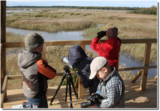 |
Kaņieris is a seriously overgrown and
shallow seaside lake. Its water level was
adjusted several times during the 20th
century so as to obtain agricultural lands.
The lake has 14 islands, among which nine
are natural and the rest are artificial and
aimed at attracting nesting water birds.
Lake Kaņieris has one of the richest
diversities of birds in Latvia. An
ornithological nature reserve was
established here in 1964. In 1989, the lake
was placed on the list of major birding
locations in Europe, and in 1995 it was put
on the list of the Ramsar Convention. At
the southeastern shore of the lake is a
boating facility (only rented boats are
permitted on the lake). A bird-watching
tower was erected on the Riekstu
peninsula in 2009
|
|
 |
Angla Tuulikumägi (Windmill Hill) is the only site in Saaremaa which has retained its historical mill scenery with four post mills characteristic of the area and one Dutch-type mill. All windmills are open to visitors. |
|
 |
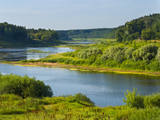
The Dole is the largest island in the Daugava River, surrounded to the Northeast by the rapid waters of the Daugava and to the Southwest by calm and gradually overgrown waters from Dry Daugava. The island is a specially protected nature park, established in 1986 to protect the landscape and cultural and historical values of the island in the wake of the construction of the Rīga hydroelectric power plant, as well as rare and protected species of plants and animals. The island is also meant to provide education and leisure for visitors. Best known on the island is the Daugava Museum, which is in the mansion of the old Dole Estate. The museum features some 13,000 exhibits that speak to the history of the island and the river – Baltic and Livonian apparel, tools and household objects. The exhibition also presents the Daugava as an important waterway and the related history of forms of transport and rafters. In the park is an open-air exhibition with reconstructed lamprey eel traps and a barrier to fish salmon, along with a set of fishing tools. A dolomite cliff is alongside the museum on the steep shore of the Dry Daugava. The ruins of the Vecdole castle can be found on the south-eastern end of the island, near Bēči. |
|
 8 days
|
The Daugava River is known as our river of destiny, the Daugava of our hearts, or our beloved mommy. It is a large and full-blooded artery of water that has flowed through our land and our history. The Vikings were aware of the river during the 5th century AD. Krāslava is the site of an ancient castle hill, and the fearless sailors were well aware of it in that downriver from it, the ships could sail with raised sails. It is known in Viking sagas as Dynasaiforgarðr. Goods from the East sail down the river to Rīga, where it is reloaded into seafaring ships for delivery to Europe. That has been the case for many centuries. Many powers wanted to control and govern the process, as is seen in the large number of castle hills, castles and populated areas around the river’s banks. The majestic ruins of the Koknese Castle, Krustpils, the grassy and mighty castle hill at Aizkraukle, another one at Daugmale. The unique fortresses at Daugavgrīva and Daugavpils are like large keys that lock or unlock this mighty and ancient trade route. Under the water in the Daugava are the ruins of the ancient Ikšķile Castle that was built by St Maynard himself. It is seen as the first brick building in the Baltic States. Nearby is Death Island, where Latvian riflemen fought for the future of their country and their land, defending each square metre of land. The Daugava proved insurmountable for Bermont’s troops, and the riflemen defended Rīga successfully. The curves of Daugava are unique. The village of Slutišķi is particularly known because the Daugava there is just like it has been in the past. The high dolomite shorelines and canyons that once made the Daugava unique in all of Northern Europe have now been lost in the reservoirs of hydroelectric power plants, as has the eternally weeping cliff of Staburags, the Liepavotu stream and the Pērse waterfall. The age of national renaissance in Latvia importantly began with a battle against the construction of another power plant on the Daugava, which would have fully destroyed the beauty of the noble river. We managed to protect it, if only a small part of it, but we succeeded. We must not stop! |
|
|
|
Sudrabkalni – a former pharmacy and medical treatment facility until the late
1980s, then an elementary school, and now a private residence.
|
|
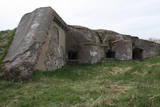 |
In addition to the Northern Forts, coastal batteries and Karosta district of Liepāja that are all mentioned in this database, there are other impressive elements of the former fortifications system – Lunete (the southern part of Lake Tosmare), the Central Fort (between Grīzupes Street and 14 November Boulevard), the Eastern Fort (to the South of Brīvības Street and the North of Lake Liepāja), the Southern Fort (at the Pērkone canal), and the Old Forts at the Olimpija stadium. All of these locations are freely accessible, but be careful if you go inside the former forts – they were blown up at one time and may remain dangerous.
|
|
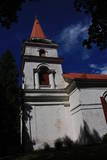 |
When you travel along the northern shore of Lake Sauka where the road to Klauce crosses your road, you will see the Sauka Lutheran Church among the trees. This is the third church at this location. It was opened in 1827 and can mostly be viewed from the outside. The altar is decorated with sculptures of St Peter and St Paul, as well as the altar painting “Jesus on the Cross with Mary and John,” which is by J. Doering. The organ was built by craftsmen in Jelgava, and the pipes were manufactured in Sauka. |
|
 |
Café Ugandi is a cosy place in the very heart of Otepää, filled with a warm atmosphere, pleasant feelings, pure and delicious flavours. As soon as you arrive, you will feel the aroma of premium quality coffee and sweet pastries. The large showcase is filled with delicious cakes - you can enjoy them here or take them with you to enjoy later at home. |
|
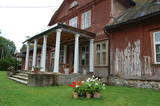 |
The mansion of Uue-Varbla Manor houses the local history museum which presents local life from the early 20th C and history of Varbla municipality. There is a handicraft workshop in the museum, while old tools and machinery are exhibited in the granary. The mansion in early Classicist style from 1797 is an attraction in itself. Traditional handicraft fairs are held in the grounds in July every summer. |
|


